Voyager 1 Is About to Cross the One Light-Day Line
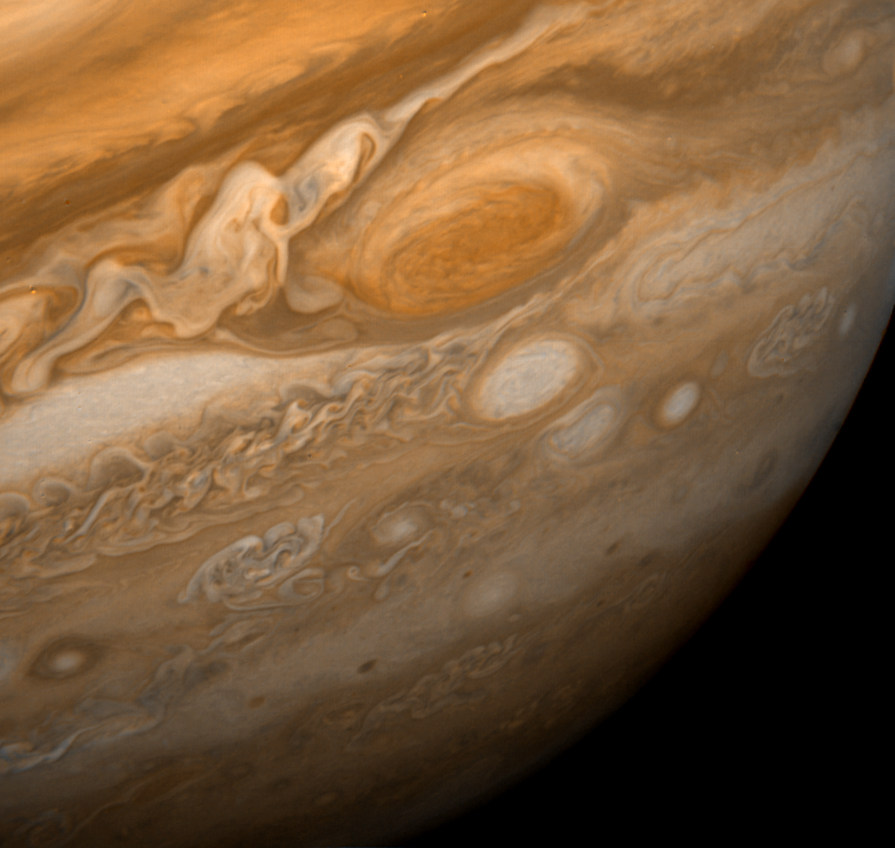
Photo: NASA / Public domain · via Wikimedia Commons
Voyager 1 Is About to Cross the One Light-Day Line
November 18 Is the Date NASA Keeps Citing
NASA's mission-status page puts a specific number on the moment: if its current trajectory holds, Voyager 1 will be exactly one light-day from Earth on November 18, 2026. A light-day is the distance light travels in 24 hours — 16,094,799,096 miles, or about 25.9 billion kilometers, according to MakeTechEasier's reading of the NASA figure. Space.com, citing the same NASA page, gives the distance as 16.094 billion miles (25.902 billion kilometers). No object built by people has reached that line before.
A Five-Year Mission Now in Its Forty-Ninth Year
Voyager 1 launched from Cape Canaveral's Launch Complex 41 on September 5, 1977, weighing 721.9 kilograms, with a brief to fly past Jupiter and Saturn. SpaceDaily notes that on February 17, 1998, at 69.4 astronomical units from the Sun, it overtook Pioneer 10 as the most distant human-made object — a lead it has held ever since. Wikipedia's entry puts the craft 171.19 AU from the Sun as of August 2026.
NASA's Wording Is Deliberately Conditional
Officials frame the milestone as conditional: if the trajectory continues. As of September 18, 2026, Voyager 1 was about 15.98 billion miles (25.72 billion kilometers) from Earth, according to Space.com's account of NASA's tracking data, and it is moving at roughly 38,000 miles (61,000 kilometers) per hour. SpaceDaily gives a more precise figure of 38,026.79 mph, about 17.0 kilometers per second relative to the Sun. The instant lands at 10:16:07 UTC on November 18 — 12:16:07 a.m. CST.
The Round Trip Now Nears Two Full Days
For the engineers at the Jet Propulsion Laboratory, one light-day is a scheduling problem. Morning Overview and theartfulage both report that a command sent from Earth and the confirmation returned from the spacecraft span close to two full days before anyone can interpret the result. Every command window, data download and anomaly response has to be planned around that latency.
Four Watts a Year, and Two Instruments Left
Power is the other clock. The spacecraft runs on three radioisotope thermoelectric generators; plutonium-238 has a half-life of about 87.7 years, the generators supplied roughly 470 watts at launch, and output drops by about four watts every year. ScienceDaily reported that on April 17, 2026, JPL engineers commanded the Low-Energy Charged Particles instrument off — an experiment that had run almost continuously since 1977, nearly 49 years, and whose shutdown is the most effective way to extend the mission. HypeFresh counts just two instruments still active: the Magnetometer and the Plasma Wave Subsystem, after the Cosmic Ray Subsystem was switched off in February 2025. Wikipedia adds that the current plan allows at least one science instrument to keep operating into the 2030s.
What the Numbers Change on the Ground
The immediate impact falls on the mission team, whose workflow is rebuilt around a two-day command cycle. Scientists lose another slice of the particle and cosmic-ray record that only Voyager 1 can sample this far out. The public story is affected too: several outlets tied the milestone to the Pale Blue Dot image, since 2026 marks 49 years since launch.
Forty Thousand Years to a Near Miss
The craft is no longer aimed at anything we would recognize as a destination. NASA has identified its track toward AC +79 3888, also known as Gliese 445, an obscure star in Ursa Minor more than 17 light-years away. Voyager 1 is expected to pass within roughly 1.7 light-years of it in about 40,000 years.
Voyager 2 Follows Nine Years Behind
Morning Overview reports that Voyager 2 will reach its own one-light-day mark in November 2035, nine years after its twin. After the power runs out and the last instrument falls silent, Voyager 1 will keep moving outward at about 17 kilometers per second — a record nothing will be left to read.
Sources
- Space.com
- ScienceDaily
- MakeTechEasier
- Morning Overview
- HypeFresh