Fed's Hammack Says Higher Rates May Be Needed to Keep an 'Inflationary Mindset' From Setting In
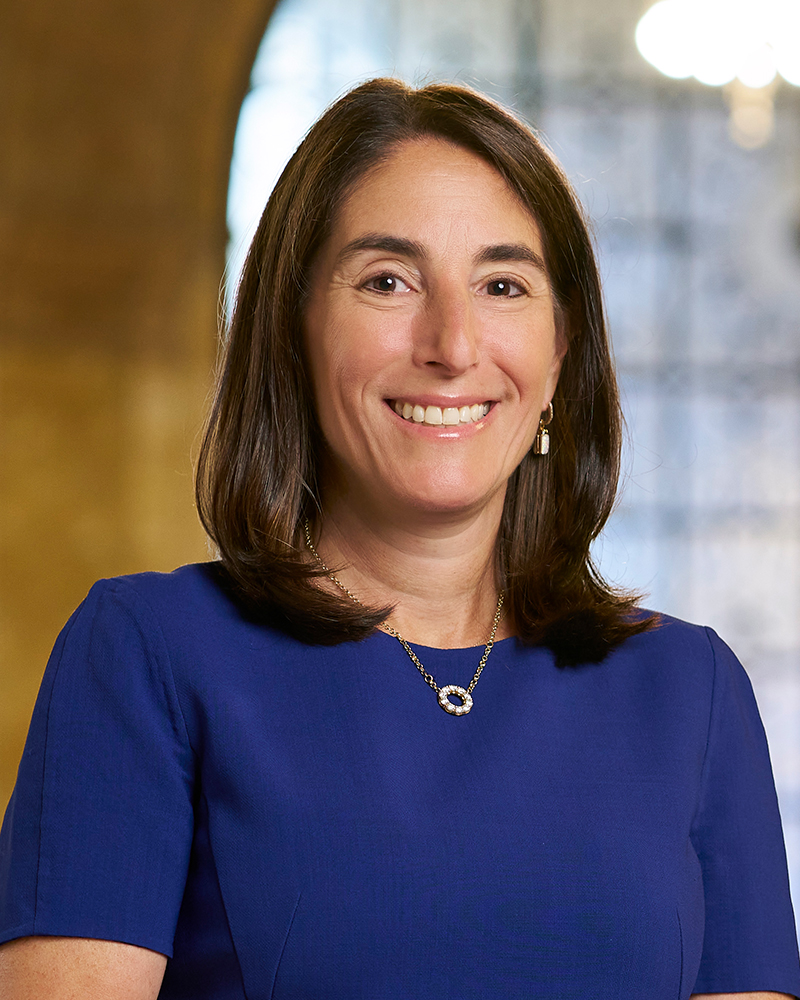
Photo: United States Federal Reserve / Public domain · via Wikimedia Commons
Fed's Hammack Says Higher Rates May Be Needed to Keep an 'Inflationary Mindset' From Setting In
Hammack's Hawkish Case: Rates May Need to Go Higher
Cleveland Federal Reserve President Beth Hammack said Monday that the central bank may need to push interest rates higher to prevent persistently elevated prices from reshaping how American businesses and households think about inflation. Speaking at the 68th annual meeting of the National Association for Business Economics , Hammack titled her address "Trimming the Sails: Communicating My Reaction Function." She is a voting member of the Federal Open Market Committee this year and is widely counted among its more hawkish voices.
Anchored Expectations Are No Excuse for Complacency
Hammack's central warning was about psychology rather than any single data point. Long-run inflation expectations, she said, have "stayed remarkably well anchored" even though actual inflation has run above the Fed's 2% target for more than five years. "But I'm not taking that for granted," she added. "With each passing month, persistently elevated inflation raises the risks of an inflationary mindset becoming entrenched in the economy." She made a similar point in late September, arguing that an entire generation of Americans has grown up without knowing sustained inflation at target, and asking how that changes the behavior of firms and households.
Preference for Small, Faster Moves Over Waiting
Her policy prescription follows directly from that diagnosis. "A restrictive monetary policy stance is appropriate to ensure a timely return to 2% inflation," Hammack said. But she stopped short of endorsing a rate increase at the Fed's October 27-28 meeting. Instead, she described a preference for pace: "When feasible, I generally think it's preferable to make smaller adjustments, and to do so relatively quickly, rather than to wait and risk needing a larger course correction," particularly if inflation proves more persistent or expectations begin to drift up. CNBC and Bloomberg both read the remarks as a hawkish signal short of an explicit call for action this month.
August PCE at 3.4%: Underlying Inflation in the Upper Half
The numbers behind the argument are sobering. Hammack noted that headline personal consumption expenditures inflation was 3.4% in August, with core PCE at 3.0%, both above the year-earlier readings of 2.7% and 2.9%. Research by her staff puts underlying inflation in the mid-to-high 2% range, and her baseline forecast is that "it will take some time for inflation to return to 2%," even with appropriate policy. She described today's price pressures as broad-based rather than concentrated in any one category.
Fuel, Tariffs and AI Buildout Push Prices Up Together
On the causes, gasoline and diesel prices are part of the story, she said, "but it isn't the whole story." Firms in her district have told the Cleveland Fed they plan to raise prices faster than their own input costs are climbing, and demand pressures tied to the artificial-intelligence buildout are lifting prices for computers, electronics and other high-tech equipment. In earlier remarks she also cited tariffs and the energy effects of the Iran war, alongside sturdy demand from a solid economy and labor market.
July Dissent, Then a Unanimous Hike to 3.75%-4.00%
Hammack's hawkish credentials are well established. At the FOMC's July 28-29 meeting, the committee voted 9-3 to hold rates at 3.5-3.75%, and Hammack dissented in favor of an immediate quarter-point increase, alongside Minneapolis Fed President Neel Kashkari and Dallas Fed President Lorie Logan. On September 16, the committee voted 12-0 to raise rates by 25 basis points to a range of 3.75-4.00%, its first hike in more than three years, with Chair Kevin Warsh on board. Minutes of that meeting, released October 7, showed officials did not expect it to be the start of a rapid sequence of hikes.
Markets Aren't Buying an October Hike
Investors, for now, are less convinced. MarketScreener and Kitco reported that traders expect the Fed to hold its policy rate in the 3.75-4.00% range later this month, with futures pricing little chance of an October increase. Commentary published Monday highlighted the gap between Hammack's preference for rates above the current level and that market pricing — a sign of the tension still running through the committee.
Explaining the Reaction Function Is Policy Too
Hammack also devoted significant time to the value of explaining the Fed's "reaction function," arguing that telling households and firms how policymakers will process incoming data helps everyone plan. "I have a responsibility to the public to explain why I make the decisions I make," she said. Transparency, she argued, lets consumers, businesses and financial markets make better-informed choices — itself a form of expectation management.
Mortgages and Cards Stay Costly Under Restrictive Rates
For households, the practical stakes are mortgage, auto and credit-card borrowing costs, which are unlikely to fall while policy stays restrictive. And if corporate price-setting is gradually accepted as normal, the return to 2% inflation could take longer still.
Three Things to Watch Next
Three things come next: whether the FOMC holds steady on October 27-28; whether upcoming PCE readings confirm the staff's mid-to-high 2% read on underlying inflation; and whether Hammack and her hawkish allies can turn their preference for small, quick adjustments into votes before the year ends.
Sources
- CNBC
- Bloomberg
- Reuters
- Quartz
- Investing.com