Drones Sink Cargo Ship Off Bulgaria as 11 Crew Vanish in the Black Sea
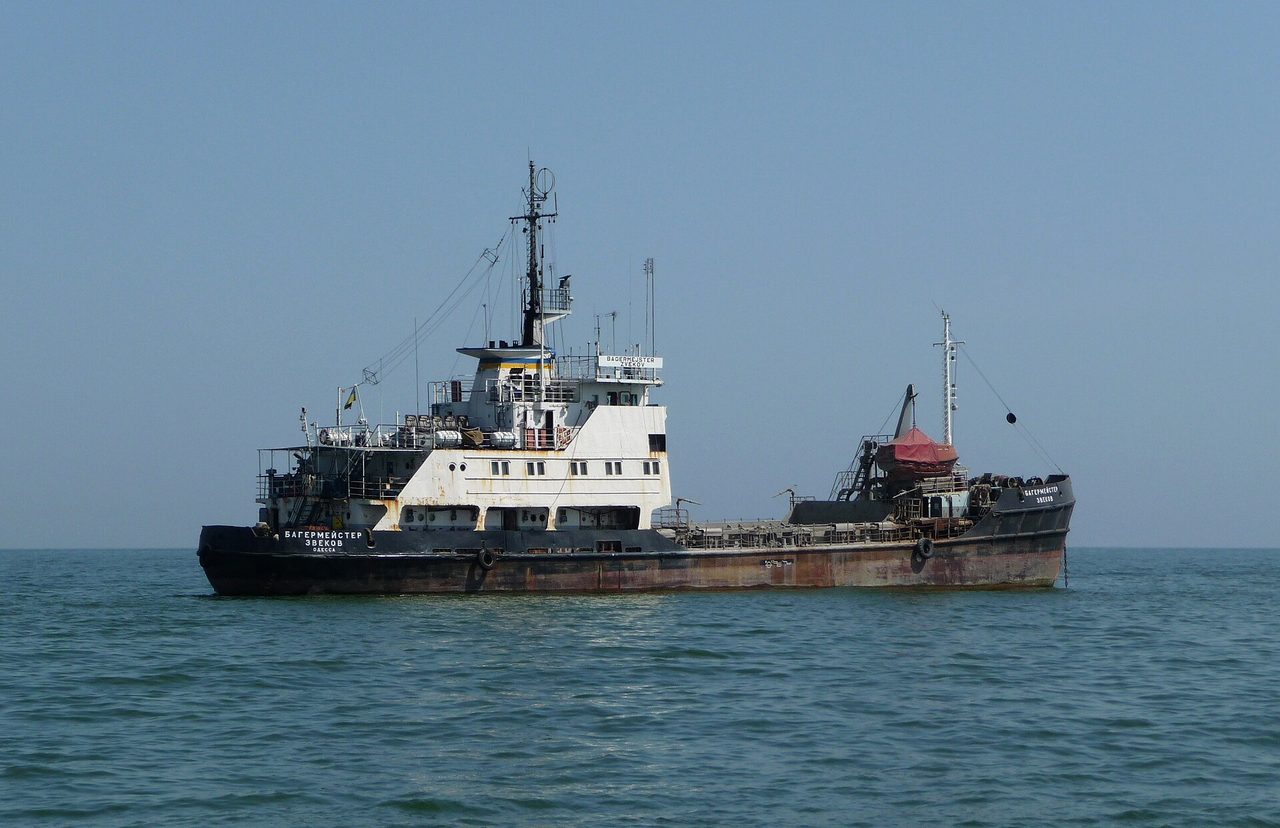
Photo: George Chernilevsky / Public domain · via Wikimedia Commons
Drones Sink Cargo Ship Off Bulgaria as 11 Crew Vanish in the Black Sea
Two merchant ships hit within hours
Drones struck two merchant vessels inside Bulgaria's Black Sea exclusive economic zone overnight into Tuesday, sinking one of them, Prime Minister Rumen Radev told an emergency security meeting. Speaking hours later, he called the strikes "absolutely unacceptable" and a violation of international law and maritime practice. It was the second such episode off the NATO member's coast in a week, and it pushed the war in Ukraine closer to alliance territory.
Chelsea 3 hit by three drones
The Ukrainian-owned Chelsea 3, sailing under a Maltese flag, was struck on its deck and hull by three aerial drones at about 1:30 a.m. local time, roughly 18 nautical miles (33 kilometres) east of the coastal town of Byala, Radev said in a Facebook livestream. Its 15 crew members — seven Ukrainians and eight Azerbaijanis — were brought ashore to Varna, where five received treatment for minor injuries. None were seriously hurt.
Eleven still missing from sunken vessel
A second ship went down about 17 nautical miles east of the village of Krapets, near the Romanian border. Officials said five crew members were rescued and 11 remain missing. The Syrian Sailors' Union said the vessel was hit by an aerial drone and two unmanned surface vessels, and that 14 of its 16 crew were Syrian nationals, with the rest Egyptian; the Bulgarian Interior Ministry described the crew as mostly Syrian. Six boats and two helicopters were deployed in the search.
Identity of the sunken ship still disputed
Reports disagree on which vessel sank. Reuters said Bulgarian media identified it as the Azov Concord, a Turkish-managed cargo ship, while President Rumen Radev's office and the Syrian Sailors' Union named the Guinea-Bissau-flagged HS Dignity. One maritime source said the Azov Concord was itself engaged in rescue operations and had not been hit. The ship's operators were not immediately available for comment.
Radev points at Moscow without naming it
Radev stopped short of formally blaming anyone. "We lack solid, clear evidence to level accusations against any specific party; however... logic suggests the outcome works to the advantage of the Russian Federation," he wrote. He told security chiefs there was "no logic in Ukraine destroying its own ships," and added: "We assume the drones are Russian." Sofia has summoned Russia's ambassador.
Ambassador cites a possible third party
After meeting Radev in Sofia, Ambassador Eleonora Mitrofanova said she had no information from Russia's Defence Ministry about attacks on commercial vessels in the Black Sea, according to the Bulgarian government. She did not rule out that a third party could have staged the incidents as a provocation. Russia's military has not publicly commented. Ukraine Foreign Minister Andrii Sybiha accused Moscow of "deliberate disregard for civilian lives and maritime security in the Black Sea."
EU and NATO pulled into the response
European Commission President Ursula von der Leyen said the Black Sea had become "another front of escalation of the Russian war in Ukraine," adding: "We stand with Bulgaria and thank its rescuers for their swift response. Those responsible should be held accountable." Radev spoke by phone with NATO Secretary General Mark Rutte and requested technical assistance from both NATO and the EU to strengthen Bulgarian maritime and airspace surveillance.
Last week's attack already killed ten
On October 6 at about 3 a.m., drones hit two ships roughly 70 nautical miles (130 kilometres) east of Byala. The Togo-flagged Alfa Watan suffered critical structural damage and sank within about three minutes, killing nine Syrian sailors and one Egyptian. The Palau-flagged Able caught fire, and a Bulgarian ferry evacuated its 18 crew — 11 Turks and seven Indians — with two injured. Sofia ended the search on October 7 after failing to recover the missing.
Shipping costs and grain routes under strain
Radev's office said the attacks have already raised commercial shipping risks, pushed up insurance costs and produced refusals to carry cargo to Bulgarian ports, warning that Bulgaria, though not a party to the war, is suffering significant economic and financial damage. President Iliana Yotova said the Black Sea is being turned into a "military zone," putting freedom of shipping and supply chains seriously at risk. The western Black Sea is a key corridor for Ukrainian grain exports.
What comes next
The main investigative obstacle is physical evidence: no drone debris was recovered after the October 6 strikes, which is why Radev turned to NATO and the EU. Allied surveillance flights and satellite monitoring of Black Sea airspace are expected to expand, while salvage teams confirm the fate of the 11 missing sailors. Until attribution is settled, insurers and shipping lines are likely to keep tightening war-risk premiums and rerouting vessels away from the Bulgarian coast.
Sources
- Al Jazeera
- BBC
- Reuters
- Associated Press
- Le Monde