South Pole Ice Telescope Wins Physics Nobel as Halzen Is Honored for Cosmic Neutrinos
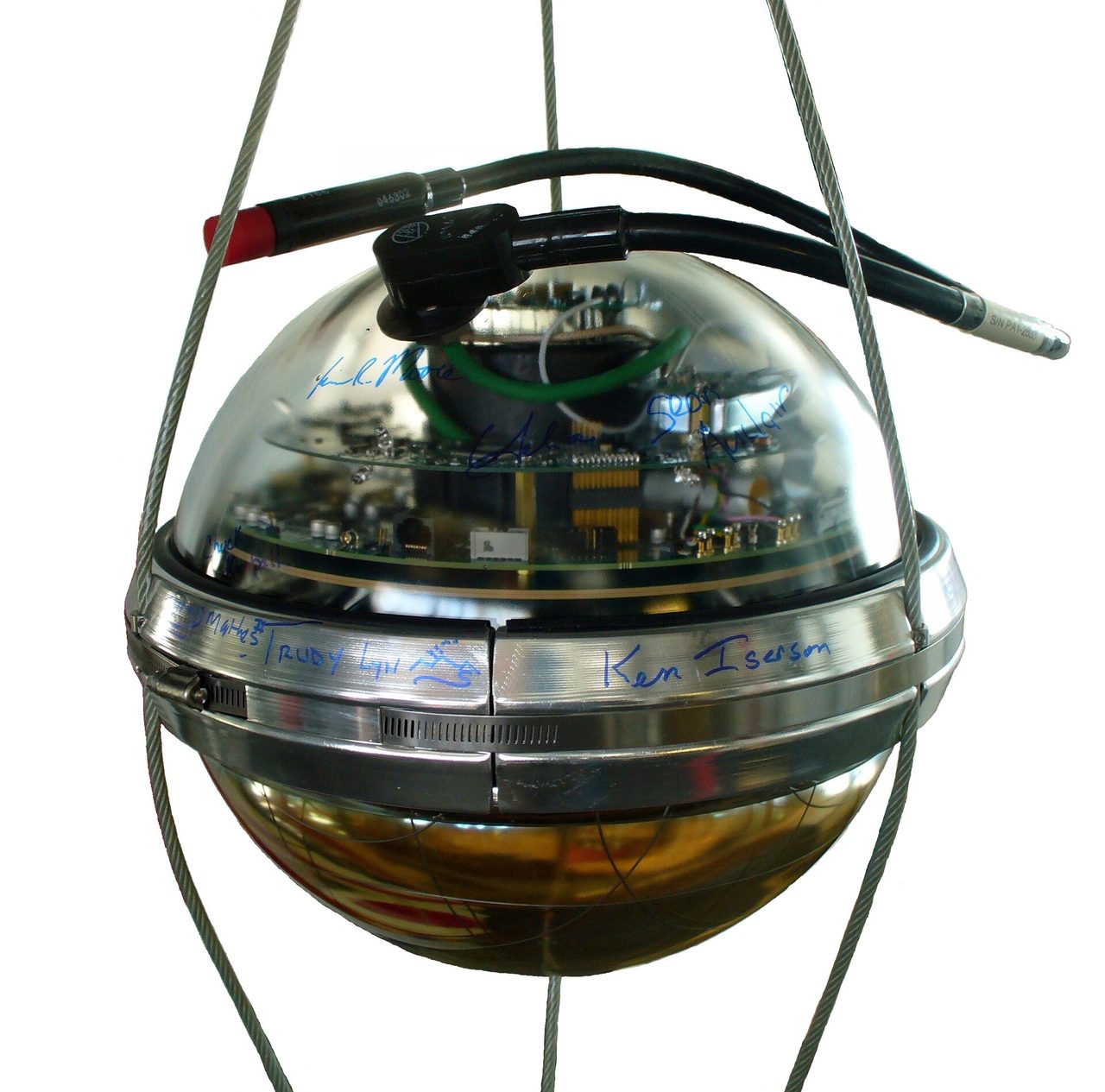
Photo: Amble / CC BY-SA 3.0 · via Wikimedia Commons
South Pole Ice Telescope Wins Physics Nobel as Halzen Is Honored for Cosmic Neutrinos
Stockholm Hands the Prize to Antarctic Ice
Sweden's Royal Swedish Academy of Sciences announced on October 6 that Francis Halzen of the University of Wisconsin–Madison receives the 2026 Nobel Prize in Physics "for decisive contributions to the IceCube Neutrino Observatory and the discovery of high-energy neutrinos of astrophysical origin." The award points directly at a facility buried in the ice at the South Pole — no mirror, no lens, no dish pointed at the sky.
The Official Citation Talks About Cosmic Messengers
The academy's reasoning rests on the particle itself. Neutrinos travel without changing direction or losing energy, which means they carry information nothing else can supply. The prize committee's chair, Mark Pearce, said Halzen's "tenacity and scientific vision has paved the way for a new kind of astronomy." The ceremony is scheduled for December 10, the anniversary of Alfred Nobel's death.
A Solo Laureate, 82, Sharing Nothing
Halzen, 82 and born in Belgium, is the sole physics laureate this year, unusual for a prize normally split three ways. He takes the full 12 million Swedish kronor (about $1.2 million). Reached by phone at a scientific meeting in Italy, he called it "a great surprise and I obviously didn't expect it," adding that every October he used to feel miserable, certain he had let the collaboration down. "That problem is finally solved."
A Plan Drawn in 1988
Halzen proposed putting a neutrino telescope in Antarctic ice in 1988; the predecessor array, AMANDA, was built with UC Berkeley. Work on IceCube began around 2001, construction finished in December 2010, and full year-round operations started in 2011. Total cost reached $279 million, the National Science Foundation is the principal funder, and the Wisconsin IceCube Particle Astrophysics Center leads a collaboration of roughly 450 researchers from 58 institutions in 14 countries.
One Cubic Kilometer, 5,160 Sensors
Crews drilled 86 boreholes with hot water and hung cables between 1,450 and 2,450 meters down, spaced about 125 meters apart, each carrying 60 optical modules at 17-meter intervals — 5,160 in total. When a neutrino strikes an atom in the ice, the resulting charged particle emits a faint blue flash that the modules record, and the pattern reveals where the particle came from. The instrumented ice weighs roughly a billion tonnes.
Why the Pole Is the Right Address
The Amundsen–Scott South Pole Station sits on nearly three kilometers of the clearest ice on Earth: deep, permanently dark, geologically quiet, low in radioactivity and free of large animals. The station supplies the power and logistics for drilling. Upper ice layers contain bubbles that scatter light, which is why the array had to go deep; construction could happen only in the austral summer, November to February, when round-the-clock sun allows continuous drilling.
2013: First Particles From Beyond the Sun
Two extreme events nicknamed "Bert" and "Ernie" showed up in 2012. In 2013 the collaboration reported 28 ultra-high-energy neutrinos above 100 teraelectronvolts — energies no earthly process could produce, up to a million times the energy of neutrinos from the Sun — establishing neutrino astronomy as a field.
2017: A Neutrino Gets an Address
On September 22, 2017, IceCube broadcast a real-time alert that led to a link with the blazar TXS 0506+056, some four billion light-years away, at about three standard deviations; archival searches found roughly 13 earlier neutrinos from the same direction in 2014–2015. IceCube later identified the galaxy NGC 1068 in 2022 and produced the first neutrino image of the Milky Way in 2023.
Who Benefits: Messengers and the Ice Community
Multi-messenger astronomy gains a standing alert channel, and gamma-ray and optical observatories gain a new trigger. Antarctica benefits too: in September the NSF renewed a $53 million, five-year operations contract for IceCube, reinforcing the South Pole station's claim to host the world's largest telescope.
What Comes Next
An upgrade deployed on February 12, 2026 was the first significant expansion in 15 years. The proposed IceCube-Gen2 would instrument roughly eight cubic kilometers with about 120 new strings and add a radio array spanning 500 square kilometers to catch the rarest extreme-energy events. Halzen says he hopes the prize helps his next proposal.
Sources
- The Guardian: Nobel prize in physics goes to Francis Halzen for south pole work on neutrinos
- Nobel physics prize awarded for detection of cosmic neutrinos
- NPR: Francis Halzen wins Nobel Prize in physics for work on high-energy neutrinos from space
- 2026 Nobel Prize in Physics awarded to Francis Halzen for discovery of high-energy neutrinos
- Physicist Wins Nobel Prize for Developing a Massive, Ice-Embedded Observatory