Cornell Freezes Fraternity Parties for the Year and Hands Assault Probes to State Police
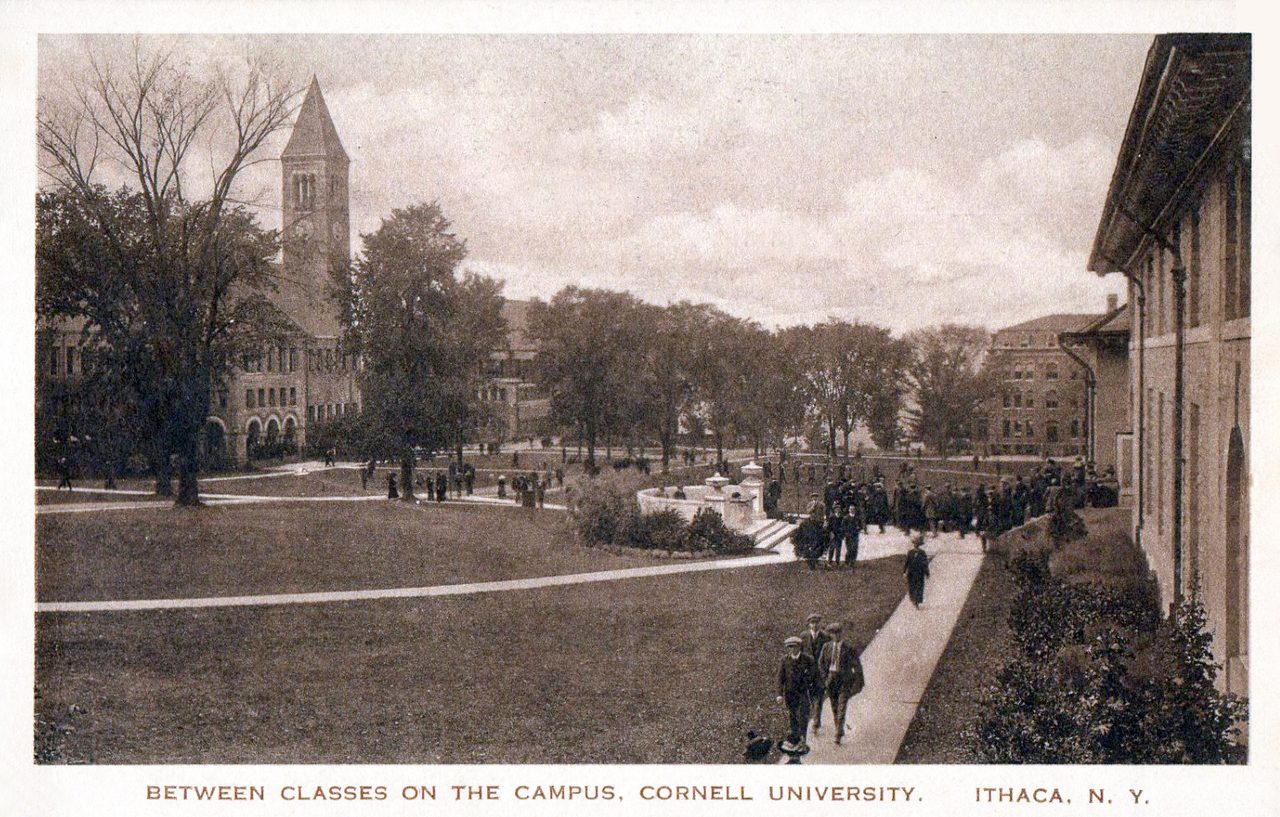
Photo: Published for The Corner Bookstore, Ithaca by The Albertype Co. / Public domain · via Wikimedia Commons
Cornell Freezes Fraternity Parties for the Year and Hands Assault Probes to State Police
Parties Halted for the Rest of the Academic Year
On Tuesday, October 13, 2026, Cornell president Michael Kotlikoff announced in a letter to campus that all parties and social events in Interfraternity Council houses are suspended with immediate effect through the end of the 2026-27 academic year. The purpose, he wrote, is to allow "a thorough review of fraternity life at Cornell to determine whether and how it can safely continue." CNN, Time and the student newspaper The Cornell Daily Sun all published the letter's text.
Violators Face an Emergency Suspension
The directive carries a zero-tolerance clause: any fraternity that holds an in-house party or social event "will receive an immediate emergency suspension." Cornell has more than 20 active IFC fraternities, and shortly before the announcement the presidents of all 22 of them voted unanimously to cancel that weekend's events, according to the student newspaper The Cornell Daily Sun. Whether the restriction extends to off-campus parties remains unclear.
The President Apologizes, but Says Women Still Feel Unsafe
"I am deeply sorry for the harm Jane Doe suffered in 2024, and appalled that this act of sexual violence occurred within our Cornell community," Kotlikoff wrote. He added that "women on our campus continue to question whether they are safe," and acknowledged that the problem reaches beyond Greek life into a campus culture of excessive drinking and drug use.
State Police Get a Role in Campus Assault Cases
The biggest structural change concerns who investigates. Cornell said it is working with the New York State Police so that the agency's criminal investigators — independent of the university and trained to handle trauma — can examine sexual assault allegations. They will interview survivors who choose to pursue charges and prepare investigative summaries for the appropriate law enforcement agency, an arrangement meant to last for the duration of the independent review. The Office of Civil Rights will also gain a case manager to help complainants navigate the process, alongside new victim advocates and expanded bystander-intervention training. Kotlikoff called the package "first steps toward systemic change on our campus."
The Lawsuit Behind the Freeze
The trigger was a civil suit filed on September 16, 2026 in New York Supreme Court. The plaintiff, a 20-year-old former student identified as Jane Doe, is suing Cornell, several Chi Phi organizations, seven current and former students, sororities, a local bar and unnamed individuals. She alleges that on the night of October 19, 2024 she was pressured into taking drugs and sexually assaulted by multiple Chi Phi members at the chapter house, and that messages describing her as available to anyone in the house circulated on Snapchat without her knowledge. Cornell closed the Chi Phi chapter in 2024 and barred it from campus, and disciplined several students after an internal investigation — but no criminal charges have been filed.
A Six-Page Summary and a Declined Case
Tompkins County district attorney Matthew Van Houten received only a six-page summary of the woman's 120-page interview transcript, then declined to prosecute or present the case to a grand jury. After the lawsuit became public, he acknowledged in a September 28, 2026 statement that his office had never seen the victim's full transcript, and he reopened the criminal investigation. Governor Kathy Hochul then named state Attorney General Letitia James as special prosecutor, who formally took over the case on October 1. Cornell says it will cooperate.
A Week of Protest Forced the Issue
The announcement followed days of unrest. On October 5 and 6, more than 20 student organizations rallied on Ho Plaza and marched to Day Hall, with student media estimating several hundred attendees. Chants included "Justice for Jane Doe" and "Ban the frats," and the demands ranged from expelling alleged perpetrators and rewriting the sexual harassment policy to forcing Kotlikoff's resignation. A separate sit-in was planned to run seven hours, matching the length of the alleged assault.
What the Ban Hits
For members of Cornell's 20-plus IFC chapters, an entire year of social life disappears, and Greek life — long one of the university's defining traditions — is put on hold. Cornell has said Chi Phi remains barred from campus under the closure imposed in 2024, and other recognized chapters fall under the same review.
Three Outside Investigations Run in Parallel
Three tracks are moving at once: New York attorney general Letitia James is leading the inquiry, Cornell has hired former deputy attorney general Sally Yates to review the university's own 2024 response, and the reopened Tompkins County case sits before a grand jury. The new state police role is bolted onto that outside oversight rather than replacing it.
What Comes Next
The tests ahead are the Yates report, a grand jury decision, and the verdict of Cornell's review of fraternity life. Kotlikoff framed Tuesday's measures as a beginning; students have already moved past "cancel the parties" toward policy rewrite and accountability.
Sources
- CNN: Cornell suspends fraternity parties after sexual assault allegations
- Associated Press: Cornell suspends fraternity parties, gives state police role in investigating campus assault reports
- The Cornell Daily Sun: Cornell Suspends All Fraternity Parties, Social Events for 2026-27 School Year
- TIME: Cornell Halts Fraternity Parties After Jane Doe's Lawsuit
- People: Cornell Student Who Helped Police Investigation Into Jane Doe's Gang Rape Allegations Speaks Out