FAA Probes LaGuardia Close Call After Business Jet's Unpermitted Takeoff
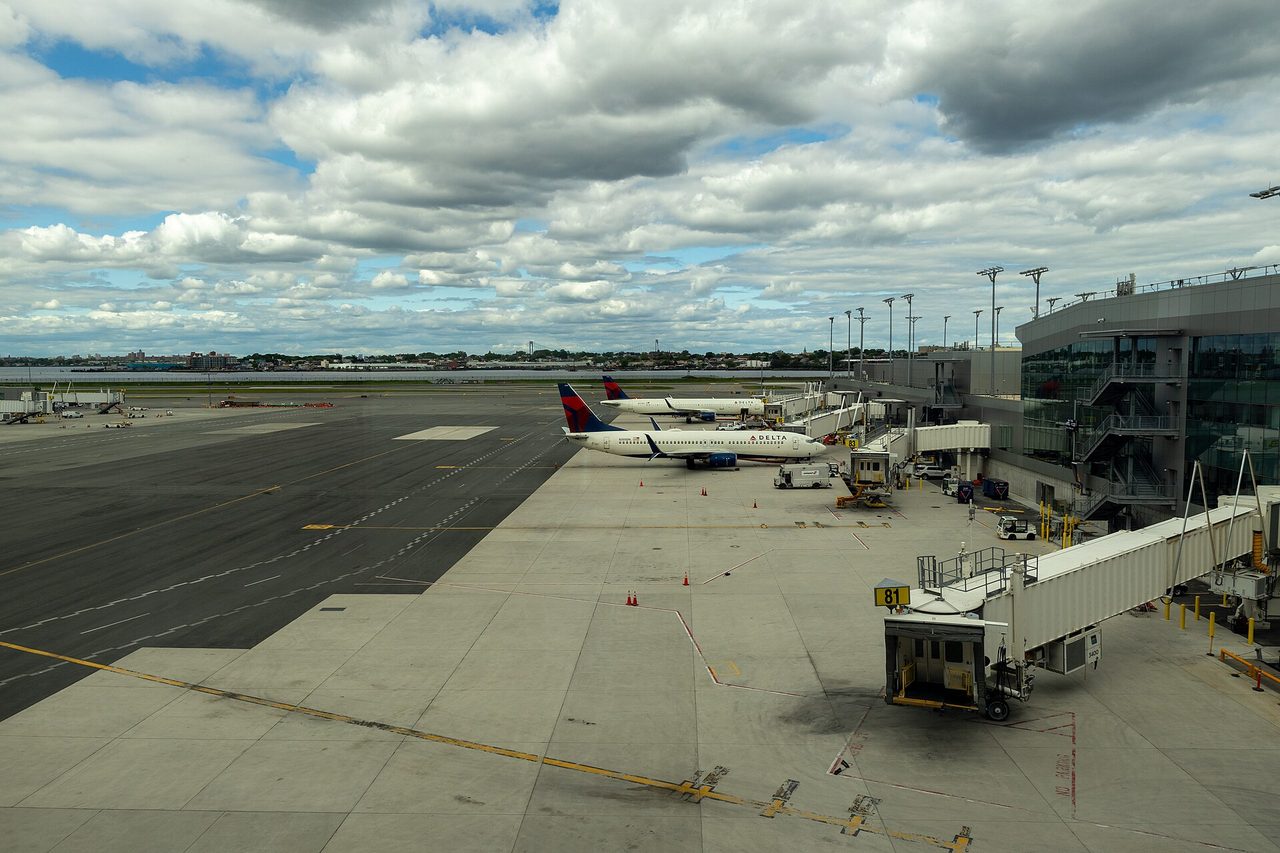
Photo: Nielsoncaetanosalmeron / CC BY 4.0 · via Wikimedia Commons
FAA Probes LaGuardia Close Call After Business Jet's Unpermitted Takeoff
A suspected runway jump forces a Delta go-around
Just before 4 p.m. on October 7, LaGuardia Airport saw a heart-stopping moment: a business jet took off without clearance from one runway while a Delta regional jet was on final approach to an intersecting runway. The Delta flight pulled up and went around just seconds before touchdown, averting a possible collision. The Federal Aviation Administration confirmed on October 13 that it is investigating the incident.
About 1,000 feet at the closest point
Flight-tracking data from Flightradar24 shows the two aircraft came within about 1,000 feet of each other at their closest point. The Delta jet was traveling at roughly 147 mph before it climbed away; the business jet was doing about 103 mph on its takeoff roll. According to WABC, air traffic control audio reveals a disagreement between the controller and the business jet's pilot over whether takeoff clearance was ever issued — the central fact the FAA probe must establish.
Delta: crew acted to ensure safe spacing
"The crew initiated a go-around to ensure safe spacing with a departing aircraft on a nearby runway," Delta said in a statement to ABC. A go-around is the textbook response when something looks wrong on final approach: full power, pitch up, and rejoin the traffic pattern rather than force a landing.
FAA opens investigation, announced October 13
The FAA confirmed the investigation on October 13. Runway incursion probes typically pull tower recordings, radar tracks, and pilot statements to determine whether the business jet truly departed without permission; if so, the pilots involved could face certificate action. Findings usually take weeks to months.
Intersecting runways: LaGuardia's old headache
LaGuardia's two runways cross each other, so departure and arrival paths inherently intersect — demanding precise sequencing from controllers and crisp readbacks from pilots. Hemmed in by water in Queens with no room to expand, the airport runs one of the densest schedules in the country, where a single misunderstood instruction can escalate fast.
Runway scares keep recurring across the US
This is no isolated case. American airports have seen a string of runway close calls in recent years, and the FAA has made runway safety a standing priority — pushing airports to upgrade ground surveillance and tighten pilot-controller communication discipline. The LaGuardia incident puts the "last mile" of ground operations back under the spotlight.
Passengers only lost a few minutes
For those on board, the go-around meant a sudden climb and a holding pattern — no more. The flight landed safely afterward with no injuries. Safety experts like to say a go-around is never a failure; it is the system working as designed. Better one extra lap than a landing full of questions.
The open question: was clearance ever given?
Everything now hinges on one question: did the business jet's pilots actually hear a takeoff clearance? The tower recordings will be the key evidence, and the FAA's conclusion will decide whether this was a simple communication breakdown or a rule violation. Neither operator has released the flight numbers or aircraft types involved.
Waiting on the FAA's preliminary findings
The FAA typically issues a preliminary factual briefing early in such investigations and may send safety alerts industry-wide if it spots a systemic risk. For travelers passing through New York, the reassuring part: LaGuardia kept operating normally, with the rest of the day's flights departing and arriving on schedule.
Sources
- ABC7/WABC: FAA investigating close call at LaGuardia Airport between Delta flight, business jet
- Yahoo: FAA investigating close call at LaGuardia Airport