Two Adults in Central North Carolina Die From West Nile Virus as a Warm Fall Stretches Mosquito Season Into Mid-October
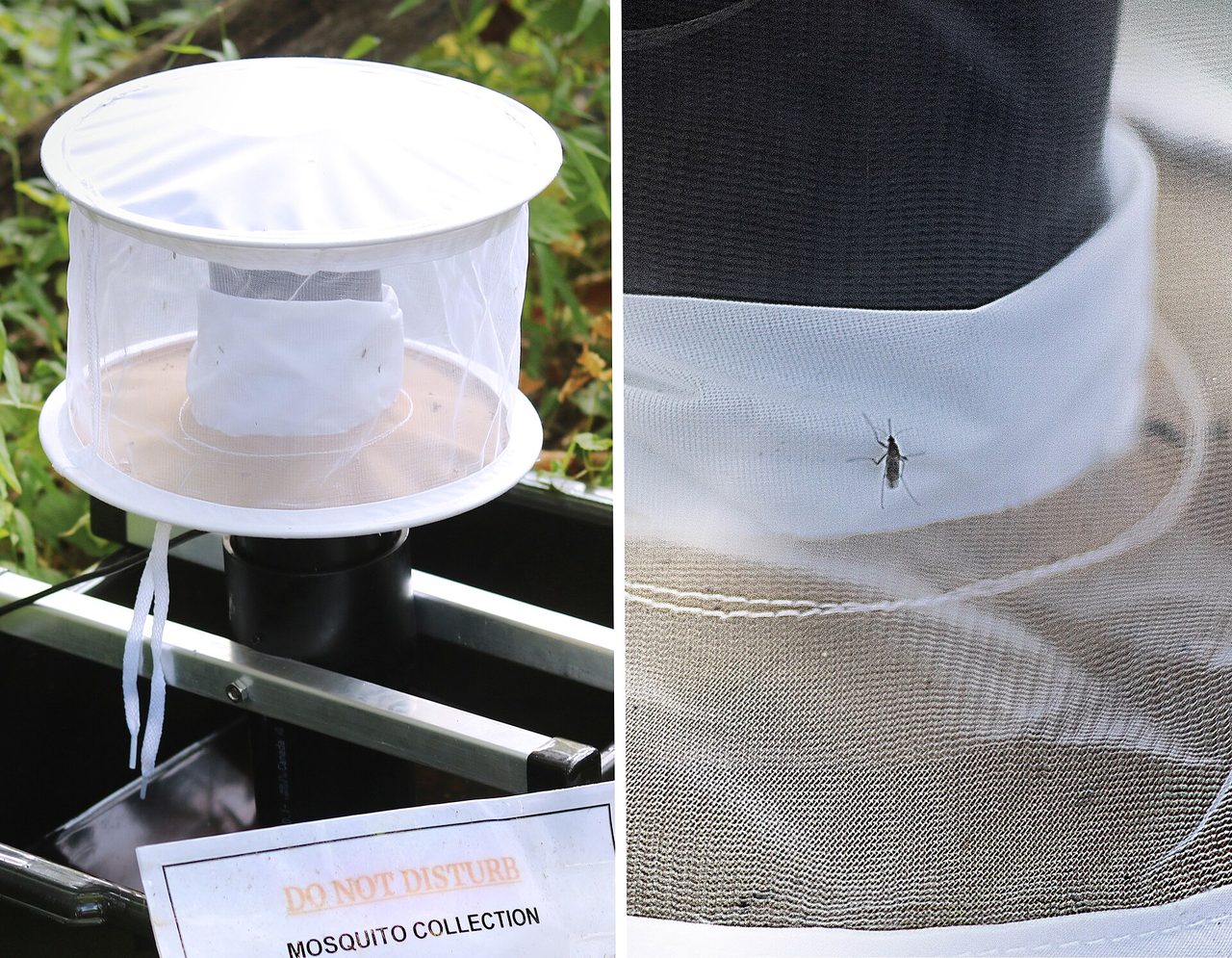
Photo: NIAID / CC BY 2.0 · via Wikimedia Commons
Two Adults in Central North Carolina Die From West Nile Virus as a Warm Fall Stretches Mosquito Season Into Mid-October
Two adults from central NC have died from West Nile virus
The North Carolina Department of Health and Human Services announced in an Oct. 9 social media post that two adults from central North Carolina had died after contracting West Nile virus — the state's first deaths this year linked to the mosquito-borne disease. The News & Observer first reported the deaths, followed by USA Today, ABC News, WSOC-TV, Contagion Live and others. NCDHHS said older adults and people with underlying health conditions face the greatest risk of severe illness.
The state did not say where the deaths occurred
NCDHHS gave only "central North Carolina" as the location. It did not identify the counties where the two patients lived, and it released no details on their ages, sex, dates of illness or underlying health conditions. Contagion Live reported that the department has not disclosed the counties involved, and several local outlets confirmed the same gap. For residents, that leaves no way to judge whether the risk sits in their own community.
Officials describe transmission as high across the region
Michael Doyle, the state public health entomologist with NCDHHS, told ABC affiliate WTVD that West Nile virus transmission is currently high in central North Carolina because the warm weather has lasted so long. "As long as the weather stays warm and what I mean by warm is over 50s during the day, then the mosquito that carries it will continue to bite," he said. Doyle added that the mosquito species that carries the virus commonly breeds in residential yards.
This year's first case was a Gaston County resident
According to an Aug. 5 NCDHHS news release, North Carolina's first human case of 2026 was a Gaston County resident. At the same time, a blood donor who tested positive for West Nile virus was identified in Mecklenburg County through routine screening. Later, in late September, a Forsyth County resident was confirmed to be infected.
Mosquito samples tested positive in July, earlier than usual
The earliest signals came in midsummer. The state laboratory detected West Nile virus in mosquito samples collected in Cabarrus, Forsyth and Mecklenburg counties in July, earlier in the season than usual. The state's own mosquito surveillance bulletins track the climb in human illness: by weeks 33–34 the state had reported five human cases of endemic mosquito-borne disease — West Nile and La Crosse viruses combined — plus 34 imported cases; by weeks 35–36 the endemic count had risen to nine.
11 human cases in North Carolina, 1,172 across 44 states
CDC data updated Oct. 6 show North Carolina with 11 reported human West Nile virus cases this year, two of which are now fatal. The same data set records 1,172 human cases nationwide across 44 states. The states with the most cases are California with 250, Arizona 94 and Texas 72.
2026 is on pace to be the second-highest year on record
WTVD reported that 2026 is on pace to become the second-highest year on record for West Nile virus cases, behind 2024, a figure ABC News also cited. An earlier CDC count put the national total at 504 cases across 41 states as of Sept. 8, including 363 neuroinvasive cases.
About eight in ten infections cause no symptoms
Most people who are infected never develop symptoms. Roughly one in five develops flu-like illness — fever, headache, body aches, joint pain, vomiting, diarrhea or rash — with symptoms usually starting two to six days after the bite, and later for people with weakened immune systems. Most mild cases recover fully, though fatigue and weakness can linger for weeks or months.
Roughly one in 150 patients develops severe disease
The CDC says about one in 150 infected people will develop severe illness leading to encephalitis, inflammation of the brain, or meningitis, inflammation of the membranes surrounding the brain and spinal cord — both of which can be fatal. Los Angeles County illustrates how severe reported cases tend to be: of the 100 cases recorded there this year, almost all involved illness affecting the brain or spinal cord and required hospital care.
There is no vaccine and no specific treatment
No licensed vaccine and no targeted antiviral drug exist for West Nile virus, and care is largely supportive. The virus spreads when a mosquito bites an infected bird and then bites a person. Because there is no final line of defense, health officials keep returning to bite prevention.
Repellent, long sleeves and weekly water dumping
Official guidance includes using an EPA-registered insect repellent with DEET at 20 to 30 percent, picaridin, IR3535 or oil of lemon eucalyptus; wearing light-colored, loose-fitting long sleeves, pants and socks; keeping window and door screens intact and tightly fitted; and emptying containers that hold standing water — plant saucers, buckets, toys — once a week. Mosquitoes that transmit West Nile virus are found statewide and are most active between dusk and dawn, so outdoor time during those hours should be limited.
Pyrethroid resistance is rising in Wake County
Another pressure on control efforts is insecticide resistance. North Carolina State University researchers reported this year that Asian tiger mosquito populations in Wake County have developed increasing resistance to pyrethroids, the synthetic class used most often in municipal spraying programs. In one account, resistance-associated mutations were found in 39 percent of mosquitoes sampled in 2023 and across 84 percent of residential blocks examined, up from none detected in 2016 and 2017.
The season is not over yet
Doyle's point cuts both ways: as long as daytime temperatures stay above 50 degrees, the mosquitoes that carry the virus will keep biting. With warm weather persisting into mid-October, this year's mosquito-borne disease season has been stretched noticeably longer.
Sources
- USA Today: 2 deaths reported in North Carolina
- The News & Observer: Two people die in North Carolina due to West Nile virus
- ABC News: 2 West Nile virus deaths reported in North Carolina: Officials
- ABC11/WTVD: 2 dead in North Carolina from West Nile virus as central NC seeing high transmission due to ongoing warm fall weather
- Contagion Live: Two Adults Die of West Nile Virus in Central North Carolina