China and North Korea Open a Bridge 12 Years in the Making
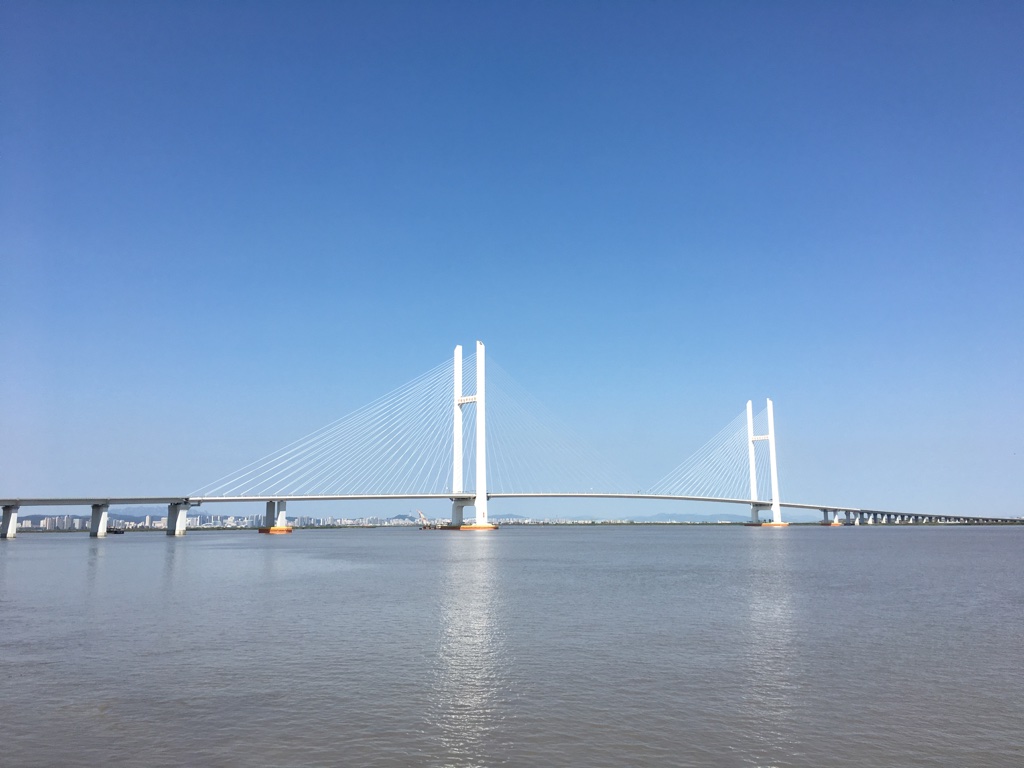
Photo: Ajew / CC BY-SA 4.0 · via Wikimedia Commons
China and North Korea Open a Bridge 12 Years in the Making
Thursday ends a 12-year wait
Xinhua announced on Wednesday that the New Yalu River Bridge will officially open to traffic on Thursday, October 15, with a joint opening ceremony held by both sides. Foreign Ministry spokesperson Mao Ning confirmed the date at her regular briefing in Beijing, describing the bridge as an important facility for connectivity that will promote trade and people-to-people exchanges. North Korean state media had not carried the announcement as of Wednesday. Earlier speculation had pointed to October 6, the 77th anniversary of diplomatic ties, before the date settled on the 15th.
Four lanes, 3,026 metres, paid for by Beijing
The cable-stayed bridge connects Dandong in China's Liaoning province with Sinuiju in North Pyongan, North Korea. It runs 3,026 metres with four lanes in both directions and sits about 15 kilometres downstream of the existing crossing, near the mouth of the Yalu River. Construction began in December 2010, the main span closed in 2013, and the Chinese side was completed in 2014 at a cost of roughly 2.2 billion yuan — the entire bill covered by China.
North Korea never finished its half
The 12-year gap was never about concrete on the Chinese bank. Pyongyang left approach roads, customs posts, immigration halls and warehouses unfinished as nuclear tests hardened into UN sanctions, with a brief resumption of work in 2018–2019 followed by the COVID-19 border closure. Only after the border began reopening in 2023 did the remaining work move again. Analysis by 38 North found some 16 trucks in the North Korean customs yard in a Sept. 28 satellite image, and one Seoul-based assessment said North Korean workers accomplished in about four months what had sat stalled for 12 years.
One lane carries 70% of official trade
The new bridge is meant to relieve the ageing Sino-Korean Friendship Bridge, which mixes road and rail, allows vehicles to move only one way at a time and cannot take trucks over 20 tonnes, yet handles more than 70% of official trade on the Dandong–Sinuiju route. The stakes are lopsided: about 98% of North Korea's external trade last year was with China, and Chinese exports to the North rose 25% to $2.3 billion — a six-year high that still sits far below pre-2017 levels.
Sanctions have not moved
Beijing frames the opening purely as connectivity and a boost to the welfare of the two peoples. Analysts caution that the UN Security Council resolutions remain in force, so the bridge initially serves legal trade, logistics and cross-border movement rather than signalling sanctions relief. Gyubeom Kim of Seoul's Institute for National Security Strategy expects Chinese exports not to surge soon, since Beijing will weigh Pyongyang's interests, while North Korean shipments of processed goods, food, cosmetics and alcohol to China could grow.
Local gains, regional signal
Dandong's logistics firms, border traders and merchants on both banks gain first: large trucks barred from the old bridge finally get a route for auto parts, building materials and factory equipment. Timing matters too. About a month ago, North Korea and Russia opened their first road bridge across the Tumen River — a two-lane, one-kilometre span costing 9 billion rubles ($104 million) and rated for up to 300 vehicles a day. Chinese President Xi Jinping visited Pyongyang in June, his first trip since 2019, and the Dandong–Pyongyang passenger train resumed on March 12 after six years, with at least 1,500 riders a week.
What to watch after the ceremony
The ceremony is the easy part. Whether the bridge changes anything depends on customs throughput, roads and logistics on the North Korean side, and how strictly sanctions are enforced. A second signal is Pyongyang's own messaging: should North Korean media stay quiet, the opening will say more about Beijing's priorities than about a shared plan.
Sources
- Xinhua: 中朝新鸭绿江大桥将开通
- Reuters: China-North Korea bridge to open on October 15
- Associated Press: A new bridge linking China and North Korea will open more than a decade late
- North Korea and China open Yalu River bridge after 12-year delay
- 搁置十年的新鸭绿江大桥即将投入使用