Warsh Won't Tip His Hand on October: "I Don't Prejudge Meetings"
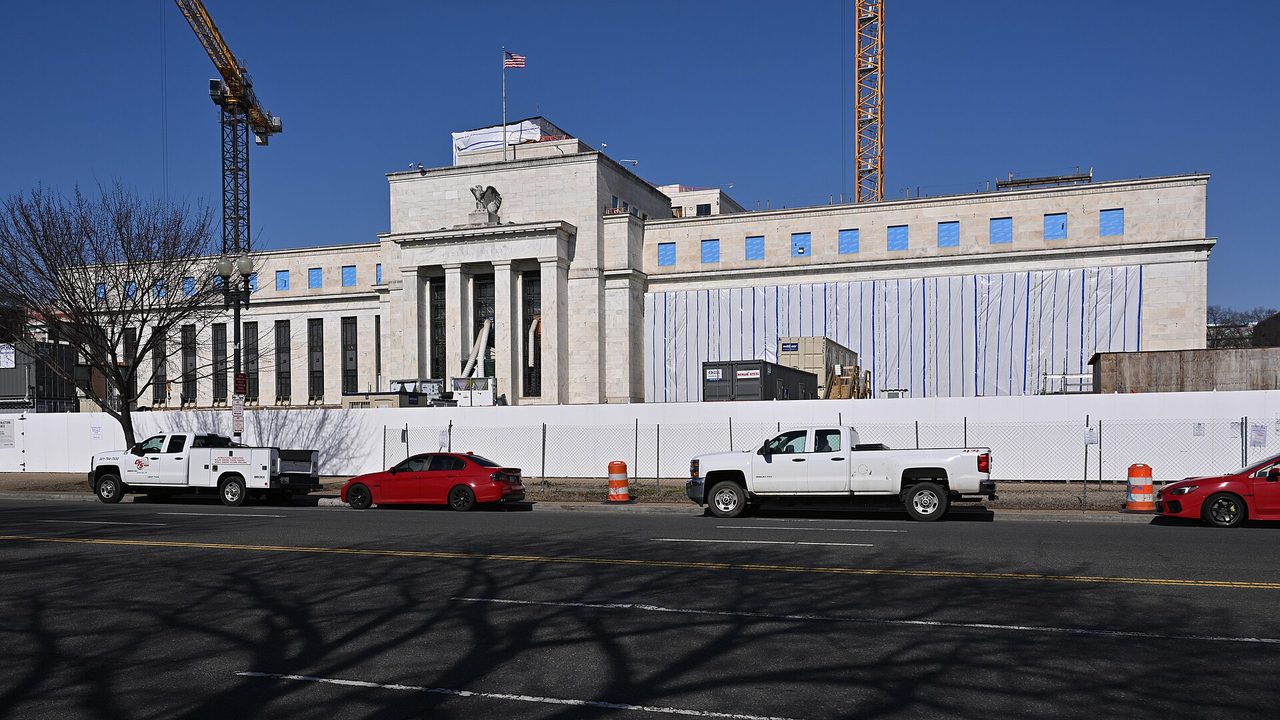
Photo: G. Edward Johnson / CC BY 4.0 · via Wikimedia Commons
Warsh Won't Tip His Hand on October: "I Don't Prejudge Meetings"
A Bangkok fireside chat with no preview for October
Federal Reserve Chair Kevin Warsh used a Friday fireside chat with IMF Managing Director Kristalina Georgieva, held during the IMF-World Bank Annual Meetings in Bangkok on October 16, to decline any steer on the October 27-28 FOMC meeting. "I don't prejudge meetings. I don't believe in saying now what I might do at the meetings we have in the balance of the year," he said, according to Reuters. Gate News reported he called it "inappropriate to spell out in advance" what the Fed will do at its remaining meetings this year.
The Fed says it has left the guidance business
Dow Jones Newswires noted that Warsh neither endorsed nor pushed back on colleagues' recent signals that officials are in no rush to hike this month, saying the central bank was no longer in the business of previewing its decisions. Thailand's Kaohoon International, which covered the panel, put him on his 148th day as chair and reported his rejection of heavy reliance on backward-looking data and long-range forecasting models in favor of "looking out the window" at real-time output, employment and inflation readings, meeting by meeting.
Two inflation prints blow past forecasts
September CPI, released October 14, rose 3.7% year over year, up from 3.4% in August and above the 3.6% consensus, with a 0.6% monthly gain; core CPI came in at 0.3% on the month and 2.6% on the year. Gasoline jumped 9.1% in the month and 34.2% over 12 months, accounting for more than half of the monthly increase, while energy rose 5.2% on the month and 20.4% on the year, the fastest annual pace since May. September PPI, out a day later, was hotter still: 6.3% year over year against 5.4% expected and 5.4% in August, the largest 12-month rise since December 2022; 1.3% on the month against roughly 0.5% expected, the biggest monthly jump since March 2022. Core PPI ran 0.7% on the month and 5.0% on the year versus forecasts of 0.3% and 4.4%. The Iran war and disruption around the Strait of Hormuz kept crude above $100 a barrel for most of September.
Hike odds went from one-in-five to nearly one-in-two, then back
CNBC and StockwireX reported CME FedWatch odds of an October hike leaping from 22.1% to about 43.7% in a single day after CPI, touching 53.7% intraday; Reuters put the move at roughly 45% to 52%. After PPI, pricing faded, with LSEG showing about a 29% probability of an October increase and other reports putting it below 30%. For context, CME readings on October 8 had a hold at 81.7% for October and a December hike at 66%, and as recently as October 9 markets priced close to an 80% chance of standing pat. Polymarket, read at 11:09 p.m. ET on October 15, showed 70.5% for no change in October and 78.5% for a quarter-point December hike.
Colleagues had already shown their cards
In early October, Vice Chair Philip Jefferson and New York Fed President John Williams spoke in succession and markets dropped their October hike bets. Evercore ISI said Jefferson "confirmed the message" from Williams, while SGH Macro's Tim Duy argued Williams "needed to be unusually clear because market pricing for rate hikes was running away from the Fed." Governor Christopher Waller favored a pause in October followed by a hike in December, warning that faster inflation could lift households' and firms' expectations, and Cleveland Fed President Beth Hammack said persistent price pressure "may require a more restrictive policy." Warsh stayed silent on all of it.
Inflation "too high and for too long," and the IMF agrees
The September 16 FOMC voted 12-0 to raise the target range by a quarter point to 3.75%-4.00%, the first increase since July 2023. Minutes released October 7 showed "most" participants judged another increase likely appropriate by year end; 16 of the 18 officials who submitted projections penciled in at least one more hike in 2026, and the median dot implied exactly one more move. At his September news conference Warsh said inflation "is too high and has been for too long," framing the hike as supporting a "timelier return" to 2%. IMF Managing Director Kristalina Georgieva had publicly praised his focus on price stability.
What it costs borrowers, valuations and a campaign
Floating-rate borrowers face the sharpest edge: a hold in October leaves payments unchanged for now, but a quarter-point December hike to 4.00%-4.25% would immediately raise credit card, auto and floating-rate loan costs. Bond yields whipsawed around the two inflation reports, with richly valued tech, REITs and homebuilders the most sensitive. Goldman Sachs argued that thinner guidance shifts the burden onto data, making short-dated Treasuries, the dollar and rate-sensitive equities more volatile. Politically, September CPI was the last inflation report before the November 3 midterms, with gasoline up 34.2% on the year.
October 28 is the first call; December is the real one
The rate decision lands October 28 at 2 p.m. Eastern, after which the Fed enters its communications blackout. The calendar then runs: November 3 midterms, the next jobs report on November 6, and the December 8-9 meeting. Warsh declined to frame the remaining meetings, calling them live. The market's base case remains a hold in October and a quarter-point hike in December — almost exactly the Fed's September dot plot. September payrolls added only about 29,000 jobs, the one variable that could rewrite that path.
Sources
- Reuters: Fed's Warsh gives no hint on October policy decision
- Bloomberg: Inflation Jolt Raises Stakes for Warsh's Final Word in Bangkok
- CNBC: Fed's Warsh says AI path will be very bumpy
- EMEA Morning Briefing: Fed's Warsh Avoids Signal on October Rate Move
- NBC News: Will the Fed raise interest rates this month?