Apple's First Touchscreen MacBook Pro Reportedly Goes on Sale November 6
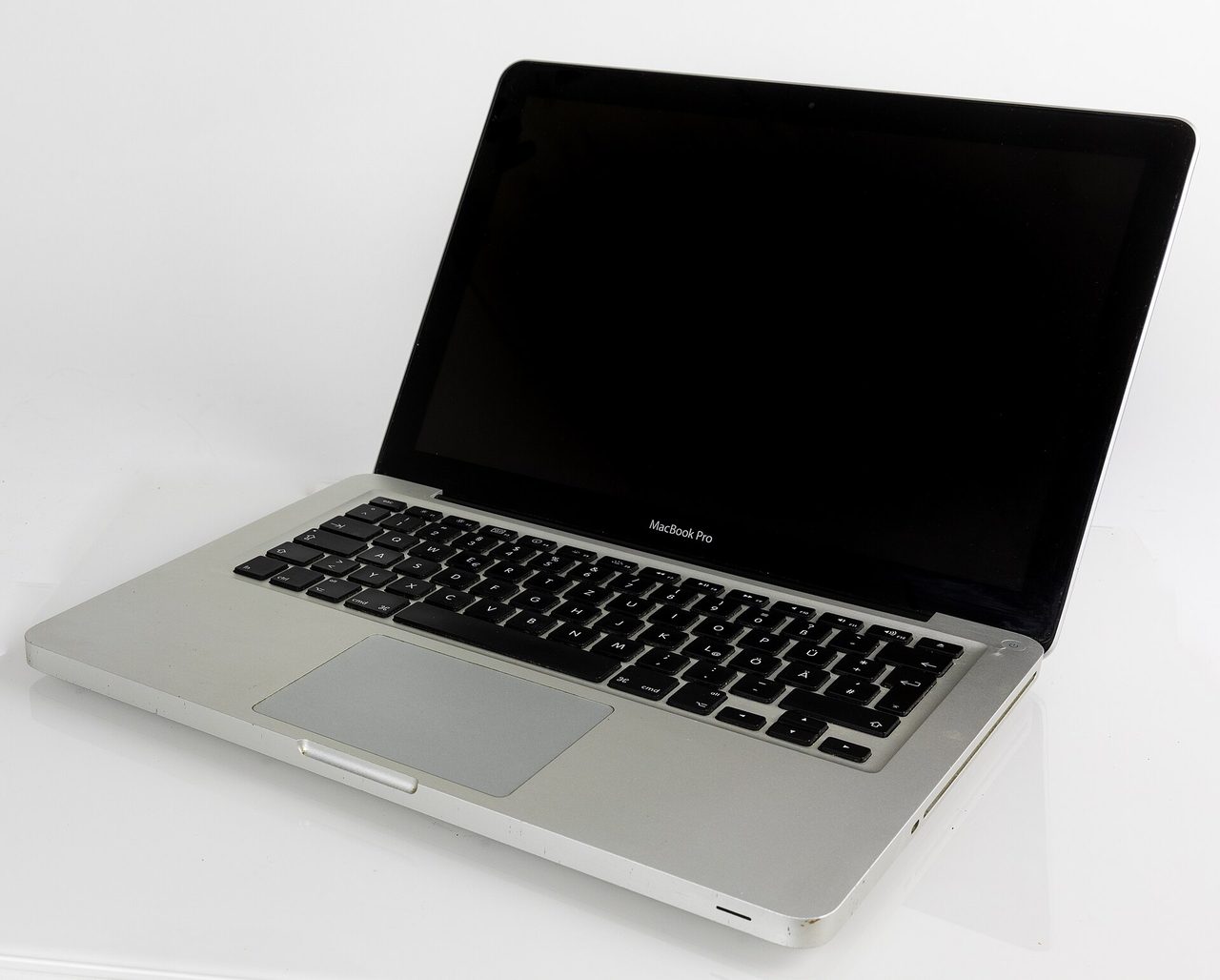
Photo: Raimond Spekking / CC BY-SA 4.0 · via Wikimedia Commons
Apple's First Touchscreen MacBook Pro Reportedly Goes on Sale November 6
Gurman points to a November 6 on-sale date
Apple plans to introduce its first OLED touchscreen MacBook Pro models on October 27 or 28, with the machines potentially going on sale on Friday, November 6, Bloomberg's Mark Gurman said on his latest Power On podcast. His evidence is retail-side: Apple Stores have a "big floor reset" scheduled for the evening of Thursday, November 5, running into Friday, November 6. Gurman believes that overhaul is preparation for the new hardware. The same wave is expected to include the OLED iPad mini, an M6 iMac and a new entry-level MacBook Pro. Apple has not confirmed any date, name or price.
The launch event slipped to October 28
Gurman posted on X that Apple has started inviting selected media to an all-day product launch experience in Los Angeles on Wednesday, October 28, focused on the touchscreen MacBooks, the new iPad mini and M6-powered Macs. That is a day later than the October 27 date he first reported. Earlier reporting described a two-day showcase spanning October 27 and 28, aimed at content creators.
No livestream, just hands-on time
Unlike a traditional Apple keynote, the Los Angeles gathering will not be streamed. Invited media and creators are expected to get hands-on time with the machines. Outlets including The Apple Post read that as a strategy shift: touch is a feature you have to feel with your fingers, and spec sheets do not convey it.
Touch comes via OLED and a Dynamic Island
According to reporting assembled by MacRumors, 9to5Mac and others, the redesigned machines come in 14-inch and 16-inch sizes and move from mini-LED to OLED, which brings deeper blacks and stronger contrast while helping Apple cut weight. The panel itself supports direct touch input. The long-standing screen notch is expected to be replaced by a Dynamic Island-style cutout of the kind iPhones have used since the iPhone 14 Pro, and like the iPhone version it should expand contextually to show background activity and notifications. The body is said to be lighter; Gurman walked back earlier "thinner" claims and now frames the change as lighter, not thinner.
Chips stay at M5 Pro and M5 Max
The high-end touchscreen models are expected to keep the existing M5 Pro and M5 Max rather than adopt brand-new silicon. Multiple reports say Apple is skipping M6 Pro and M6 Max, with faster high-end chips not arriving until the M7 generation. The M6 iMac and the entry-level 14-inch MacBook Pro expected at the same event are chip refreshes with largely unchanged designs. In other words, the touchscreen tier is being positioned above the conventional lineup.
The name could be MacBook Ultra
Apple has not announced a name. The label that keeps surfacing in the rumor trail is "MacBook Ultra," which would be a new naming tier for the Mac. Whether the final product is a MacBook Pro or a MacBook Ultra will only be settled by an official announcement.
macOS code already references touch gestures
The third developer beta of macOS Golden Gate 27.2 contains code pointing to touch-specific gestures: a recognizer called "touch sentinel" in Safari, PXGTouchDwellGestureRecognizer in Photos, ICTouchPressGestureRecognizer in Notes, and a dragTouch feature in Quick Look. The references were first spotted by MacRumors contributor Aaron Perris. Gurman has also said Apple is testing the new MacBook Pro internally with macOS 27.2. One caveat: the same code could be aimed at Sidecar, the feature that lets an iPad act as a second Mac display, so it is not proof of a touchscreen laptop.
Pricing is unannounced and could climb about 20%
Apple has released no price. For reference, the current MacBook Pro with M5 Pro starts at $2,499 for the 14-inch model and $2,999 for the 16-inch model. Tom's Guide estimates the OLED touchscreen could add as much as roughly 20 percent; DigitBin floats a guess of around $4,000, and fully loaded configurations could run higher. Both are estimates, not leaks. The backdrop is a memory crunch driven by AI data centers: Apple already raised prices on June 25, taking the MacBook Pro from $1,699 to $1,999, with then-CEO Tim Cook calling the increases unavoidable.
The biggest Mac redesign in two decades
Putting touch into a laptop reverses a position Apple held for years. Steve Jobs argued against touchscreen laptops in 2010, and software chief Craig Federighi said in 2018 that he was "not into touchscreens" on Macs. The launch is being slotted into a roughly four-week product run: the iPhone Duo reaches stores on October 23, the HomePod mini 2 arrives October 30, and the Mac and iPad wave is expected November 6.
What to watch next
Three things matter: Apple's own announcement, since every date so far is rumor; how macOS touch actually feels once developers have hardware; and final pricing, which in a memory shortage may matter more to buyers than the touchscreen itself.
Sources
- MacRumors: 触屏MacBook Pro传11月6日开卖
- 9to5Mac: 触屏MacBook Pro及更多新品将在10月28日苹果活动亮相
- The Apple Post: 苹果触屏MacBook Pro传11月6日开卖
- Gagadget: 苹果触屏Mac活动挪到10月28日
- Mashable: 最新MacBook Pro与Ultra传闻:苹果OLED触屏Mac已知信息