IMF to Wealthy Members: Fund the Poor Before the Inflation and War Bills Bite
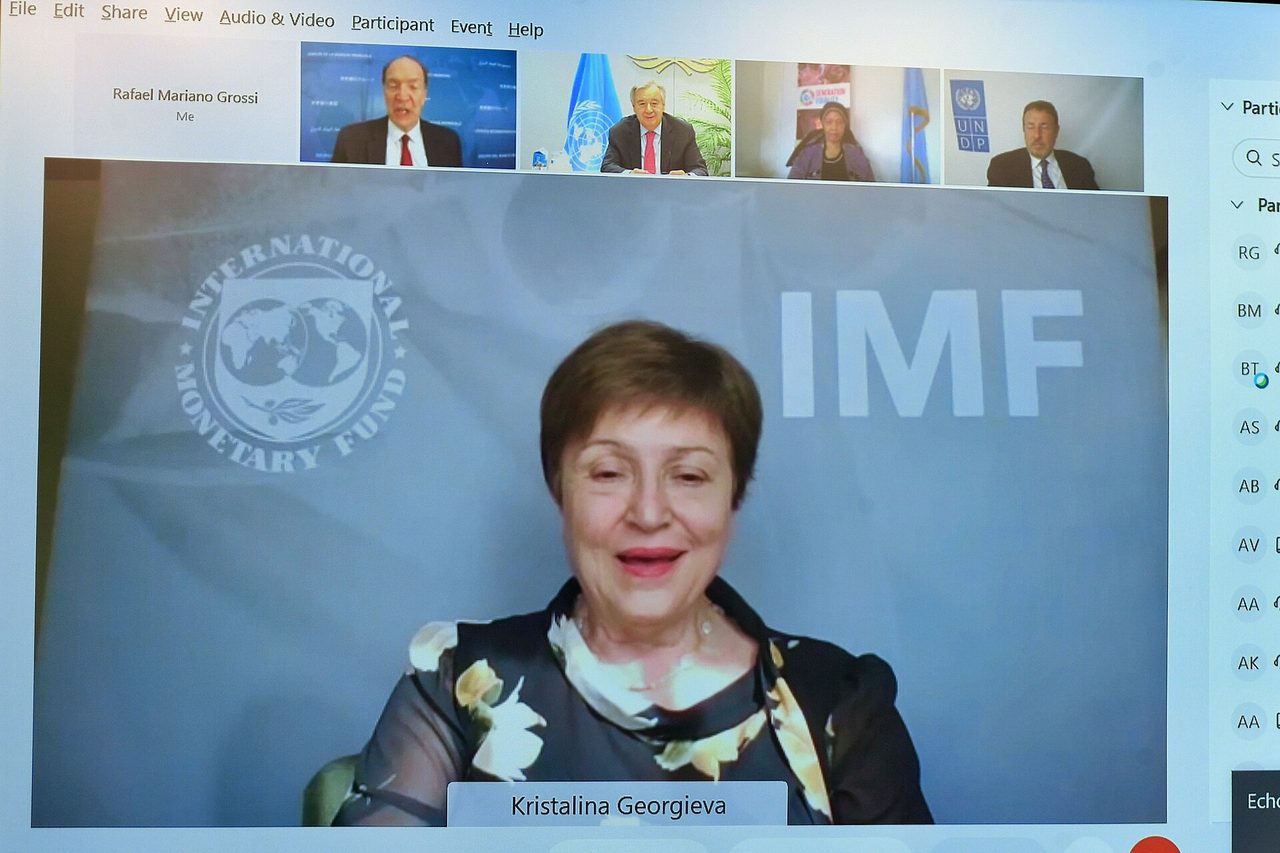
Photo: IAEA Imagebank / CC BY 2.0 · via Wikimedia Commons
IMF to Wealthy Members: Fund the Poor Before the Inflation and War Bills Bite
Bangkok meetings close on a split mood
The IMF-World Bank Annual Meetings ended in Bangkok on Oct 17 after a week of talks (Oct 12-18) that brought more than 15,000 delegates from 191 member countries to Thailand, the first time the city has hosted the gathering in 35 years. Managing Director Kristalina Georgieva told a closing briefing the discussions had been marked by both "optimism and worry."
Inflation is a tax on the poor, she says
Georgieva framed the problem bluntly: "People everywhere, but especially in poorer countries, don't like inflation. Inflation is like a tax on the poor." Poorer households spend a larger share of their budgets on energy and food, so price spikes hit them hardest. The line was picked up by Al Jazeera, the Bangkok Post and other outlets covering the close of the meetings.
Debt now eats up to 14 percent of revenue
Higher global interest rates mean low-income countries now spend 8 to 14 percent of government revenue on debt repayments, Georgieva said. Some reports put average debt-service costs for developing countries at 14 percent of revenue, up from 6 percent a decade ago. Rising bond yields in advanced economies are adding to the squeeze on emerging and low-income markets.
War keeps driving the energy and food bill
The immediate driver is spillover from the war in the Middle East, which the IMF describes as a negative energy supply shock, with shipping risks and tight refining and gas supply pushing costs downstream. The Fund's World Economic Outlook, released Oct 13, raised its global inflation forecast to 4.7 percent for 2026 from 4.1 percent a year earlier.
Net oil importers with no AI stake suffer most
The Outlook singled out low-income developing countries that import oil and are not plugged into the artificial intelligence investment boom as the most exposed. Georgieva said the pain was unavoidable: "Unfortunately there is no other choice" but to tighten spending while protecting the most vulnerable. Allison Holland, deputy director of the IMF's African Department, has said around 14 percent of low-income countries are in debt distress and another 33 percent are at high risk, with about 23 percent of emerging markets facing high sovereign stress.
The AI boom is bypassing most countries
The other side of the ledger is a positive demand shock. The IMF estimates AI hardware and related technology now account for more than a tenth of world goods trade, and that AI investment as a share of GDP may exceed what was once spent on railways, power grids and telecoms. But the gains are concentrated: IMF chief economist Silvana Tenreyro noted that 32 countries now generate 95 percent of global growth, down from 54 countries in April. Georgieva warned that relying on a single growth engine is "like standing on one leg."
Growth 3.1 percent, inflation 4.7 percent
The IMF nudged its 2026 global growth forecast up 0.1 percentage point to 3.1 percent, below 3.5 percent in 2025, with a rebound to 3.4 percent expected in 2027. The United States is seen growing 2.3 percent in both 2026 and 2027, the eurozone 1.1 percent, China 4.5 percent and India 7 percent; emerging and developing economies grow 3.7 percent this year, down from 4.5 percent.
A third of low-income states sit near debt trouble
The IMF and World Bank approved in September the first overhaul since 2017 of the framework used to judge low-income countries' debt, adding domestic debt, climate and long-term development needs to the analysis. The revised framework is expected to become operational in the second half of 2027.
Target the cash, skip blanket subsidies
The IMF wants assistance to be temporary and delivered through targeted income support that can be scaled up fast through existing social protection systems, rather than broad subsidies or price freezes. For countries whose budgets are being consumed by interest payments, protecting health, education and food spending matters more than holding down prices for everyone.
A tripled lending window still needs funding
On financing, the IMF has restructured its Poverty Reduction and Growth Trust to triple lending to low-income countries, but Georgieva pressed member states to honour their pledges. She also called for an urgent replenishment of the Catastrophe Containment and Relief Trust, which grants debt-service relief to the poorest members and has been drawn on heavily in recent years.
Research shows the lasting cost of price shocks
IMF research published Oct 6 used a model that reflects poorer households' spending patterns and found that 23 million more people fell below the extreme poverty line between 2021 and 2024 than previously calculated, a gap of 0.8 percentage point against standard inflation measures. Near- and medium-term inflation expectations rise sharply during cost-of-living crises and do not fall back quickly.
Next: pledges, Iraq and Lebanon
Attention now turns to delivery: whether members fill the PRGT and CCRT funding gaps, whether developing countries can cut spending without gutting social budgets, and whether debt restructurings move. Georgieva said the IMF intends to support Iraq "very firmly" with a loan programme and that talks with Lebanon have made significant progress, though more work remains. The Fund expects Iraq's economy to contract 16 percent in 2026 and grow 19 percent in 2027.
Sources
- IMF urges support for poorer nations facing high inflation, war spillovers
- IMF chief has optimism and worry after Bangkok annual meetings
- IMF chief sees optimism and worry at Bangkok talks
- IMF urges members to stock up funds for low-income, vulnerable states
- No choice: IMF says developing countries must cut spending despite war shock