Dementia's Doubling: New Research Moves the Timeline Up a Decade
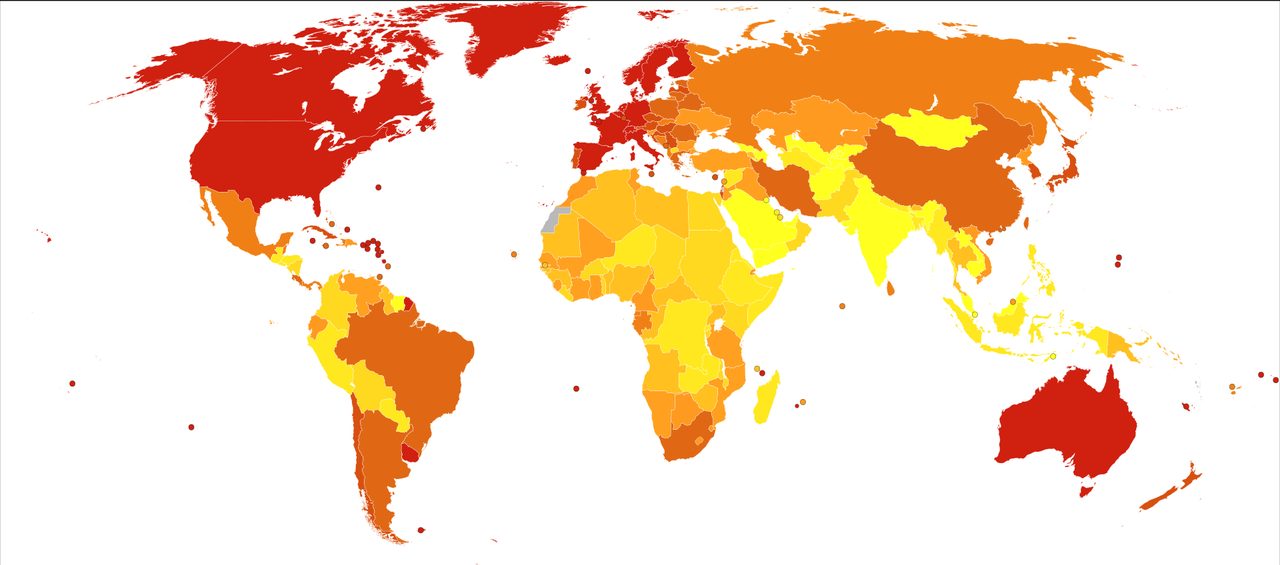
Photo: Chris55 / CC BY-SA 4.0 · via Wikimedia Commons
Dementia's Doubling: New Research Moves the Timeline Up a Decade
New cases to hit 24.7 million a year by 2050
A global analysis published in JAMA Neurology on Oct. 12, 2026 estimates that about 11.4 million people developed dementia in 2023, and projects that figure will reach 24.7 million new cases a year by 2050. As USA Today, HealthDay and Medical Xpress reported, that is an increase of 116 percent across 27 years — the sharpest picture yet of what an ageing world will look like in clinics and living rooms.
The doubling date moved up a decade
Earlier work had put the doubling of US cases around 2060. The New York Post noted that the new paper pulls that date forward by a full decade. U.S. News & World Report put it bluntly: cases will more than double as populations age, and Australia's ABC called the trajectory "scary."
What the 22-study analysis actually measured
The work was led by researchers at UNSW Sydney's Centre for Healthy Brain Ageing through the COSMIC consortium, and Medical Xpress describes it as one of the most comprehensive and comparable sets of global incidence estimates yet assembled. It pooled 22 population-based studies covering 38,418 participants across 18 countries and territories on six continents. Medical News Today reports 287,632 person-years of follow-up, 3,001 people who developed dementia, and an overall incidence of 9.7 new cases per 1,000 person-years after adjusting for age and sex.
Women carry a higher rate at every age
The gap is not just about age. Medical Daily and Time News both report an age-adjusted incidence of 10.6 per 1,000 for women against 8.6 for men. Lead author Ashleigh Vella said the findings call for greater vigilance in screening women and for treating women's brain health and sex-specific risk factors as a priority.
The burden lands hardest on poorer countries
The geographic gap is wider still: 13.6 new cases per 1,000 in low- and middle-income countries versus 8.3 in high-income countries, according to Medical Daily and Time News. HealthDay quoted Dr. Liron Sinvani, who was not involved in the study, saying the rate was 64 percent higher in low- and middle-income countries — the places with the fewest resources for diagnosis, treatment and caregiving.
Ageing, not contagion, drives the rise
Speaking to U.S. News & World Report and the New York Post, Sinvani explained the mechanics: about 1 in 9 people over 65 has dementia, rising to nearly 1 in 3 past 85. Bulgaria's bgnes noted the 2050 projection assumes incidence rates stay flat, which means population growth and ageing alone produce the surge.
Incidence tells a different story than prevalence
The New York Post and bdnews24 both stress that the study measures incidence — how many people develop dementia each year — rather than prevalence, the total living with the condition. For scale, bgnes and Medical News Today cite more than 57 million people currently living with dementia worldwide, with earlier research projecting that stock could approach 150 million by 2050.
Care falls on unpaid women and strained systems
The stock of cases lands on families. Medical Daily cites CDC projections that Americans living with Alzheimer's will roughly double from 6.9 million in 2020 to nearly 14 million by 2060, alongside a separate US study estimating annual new cases rising from about 514,000 in 2020 to roughly 1 million in 2060. ScienceDaily reports a 42 percent lifetime risk for middle-aged Americans — 35 percent for men, 48 percent for women. In the African region, MetroBusinessNews reports dementia costs an estimated US$15.6 billion a year, with unpaid carers — mostly women — spending an average of 12.9 hours a day on care, against a global average of 7.8 hours.
WHO has already started convening governments
Some official machinery is moving. HealthCare Middle East & Africa reported that WHO's African regional office convened a Regional Intercountry Workshop on Dementia in Nairobi from Sept. 14 to 16, 2026, with participants from Cabo Verde, Comoros, Gabon, The Gambia, Ghana, Kenya, Malawi, Tanzania, Zambia and Zimbabwe. Priorities included stigma, risk reduction, health worker capacity, integrating dementia into primary care, supporting carers and strengthening surveillance data.
What countries are being asked to do next
Sinvani's conclusion is that "this is not a future problem": health systems must prepare for a massive increase in diagnostic and care demand, and the poorest are least equipped. Time News reports researchers pointing to 14 modifiable risk factors — physical inactivity, obesity, smoking, air pollution, and managing diabetes and hypertension among them — that together account for nearly half of dementia cases. The prevention window sits in midlife. The care bill is already due.
Sources
- USA Today
- HealthDay
- Medical Xpress
- Medical News Today
- The Epoch Times