An American Pope Brings American-Style Governance to the Vatican — Even in a Health Crisis
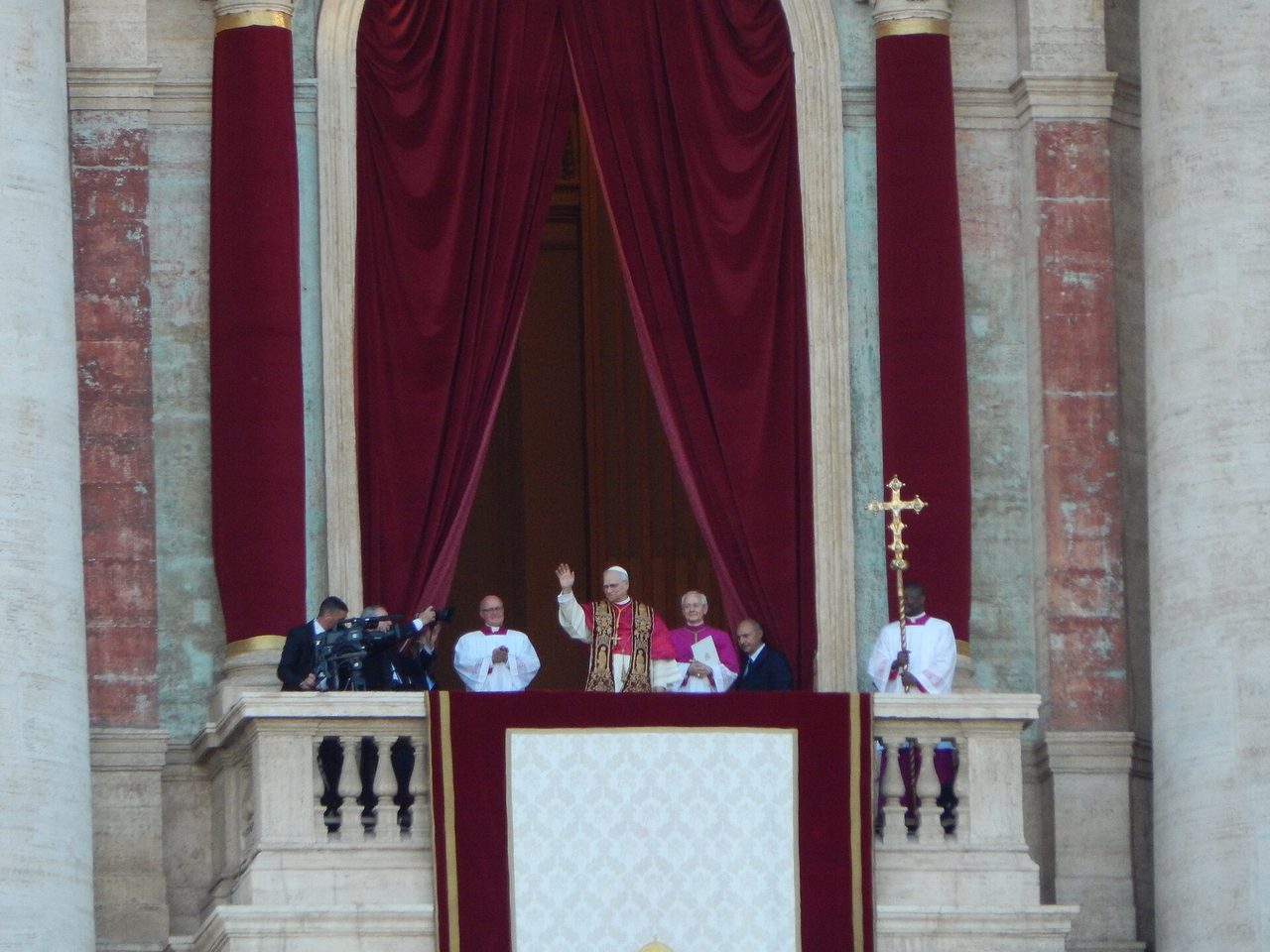
Photo: INFOWeather1 / CC BY-SA 4.0 · via Wikimedia Commons
The American Pope Rewrites the Vatican's Playbook
The first American pope runs the Vatican like a boardroom
Leo XIV — born Robert Francis Prevost in Chicago on Sept. 14, 1955 — was elected the 267th pope on May 8, 2025: the first American, the first Augustinian, and a citizen of Peru. In 17 months he has imported American corporate good governance — lean on experts, be transparent, evaluate — into a 2,000-year-old institution. His own health crisis made the shift visible.
He announced his own lung nodule on live TV
On Oct. 13 he had surgery at Rome's Gemelli hospital to remove the lower lobe of his right lung. A Vatican medical bulletin confirmed lung adenocarcinoma, the most common form of lung cancer. The operation lasted about 90 minutes and was "successful, on schedule and as planned," with no complications. Days earlier, at the end of his Sunday noon blessing, he told the world — on live television, almost as an aside — that doctors had found a small, localized nodule and that he would have it removed.
The doctors, not the Curia, deliver the updates
Unlike the past, the medical news comes from his physicians, not the Vatican. His personal doctor, Luigi Carbone, and Stefano Margaritora, head of thoracic surgery at Gemelli, reported on Oct. 16, his fourth day in hospital, that blood tests and a chest X-ray confirmed "steady improvement," that respiratory physiotherapy continued, and that recovery already lets him carry out normal daily activities entirely independently. The Vatican also released the first photos of Leo since surgery, showing him celebrating Mass alone in a makeshift chapel, distributing Communion to medical staff and Vatican gendarmes and delivering a homily. Spokesman Matteo Bruni handles the messaging. On Oct. 17, the Vatican announced he had been discharged and returned to the Vatican; he is expected to lead the Sunday Angelus blessing on Oct. 18.
The old habit of hiding papal illness is over
Church historian Alberto Melloni recalled St. John Paul II, 84, at Gemelli for a tracheotomy: the next morning his spokesman gave reporters a "remarkably rosy, seemingly implausible" update. "It was normal then that they told lies about the pope. Those were the rules of the game." Francis went the other way — refusing knee surgery, refusing hospital as pneumonia worsened, governing alone. Giovanni Maria Vian, former editor of the Vatican newspaper L'Osservatore Romano, called Leo's self-disclosure "truly a revolution. It was like he was reading a medical bulletin himself."
Textbook American corporate governance
Julie Rubio, a professor of Christian social ethics at Santa Clara University's Jesuit school of theology, said Leo's handling of his cancer is "in many ways textbook American-style corporate good governance, applied to the Catholic Church." Relying on experts, transparency and evaluation "are practices that are good for an institution," she said — and Leo, "the American math major pope," had already brought them into how he governs.
From Chicago's South Side to the Curia
Leo grew up in Chicago, studied mathematics, spent more than two decades in Peru as a missionary and bishop — bishop of Chiclayo from 2014 to 2023, a Peruvian citizen since 2015 — and was summoned to Rome in 2023 by Francis to run the office for bishops. Italy's Repubblica describes his measured tempo as the "Prevost method": learn the Curia's currents and traps before moving.
He fronted the AI encyclical himself
On May 15, 2026, the 135th anniversary of Rerum Novarum, he signed his first encyclical, Magnifica Humanitas, on safeguarding the human person in the age of artificial intelligence — roughly 40,000 words, released May 25. Instead of a handful of prelates at a press conference, Leo presided himself, flanked by three cardinals, two lay female theologians from Britain and Congo, and the co-founder of Anthropic. He called AI's consequences "even greater" than those of the Industrial Revolution.
Cardinals are now summoned to Rome every year
At the end of his first consistory, Leo asked the world's cardinals to return to Rome for three to four days every year, with a second session proposed for June 27–28, 2026. In June he convened them again to reassess the effectiveness of the Holy See's communications. From Oct. 7 to 14 he held a meeting marking ten years of Amoris laetitia, drawing about 190 participants, including 115 bishops' conference presidents, 11 married couples and some 30 experts.
An Asian dean and an Irish sister take key posts
On Oct. 9 the Vatican announced that Cardinal Luis Antonio Tagle of the Philippines was elected dean of the College of Cardinals — the first Asian to hold the post — succeeding 92-year-old Italian Cardinal Giovanni Battista Re, who had served since 2020. On Oct. 8, Leo named Irish Sister Mary Teresa Barron, 57, president of the Pontifical Mission Societies, the first woman to lead it; she takes office Jan. 4, 2027, in a church with more than 600,000 religious sisters.
His November trip to Latin America is still up in the air
Leo is due to visit Uruguay, Argentina and Peru from Nov. 6 to 17 — ten cities in 12 days, 14 flights and about 19,000 miles — with a homecoming to Peru, where he first arrived as an Augustinian missionary in 1985. The Vatican has not changed the schedule, but Peru's president has hinted it may need adjusting. His doctors say recovery from the surgery itself takes 15 to 20 days; whether the cancer has spread, and whether chemotherapy is needed, awaits test results. All audiences through Oct. 20 are canceled.
A quiet resistance inside a millennial machine
What is at stake is the world's roughly 1.4 billion Catholics, the Roman Curia, the College of Cardinals and national bishops' conferences — and, more deeply, a Vatican culture built on secrecy and personal rule. American transparency and the language of evaluation collide with that tradition. Leo is cautious, so the change is gradual. But the direction is clear.
Sources
- Associated Press
- NBC News
- Los Angeles Times
- Vatican News
- USA Today