Texas Early Voting Opens With a Record 19 Million on the Rolls — and a Trail of State Errors
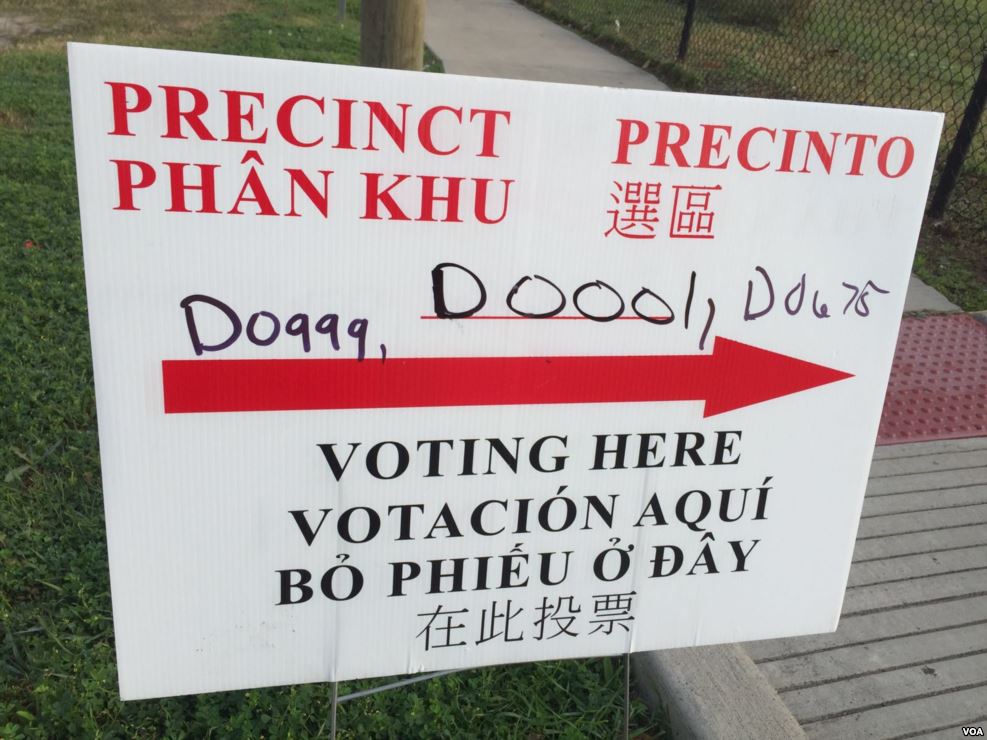
Photo: G. Tobias / VOA / public domain · via Wikimedia Commons
Texas Early Voting Opens With a Record 19 Million on the Rolls — and a Trail of State Errors
In-person early voting runs October 19 through October 30
Texans can begin casting early in-person ballots on Monday, October 19, and the window closes Friday, October 30. Election Day is November 3. Applications to vote by mail must reach county early-voting clerks by October 23 — a received-by deadline, not a postmark. Completed mail ballots must arrive by 7 p.m. on November 3. More than 40,000 Texans had already voted by mail before in-person voting began.
The state's headline number is 19,041,684 voters
Secretary of State Robert Howden announced the figure on October 16, calling it a state record and urging Texans to make a plan to vote. It is 553,518 more registrations than last November, a gain of roughly 3 percent, and 7.7 percent above the 2022 midterms. Fast-growing suburbs drove much of it: Kaufman County is up 27 percent since the last midterm, Waller 23 percent, and Ellis and Hays 21 percent each. Tarrant, a swing county, is down 32,503 voters, or 2.6 percent.
Officials say a year-long backlog is now cleared
A software update to the Department of Public Safety's online driver's-license portal in October 2025 dropped three data fields, so at least 500,000 registration records and address updates never reached counties; a lawsuit puts the figure near 600,000. Harris County received about 75,000 late records and Dallas about 68,000. Denton processed 42,000 and Travis 35,000, with Travis still holding 20,000 routine applications. Howden's office offered counties grants for overtime and temporary workers and says no county has pending applications left.
A second glitch delayed 15,000 more records
Records updated through texas.gov between September 1 and mid-October — about 15,000 of them — also failed to sync. The Texas Association of County Election Officials initially counted more than 5,200 affected applications across Bexar (3,000), Travis (1,100), Williamson (700) and Hays (400) counties. Harris received about 1,400 on October 15 and more than 2,400 in total by the following day. The county officials' group thanked the state for money while pointing the blame at its vendor.
Tarrant County keeps 92 fewer polling sites
Commissioners voted 3-2 to cut Election Day sites from 316 in 2022 to 224, and early-voting sites from 50 to 47. Fort Worth City Council member Deborah Peoples sued; on October 13 Judge Patrick Gallagher declined to reinstate the sites, with the county arguing voting machines could not be retested in time. The Dallas Morning News reported that one predominantly Black and Hispanic ZIP code in East Fort Worth lost all three of its polling places.
Citizenship screening also removed voters
Texas ran its voter list against the federal SAVE database and flagged 2,724 people as possible noncitizens. In Bexar County, 201 voters received verification letters; 20 were confirmed noncitizens, one proved citizenship, and 180 were dropped after failing to respond within 30 days. The Secretary of State's office has referred 117 suspected noncitizen voting cases to the attorney general. The Supreme Court allowed states to resume using SAVE in September.
Both marquee races sit inside the margin of error
Democrat James Talarico and Republican Ken Paxton are tied at 45-45 in a UMass Lowell/YouGov poll of 850 likely voters taken September 18-28, with a margin of error of 4.5 points. In the governor's race, a ReconMR survey of 617 likely voters from October 5-8 put Republican Greg Abbott ahead of Democrat Gina Hinojosa 48-47, inside its 4.4-point margin. A separate fight over the state's mid-decade congressional map also reached the Supreme Court.
Turnout is the number that matters next
Texas voted at 57 percent in 2024, against 64 percent nationally, and nearly one in four registered voters turned out for the March primary. Polling places must stay open at least nine hours on weekdays from October 19-23, at least 12 consecutive hours on Saturday, at least six on Sunday, and 12 hours each weekday in the final week. Voting-rights groups are asking a judge to order DPS and the Secretary of State to keep the registration pipeline working and to document compliance within a month. That lawsuit remains unresolved as ballots go out.
Sources
- Newsweek
- Texas Tribune
- The Center Square
- The Guardian
- Votebeat