Skip the giant models: World Bank tells developing countries to build 'small AI' that runs on a phone
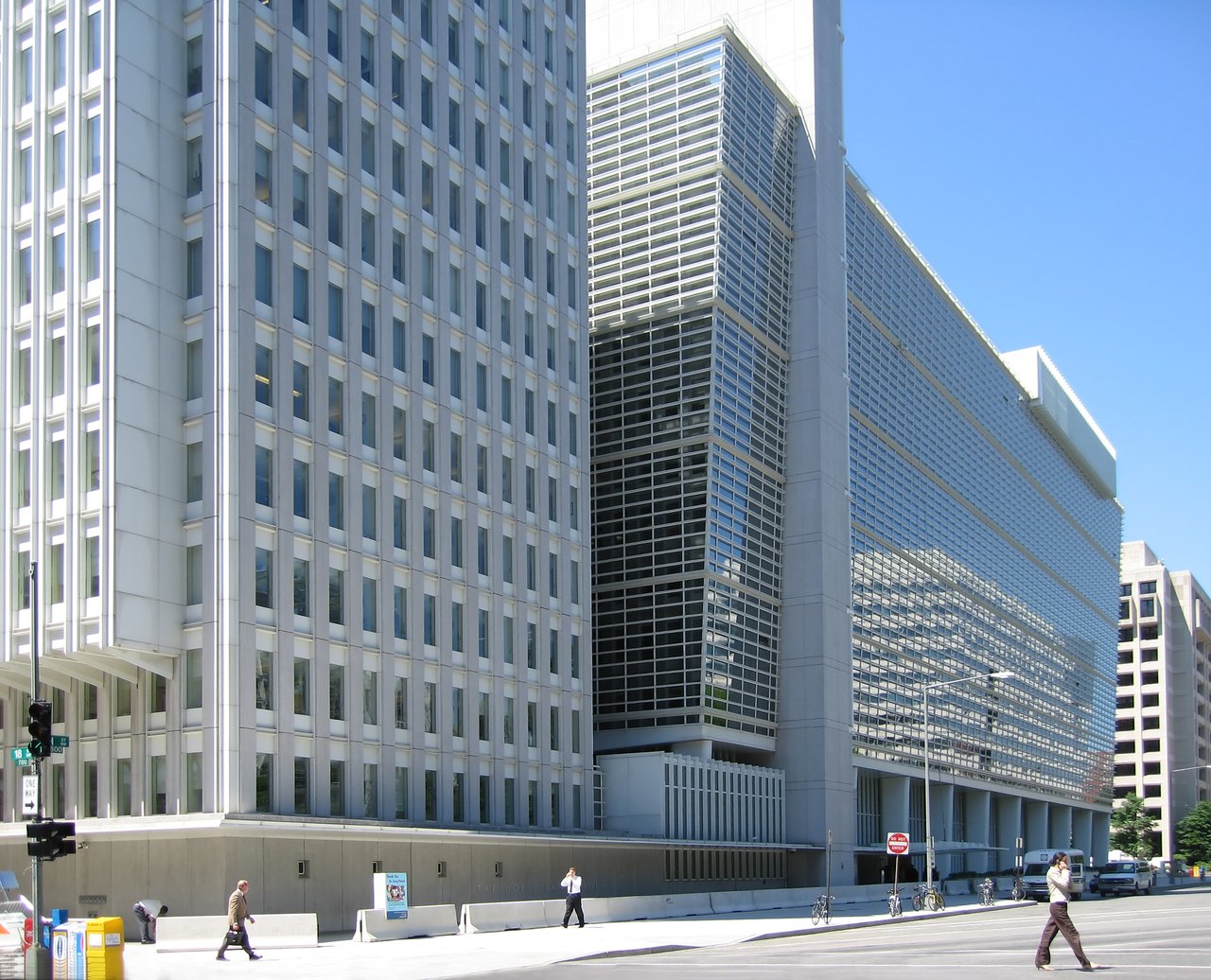
Photo: Shiny Things / Wikimedia Commons, CC BY 2.0 · via Wikimedia Commons
Skip the giant models: World Bank tells developing countries to build 'small AI' that runs on a phone
The bank puts narrow models at the centre
The World Bank is telling developing countries to put their effort into "small AI" rather than chasing the frontier: compact models trained on narrow datasets for a single job, instead of the power-hungry large language models coming out of Silicon Valley. The pitch came from Paschal Donohoe, the bank's chief knowledge officer, during the World Bank and IMF annual meetings, which ran in Bangkok from 12 to 18 October with AI's effect on jobs and growth as a central theme.
It works on a weak signal, in a local language
Donohoe defines small AI as AI that fits on your phone: it runs in a local setting with low connectivity, works in the language of the community and processes data locally. He drew the contrast with frontier systems that need vast computing power and energy — exactly the inputs many emerging economies lack.
'Centuries of progress' could arrive in decades
"We argue that economic development in the countries that we serve and partner with that could have taken centuries to make happen, the potential is there for that economic development now to happen within decades," Donohoe said. That claim is the heart of the sales pitch: small AI is presented as a way of compressing the development timeline.
A farmer photographs a leaf, and pays 25 rupees
Donohoe's example is AgriConnect, the bank's agriculture programme, where Indian farmers need soil analysis in their own language. "There's not going to be enough scientists and agricultural experts to do that for every small farm in India," he said. World Bank President Ajay Banga has described a related pilot in Uttar Pradesh, run with Google, in which illiterate women farmers speak into a 3G phone, point the camera at the back of a diseased leaf, and get back the name of the disease plus the right insecticide for 25 rupees from their cooperative. AgriConnect aims to reach 300 million smallholder and family farmers by 2030.
Private capital, not shrinking aid budgets
Donohoe said the World Bank mobilised $120bn of private capital over the past year through guarantees and other instruments, at a moment when donors including the United States and Britain are cutting aid. The bank's own figures differ slightly: at the annual meetings plenary on 16 October, Banga said private capital mobilisation reached $112bn in fiscal 2026, more than three times the $35bn of four years earlier, and that combined with the bank's own financing the total going into developing economies exceeded $200bn. The group issued more than $25bn in guarantees, beating its goal of $20bn a year by 2030 four years early. The money came from investors in 110 countries, led by the United States, Britain and India. The bank also concedes that mobilisation stayed flat in low-income and fragile economies.
Georgieva calls it a 'slow-moving tsunami'
IMF Managing Director Kristalina Georgieva brought the caution to the same panel, "Small AI: More and Better Jobs". She called AI "a slow-moving tsunami, but a tsunami nonetheless" for labour markets, and said the IMF estimates that about 40% of jobs worldwide could be augmented, downgraded or eliminated — roughly 60% in advanced economies and about 23% in low-income countries.
Low exposure in poor countries is not safety
Georgieva said the lower figure for low-income countries mostly reflects how little AI has reached them. She listed the preconditions for adoption: access to electricity, digital infrastructure, willingness to adopt, and governments able to protect people from bad actors. The World Bank's October Africa Economic Update, titled Building AI Readiness, spells out the gap: about 900 million Africans are still offline, and a continent with roughly 18% of the world's population holds only about 0.6% of global data-centre capacity, with just 5% of its data centres considered AI-ready.
Much of the gain would go to the already connected
Under an ambitious scenario with the foundations in place, the bank estimates AI could add as much as $1 trillion to Africa's GDP by 2035, create 35 million to 40 million digital jobs and generate close to $150bn a year in tax revenue. At today's level of readiness, the contribution to cumulative GDP over the next decade would be just 0.2% to 4%. The report warns that the benefits could accrue mainly to highly educated workers, formal firms and richer urban households. Banga named five sectors with the strongest job potential: infrastructure and construction, smallholder agriculture, primary healthcare, tourism, and manufacturing and value-added processing.
Aid is shrinking, and protesters are outside
All of this lands against a contracting aid budget. Assistance from OECD Development Assistance Committee donors fell 23% in real terms in 2025, the largest annual drop in the history of official development assistance, with the United States, Germany, Britain, Japan and France accounting for 96% of the fall. In Bangkok, several hundred people marched against the IMF and the World Bank on 15 and 16 October; the People's Network Against the World Bank and IMF complained of household debt, environmental damage and worsening climate disasters in a written statement. World Bank chief economist Michael Kremer argued in Bangkok that governments need open-access tools, systems that combine AI with human expertise, quality standards and sustainable financing.
The test now is delivery, not the slogan
Small AI is not a new idea; the hard part is shipping it. The 25-rupee example already works in one Indian state, but scaling from a pilot to hundreds of millions of farms depends on electricity prices, network coverage, local-language data and public procurement. The meetings wrap up this weekend, and over the next months the bank will have to turn "decades, not centuries" into specific projects and financing structures.
Sources
- The Guardian: World Bank says 'small AI' could transform developing countries
- The Next Web: World Bank backs 'small AI' on phones for poorer nations, Guardian reports
- International Business Times: World Bank Encourages Developing Nations To Embrace 'Small' AI To Accelerate Economic Growth
- The Hans India / IANS: AI can empower India's farmers, says World Bank chief
- Bangkok Post: 'Let us build': World Bank chief outlines jobs-led development agenda