Covered-Call ETFs Pay Retirees Every Month. The Tax Bill Shows Up in April.
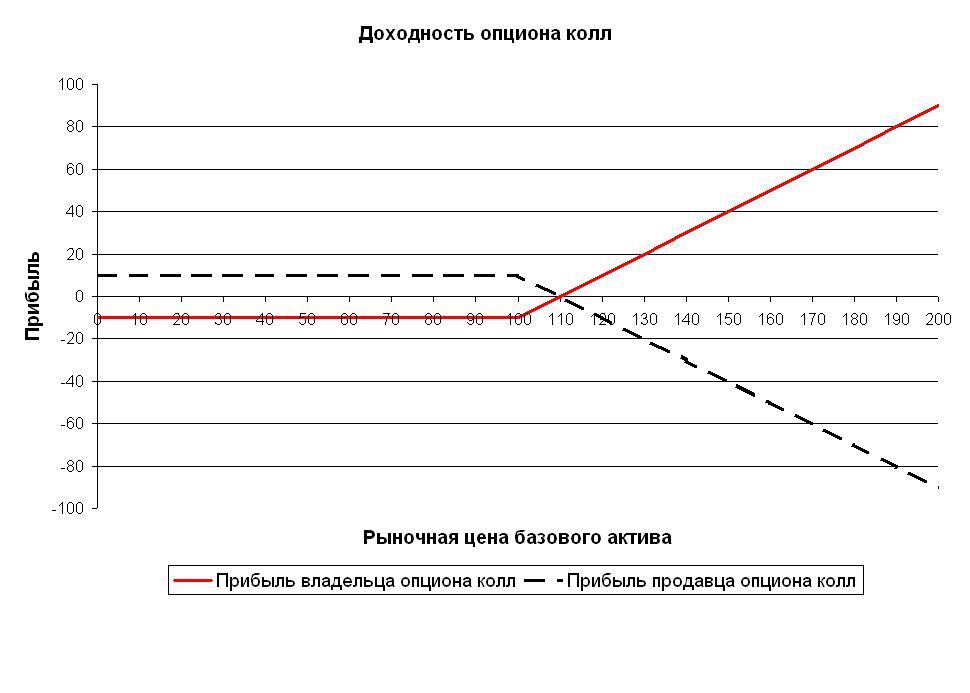
Photo: Sergei Kazantsev / CC BY-SA 3.0 · via Wikimedia Commons
Covered-Call ETFs Pay Retirees Every Month. The Tax Bill Shows Up in April.
Selling calls, paying out cash every month
Covered-call ETFs do something simple: they hold a basket of stocks — often the S&P 500 or the Nasdaq-100 — and sell call options against those holdings, collecting the premium buyers pay and passing it out as a monthly distribution. JEPI, the largest of them, puts roughly 20% of its portfolio in bank-issued equity-linked notes that write out-of-the-money S&P 500 calls, so the premium arrives as monthly cash. When markets are jumpy the premium is fatter; when they are calm, the check shrinks.
$7 billion to $214 billion in six years
The category has grown fast. ETF Trends puts derivative income fund assets at more than $214 billion, up from about $7 billion in 2020 — roughly a 30-fold increase. 24/7 Wall St., citing JPMorgan Asset Management, pegs derivative income at $175 billion as of May 2026, against $6 billion five years earlier. Funds in this group are marketed with headline yields of 7% to 15%, paid monthly.
Morningstar's tax-cost ratio: 3.11 for JEPI
ETFs are widely assumed to be tax-efficient, which is exactly how the bill gets missed. CNBC reports JEPI's three-year tax-cost ratio at 3.11 and JEPQ's at 4.30, against 0.48 for SPYI. The Morningstar measure shows how much of a fund's annualized return taxes consume: for investors in the top bracket, JEPI's after-tax return is reduced by roughly 3.11 percentage points a year. Fees add up too — 0.35% for JEPI and JEPQ, versus 0.03% for Vanguard's S&P 500 ETF.
Option premium is ordinary income, taxed up to 37%
The label on the money matters. Qualified dividends and long-term capital gains are taxed at 0%, 15% or 20%. Option premium and note interest are ordinary income, taxed at marginal rates of 10% to 37%, plus the 3.8% net investment income tax for high earners. Because JEPI's income arrives through bank notes, the IRS treats most of it like bond interest — so a payout that would cost 15% in a dividend fund can cost 22% to 37% here.
Sometimes the "dividend" is your own money
Return of capital is the second layer of confusion. In QQQI's fiscal year ended May 2025, roughly 94% to 99% of each monthly payout was classified as return of capital — untaxed now, but it lowers your cost basis and raises the gain when you sell. Estimates can also be revised: QYLD's monthly notices pointed to return of capital, then the year-end 1099-DIV reclassified the money as ordinary income, taxable at up to 37%.
The upside is capped, the downside is not
The monthly check is not free. Selling calls gives up the gains above the strike: JEPQ returned 19% over five years while the Nasdaq-100 returned 24%, and RYLD gained just 11%. Morningstar found the 20 largest single-stock covered-call ETFs took in more than $18 billion in net inflows since November 2022 but held only $5.8 billion in net assets as of September 2026, and estimated taxes can claim 50% or more of their pre-tax returns by the time investors sell.
Advisors say: buy it inside the IRA
"The after-tax net total return might fall below your expectations," said Matthew Smart, chief investment officer at WWM Investments in Chicago. Edwin Retter, a senior wealth advisor at Mission Wealth in Melbourne, Florida, said covered-call ETFs belong in tax-deferred accounts such as a traditional IRA: "I don't know how many investors give so much thought to that. They just find out at tax time." His alternative for taxable accounts: hold an S&P 500 or total-market ETF, collect the dividends, and make systematic withdrawals through small share sales after a year. CNBC also points to the 30-day SEC yield — 7.45% for JEPI, 11.56% for JEPQ.
Boomers are the buyers
The product is built for retirees: one ticker, one deposit, a stand-in for an annuity or a bond ladder. JEPI holds $44.7 billion in net assets, the largest in the category, and took in $357 million in the past month and $4.62 billion this year; JEPQ holds about $41 billion. Four monthly option-income ETFs showed trailing 12-month distribution rates of 10% to 14.83% as of Oct. 13. But the cash shrinks: JEPI paid $6.36 per share in 2022 and $4.22 in 2024, with the latest 12 payments totaling about $4.56 — a 1,000-share position fell from $6,362 to roughly $4,564 a year, down 28%.
Issuers are selling the tax wrapper now
The money is reshaping the industry. U.S. ETF inflows hit a record $1.54 trillion in 2026, with $51.6 billion of it going to U.S. derivative income ETFs and $11.7 billion to defined-outcome strategies year to date. In August, Goldman Sachs agreed to buy NEOS in a deal worth up to $2.25 billion; JPMorgan, BlackRock and Morgan Stanley now build tax-optimized versions that replicate only part of an index, with a commonly cited cap of 70% overlap. Newer products are bolder: Calamos markets an autocallable ETF paying 14% income as long as markets do not fall more than 40% in a month.
Sources
- CNBC
- Traders Union
- Morningstar
- 24/7 Wall St.
- ETF Trends