Rubio's First Central Asia Trip Comes With Questions About What He Skips
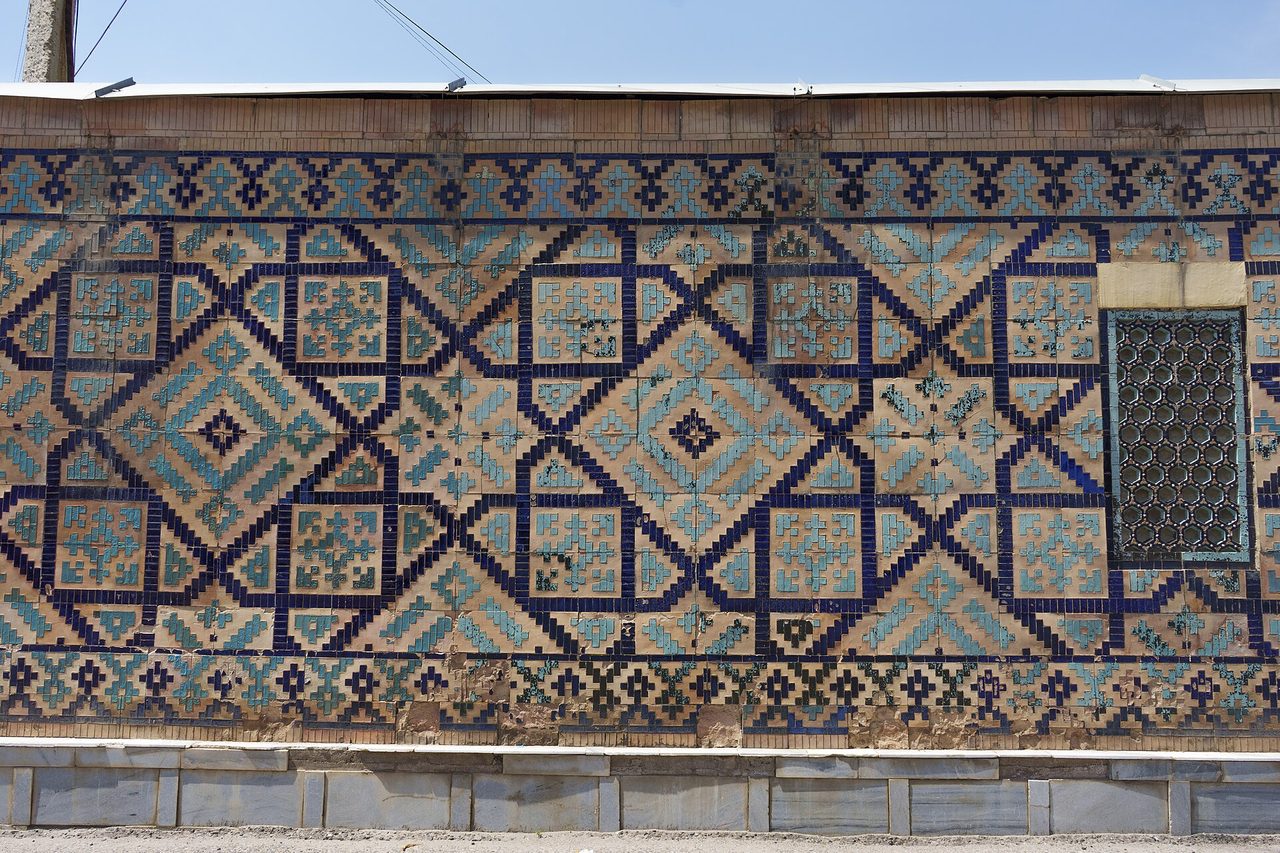
Photo: Koshkinhome / CC BY-SA 4.0 · via Wikimedia Commons
Rubio's First Central Asia Trip Comes With Questions About What He Skips
A first Central Asia visit, starting in Samarkand
Secretary of State Marco Rubio landed in Samarkand, Uzbekistan, on the evening of Oct. 18 for his first trip to Central Asia, part of an Oct. 17-22 itinerary that also takes him to Mumbai and Jamnagar in India. He was met at Samarkand International Airport by Uzbek Foreign Minister Bakhtiyor Saidov, presidential administration head Saida Mirziyoyeva and Sergio Gor, the U.S. special envoy for South and Central Asia. Writing on X before departure, Rubio framed the trip as "securing the Trump Administration's economic opportunities."
More than 200 executives travel with him
The State Department says Rubio is leading a commercial delegation of more than 200 business leaders; Gor had earlier billed it as a "historic business delegation of more than 100 American companies." Uzbek President Shavkat Mirziyoyev met Gor on Oct. 16 to review preparations for the visit, the C5+1 meeting and the second session of the U.S.-Uzbekistan Business and Investment Council. Al Jazeera reports Mirziyoyev has pledged up to $100 billion in investment into the U.S. economy.
Minerals, energy and investment top the agenda
The C5+1 format binds Washington with Uzbekistan, Kazakhstan, Kyrgyzstan, Tajikistan and Turkmenistan; it was set up in 2015, and Trump hosted the five leaders at the White House last November. Washington describes the ministerial's aims as deepening regional economic connectivity, enhancing energy security and promoting collaborative solutions to shared regional priorities. Rubio also launches a first round of an expanded strategic partnership dialogue with Saidov and attends the business council's photo session and dinner.
$25 billion promised at last November's summit
The U.S. Commerce Department says more than $25 billion in commercial agreements and commitments were announced during the November 2025 C5+1 events, spanning aviation, agricultural equipment, railway infrastructure and mineral development — many at various stages of development rather than completed investments. A senior State Department official said Kazakhstan and Uzbekistan alone have generated more than $30 billion in new investments into the United States over the past year.
Trade: $7.1 billion with Kazakhstan, $1.7 billion with Uzbekistan
U.S. government figures put 2025 bilateral trade in goods and services at $7.1 billion with Kazakhstan and $1.7 billion with Uzbekistan. The region's leverage is in resources: the World Nuclear Association counts Kazakhstan's 2025 uranium output at 25,839 tonnes, roughly 40 percent of world supply, while the U.S. Energy Information Administration says American civilian reactor operators bought 46.9 million pounds of U3O8 equivalent in 2025, with Kazakhstan supplying 28 percent and Uzbekistan 7 percent.
"It's an important relationship," Rubio says
Asked at Joint Base Andrews why he was going to Uzbekistan while crises demand attention elsewhere, Rubio said the timing was chosen so all five foreign ministers could attend. "One of the things that suffers is the strategic visits," he said, describing countries Washington wants to reach precisely because there is no emergency there. The State Department pushed back at critics, saying Rubio's responsibility "is not to generate a public profile around every challenge" but to help the president execute a strategy, and that "some of the most consequential diplomatic work takes place outside the public spotlight."
Critics see the low-hanging fruit
The Associated Press notes this is Rubio's 31st trip abroad as secretary of state, while the Iran war, Saudi Arabia's fight with the Houthis and a fresh rift in U.S.-Ukraine relations sit elsewhere. Earlier this month he visited Iceland, Greece and Portugal; before that, Colombia, Ecuador and Peru. Some observers say he is sidestepping the hardest files for politically safer travel. Deputy Secretary of State Christopher Landau defended the pattern, hitting back at former NATO ambassador Ivo Daalder.
Central Asia wants options, not a side
Regional analysts told Al Jazeera that Central Asian leaders' interest in Washington is "mostly geopolitical and military-strategic," and that issues such as Afghanistan, borders and water are absent from Rubio's agenda. One expert said Western moralizing pushed the region toward China and Russia. Ariel Cohen of the Atlantic Council told RFE/RL that China is the dominant economic partner and Russia still provides security links, but "the United States is not walking away."
Rights questions left off the agenda
Al Jazeera describes the engagement as pragmatic, transactional and devoid of speeches about democratization and human rights. The World Uyghur Congress has urged Rubio to press Central Asian governments to stop deporting Uyghurs to China, and rights groups want him to raise the case of jailed Uzbek activist Dauletmurat Tazhimuratov. The State Department comments cited by AP did not address those issues.
Next: Mumbai talks, then the Jamnagar refinery
Rubio meets Indian External Affairs Minister S. Jaishankar in Mumbai on Oct. 20, then flies to Jamnagar in Gujarat to tour Reliance Industries' refining complex — which Reliance calls the world's largest single-site refinery, with capacity of 1.4 million barrels per day — on a stop expected to last about nine hours. Reliance is preparing an investment in a new Texas refinery that the administration counts as a priority. It is Rubio's second official visit to India this year, after May; the trip ends Oct. 22.
Sources
- Rubio heads to Central Asia as some wonder if he is keeping the most pressing matters at a distance
- Rubio arrives in Central Asia while other US officials hit foreign policy hot spots
- Rubio arrives in Samarkand as Washington seeks closer ties with Central Asia
- Al Jazeera: Rubio's Uzbekistan trip underlines Central Asia's hunt for diverse partners
- US To Make Investment, Counterterrorism Push As Rubio Heads To Central Asia