California's Fifth Assessment Warns the Good Life Is About to Change
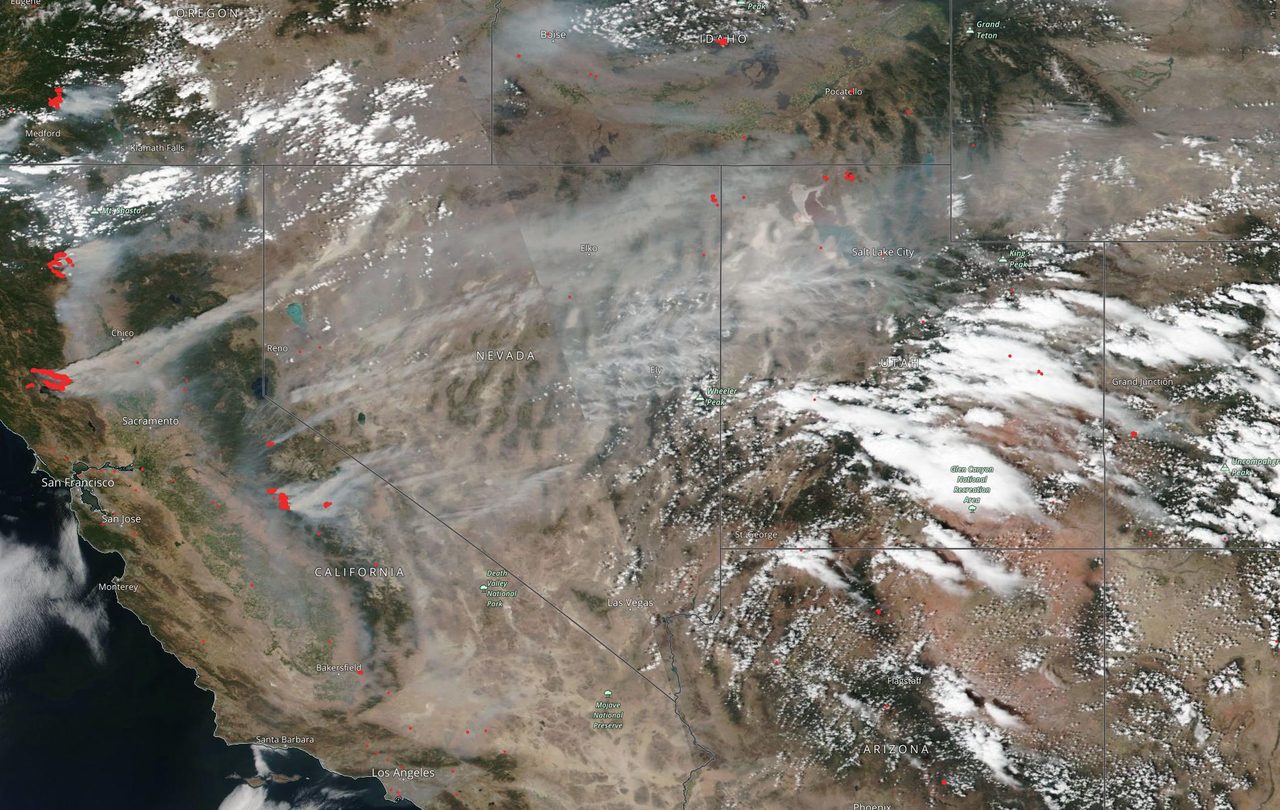
Photo: Generated in WorldView using NASA data / Public domain · via Wikimedia Commons
California's Fifth Assessment Warns the Good Life Is About to Change
Fifth assessment lands with a lifestyle warning
California has released its Fifth Climate Change Assessment, produced by the Governor's Office of Land Use and Climate Innovation with the Energy Commission and the Natural Resources Agency. The message is blunt: longer summers, vanishing snowpack and persistent wildfire smoke will reorder daily life across the most populous US state. State law SB1320, passed in 2020, requires such a peer-reviewed synthesis at least every five years to guide policy and infrastructure spending. The new product is organized around nine regions, pairing climate-model projections with impacts on rivers, forests, wildlife, infrastructure and regional culture.
Official line: cut emissions and adapt at once
The official line is that the second half of the century is still partly a choice. How bad it gets depends on global greenhouse-gas trajectories over the next two decades, but even the most optimistic emissions path cannot avoid substantial warming already locked in by past pollution. Sacramento therefore prescribes aggressive decarbonization alongside heavy investment in resilience. The Transportation Department's 2026 vulnerability and risk assessment and refreshed sea-level rise guidance feed the same strategy, using mapping to rank assets exposed to sea-level rise, fire, flooding, erosion and landslides.
October heat shows why summers feel endless
October offered a preview. Los Angeles logged four straight days above 100F, its longest October triple-digit streak. A parked high-pressure ridge, sinking air, downslope winds and unusually warm ocean water linked in part to El Nino muted the sea breeze that works as natural air conditioning. Highs along coasts and valleys ran in the 90s to low 100s, about 15 to 22 degrees above normal, with beaches stuck in the upper 80s. On October 3, eight daily highs fell and one was tied across Orange, San Diego and Riverside counties. Santa Ana hit 41.7C, about 2.8 degrees above its 2014 record for the date, Vista reached 42.2C, and San Diego International Airport hit 40.6C, breaking a record held since 1987 by about 16.1 degrees above normal. In the first four days of October, California set 75 new daily highs, and the state's year-to-date average stood 4.7F above the twentieth-century average.
Fire, smoke and snow loss hit bodies and water
The Norte Fire started in San Clemente and ran into San Juan Capistrano on 50 to 70 mile per hour gusts, reaching 570 acres or about 230 hectares with 5 percent containment. About 6,000 homes and 16,000 residents fell under mandatory evacuation in that perimeter, while another tally put the burn at 465 acres or 188 hectares with at least four homes hit. Six homes were destroyed or damaged and two firefighters suffered significant but stable injuries. In Malibu the Bryson Fire burned 147 acres with 39 percent containment, drew more than 400 firefighters and forced the relocation of 38 youths from a nearby juvenile facility. Utilities cut power to 150,000 to more than 200,000 accounts to prevent ignitions, and ten schools sent pupils home early. The health signal is sharp. A UCLA survey found nearly 30 percent of Los Angeles County adults, about 2.3 million people, personally experienced wildfire in the prior two years, up from 6.6 percent or about 503,000 in 2024, while statewide mental harm from smoke rose from 1.6 million to 2.1 million. After the Palisades and Eaton fires burned 22,000 acres, pulmonary visits rose 24 percent and heart attacks rose 46 percent within 90 days. Water faces a parallel squeeze. Western mountain snowpack has fallen 36 percent over seventy years, with about 40 percent of that decline tied to 122 companies, and snowmelt has historically supplied about 30 percent of California water.
Grid survives the peak, but burdens skew
The grid passed its September stress test. Demand hit 50,335 megawatts on September 9, the highest in four years and about 3 percent below the all-time record of 52,061 megawatts from September 2022, with no emergency measures. The state credits more than 39,000 megawatts of new utility-scale clean energy since 2019 plus 23,000 megawatts of battery storage. Home batteries from Sunrun and Tesla discharged 580 megawatts that evening, described as the largest residential virtual-plant event on record and enough for Sacramento County households at peak, followed by another 140 megawatts for Southern California Edison the next evening, a combined potential above 720 megawatts. Exposure remains unequal, with the lowest-income Californians struggling for food and Los Angeles County wildfire survivors reporting higher rates of mental and physical harm than the statewide average.
Summit next, with regions to carry the work
What comes next is implementation. The assessment headlines the Resilient California Summit in Sacramento on October 20 to 22, followed by webinars on the economy, displacement and equity topical reports. Caltrans is already using its findings to update district adaptation investment lists and pre-position maintenance crews for winter storms. Regional convenings are translating the nine-area chapters into local plans, from coastal access to forest and river management. For households, the practical guidance is to treat smoke season, shutoffs and longer heat as routine: filtration, go-bags, evacuation zones and water storage that does not depend on slow snowmelt.
Sources
- Streamline Feed: California faces longer summers, severe droughts and major upheaval, fifth climate assessment warns
- The Guardian: Record high temperatures as southern California swelters under heatwave
- Los Angeles Times: Extreme heat breaks SoCal records. When will it end?
- CGTN: California heat wave breaks records, raises wildfire concerns
- Yahoo: Record 100-Degree Heat Scorches October First Days