Edited Crops Learn to Flash Their Stress Before Eyes Can See It
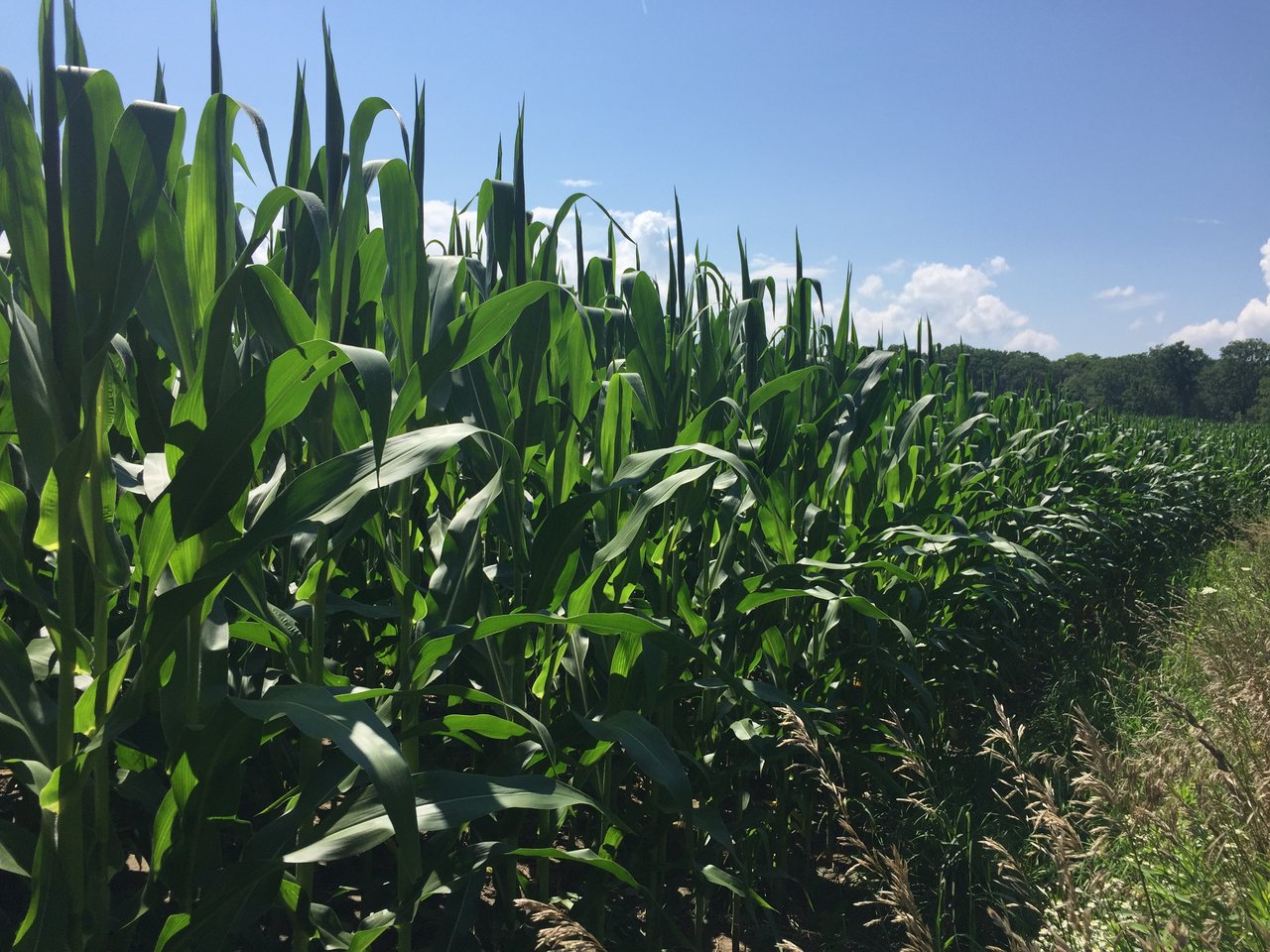
Photo: David Danelski / CC BY-SA 4.0 · via Wikimedia Commons
Edited Crops Learn to Flash Their Stress Before Eyes Can See It
Corn Leaves Turn Purple to Flag Infection Early
A handful of startups are teaching crops to report their own stress. Insignum AgTech of Indiana is breeding corn whose leaves turn purple when fungal disease or pests strike. Chief executive Kyle Mohler puts it bluntly: when you see disease it is too late. His argument, quoted by LiveMint, is that plants react within minutes of infection, while growers may not know for days or weeks. Insignum uses gene editing to switch on traits already carried in the plant genome, so the color shift works like a built-in alarm rather than an added dye.
Soybeans Glow Under Fungal Attack for Sensors Overhead
InnerPlant, founded in 2018, takes a fluorescence route. Its engineered soybeans emit a signal invisible to the human eye when their immune pathways respond to fungal infection. Ground detectors and hyperspectral satellites pick up the glow. The first product targets fungal disease in soy. Each monitoring plot is planted to mimic neighboring farms in soil, topography and row spacing, so a warning from a sentinel plot reads as a warning for the surrounding fields, where disease tends to follow geography.
Argentine Demo Proves Satellites Can Read Ten Acres
The companies insist this is field-tested, not lab theater. InnerPlant ran its first demo in Argentina between December 2023 and March 2024, tasking a hyperspectral satellite and the imaging spectrometer aboard the International Space Station. The hardware spotted 10 acres of calibrator plants engineered to glow constantly, mixed inside commercial soybean fields. For the 2027 season the company is expanding to CropVoice Whole Farm, pairing its established InnerSoy optical sensors with new InnerCorn sensors to cover the two largest United States crops, corn and soybeans, with weekly scouting reports and round-the-clock infection alerts.
Population and Heat Leave Farming Less Room for Error
The official case leans on a long squeeze. Sean Cutler, plant biology professor at the University of California, Riverside and co-founder of Living Sensors, says population growth plus changing global temperatures will pressure farm productivity over the next century, so technologies that eke out more yield matter. Living Sensors applies technology similar to InnerPlant to detect so-called forever chemicals in soil. A separate early-stage venture repurposes sensing hardware first built to find explosive residues around land mines, rewiring it to sniff small airborne molecules from plants known as volatiles. Co-founder Stuart Dixon cites a simple example: when an aphid nibbles a leaf, the volatile release attracts ladybirds, and tapping that language turns an invisible cue into an actionable warning.
Growers Gain Lead Time as Spraying Turns Surgical
The first to feel the effect are row-crop growers, crop scouts and custom spray operators. Visual scouting routinely misses the opening days of infection, forcing blanket fungicide passes once symptoms are obvious. A living-sensor network promises alerts before symptoms, letting a farmer treat only the compromised area and time the pass better. Trade coverage in Payload and Upstream Ag frames this as a data trait: the plant reports the problem rather than resisting it, with diagnosis, maps and spray timing built on consistent signal capture in full daylight, where partners in machinery and sensing come in.
Sentinel Networks Expand From Two Crops to Chemistry
What comes next is scale and breadth. InnerPlant is moving from single plots to a mesh of detectors across drones, equipment and satellites, with patents around reading faint fluorescence under midday sun. Insignum is pushing purple-leaf corn toward commercial fields. Living Sensors points beyond pathogens toward soil chemistry. If the sentinel model holds, farm work shifts from scheduled coverage to alerts-driven response, and the crop itself becomes the earliest scout in the field.
Sources
- LiveMint: Gene editing is giving crops a way to tell farmers when they are feeling stressed
- Payload Space: InnerPlant's Glowing Soy Demos Hyperspectral Use Case
- Upstream Ag: Upstream Ag Professional - September 27th 2026
- Topsoil Substack: When crops are under the weather
- Wealthing VC Club: InnerPlant's technology lets crops text farmers