Garmin Edge 1060 Puts Voice Control on the Handlebars
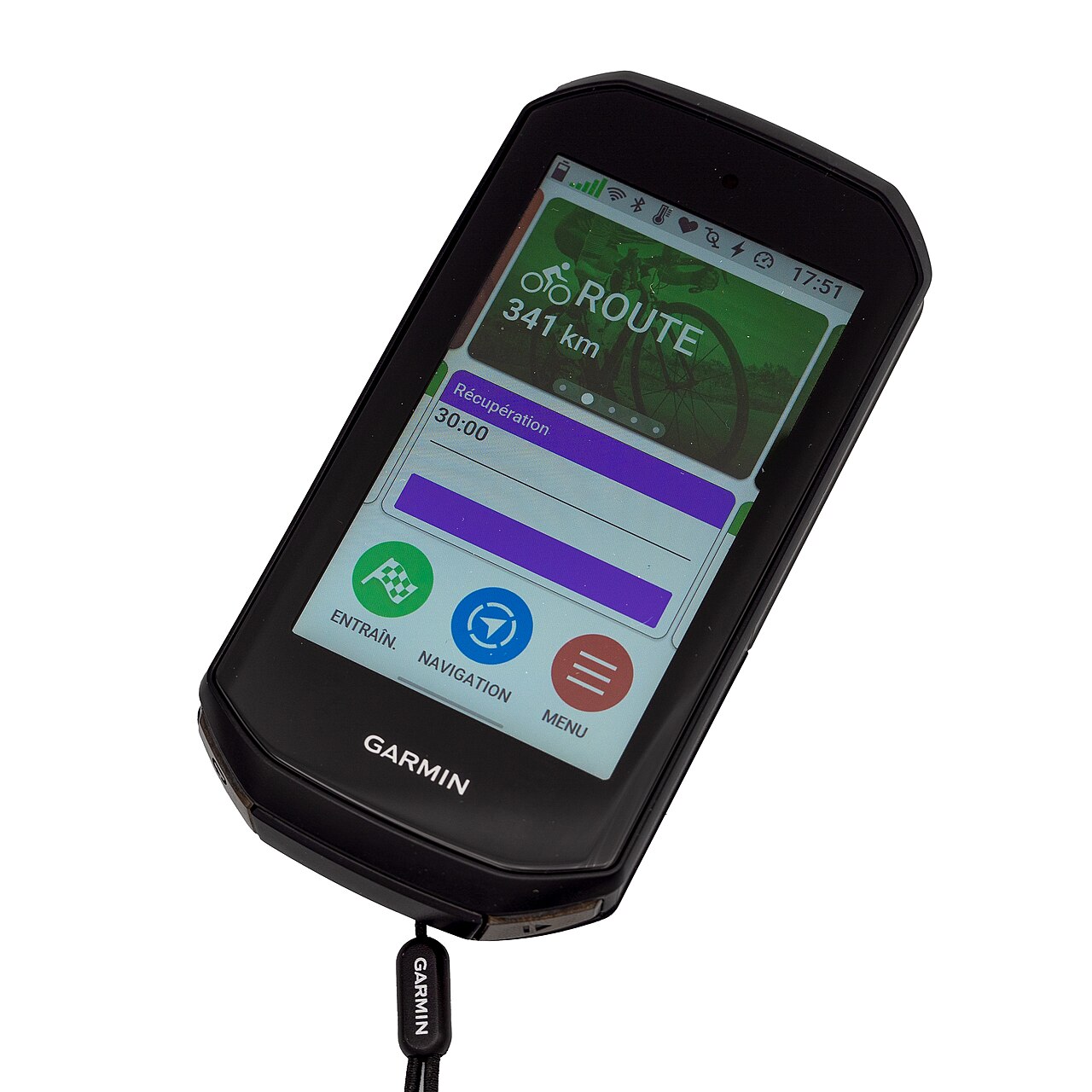
Photo: Hugo LUC / Wikimedia Commons(CC BY-SA 4.0) · via Wikimedia Commons
Garmin Edge 1060 Puts Voice Control on the Handlebars
A Flagship That Finally Listens
Garmin announced the Edge 1060 on October 20, 2026, and the headline is simple: it is the first Edge cycling computer with a microphone. Riders trigger it by saying "Okay, Garmin" and can then pull up performance stats, switch screens, request a route, or report a road hazard without taking their hands off the bars. Garmin's own examples set the tone: "Report a pothole," "Route me to the closest coffee shop," and "What is my heart rate." The computer answers by changing the display, reading numbers aloud, or offering a route.
The Price of Talking: 800 Dollars
The Edge 1060 retails for 799.99 dollars in the United States, 699.99 pounds in Britain, and 799.99 euros in the eurozone, roughly 100 dollars or pounds more than the Edge 1050 it replaces. Cycling Weekly calls it the most expensive bike computer on the market. Garmin says it is available now, with some storefronts listing shipments from October 23.
Smaller and Lighter, Same Screen and Battery
The new unit weighs 142 grams, 19 grams less than the 1050, and is 11.5 millimeters shorter, yet the 3.5-inch 480 by 800 touchscreen is unchanged. Battery ratings are identical too: up to 20 hours in demanding use and up to 60 hours in battery saver mode. Storage stays at 64 gigabytes, and multi-band GNSS across GPS, GLONASS, and Galileo carries over, along with an IPX7 waterproof rating and Bluetooth, ANT plus, and Wi-Fi. As the5kRunner dryly tallied it, the screen, the battery, and the storage are all the same, so the price hike rests entirely on the new tricks.
Garmin's Pitch: Hands Stay on the Bars
The company's official line centers on safety and flow: the built-in microphone and speaker let cyclists check in-ride stats, pick routes, find points of interest, and trade voice messages with Garmin Messenger app users while keeping both hands on the bars. The fine print matters: Garmin notes voice performance varies with riding conditions, voice control covers only select languages, and messaging needs a paired smartphone.
Navigation Gets Smarter About Closures
Beyond voice, navigation is the other real upgrade. Route previews show closures, hazards, and traffic before a ride starts. On the road, riders get closure alerts reported by fellow Garmin cyclists, on top of existing warnings for potholes, obstructions, and even aggressive animals, and they can file their own hazard reports by voice. Free Flow Routing plots courses with fewer stops and slowdowns for riders who want to hold a rhythm, and GroupRide features get an update.
Reverse Charging for Lights and Phones
The 1060 adds reverse charging: with a compatible USB-C cable it can top up a Varia headlight or taillight, a phone, or another device in a pinch, though not while riding. The speaker doubles as a digital bike bell, and established safety features such as incident detection and LiveTrack location sharing remain on board.
Who Feels It First: Power Users and Solo Riders
The target buyer is the serious trainer or long-distance solo rider who checks power and heart rate mid-effort, reports hazards on the fly, and wants closure warnings before a route goes wrong. Owners of the 1050 face a harder call, since the display and battery are untouched and the extra 100 dollars buys mostly a microphone and software. CyclistsHub went further, branding the launch a bike computer nobody asked for.
Two Cheaper Siblings Join the Lineup
Garmin launched two navigation-focused units the same day: the Edge Explore 3 at 399.99 dollars and the Edge Explore 3 Plus at 499.99 dollars, both with 3-inch touchscreens. The Plus adds a speaker, a microphone, and Wi-Fi, bringing voice control to a lower price tier for riders who want hands-free basics without flagship money.
What Comes Next: Real-World Wind Noise Tests
DC Rainmaker's hands-on verdict frames the 1060 as the 1050's internals repackaged in a smaller, lighter shell with a microphone and new software on top. The decisive test is still ahead: how well "Okay, Garmin" hears its rider in wind, descents, and traffic. If it holds up, rivals such as Wahoo and Hammerhead will feel immediate pressure to answer.
Sources
- New Garmin Edge 1060 cycling computer gives cyclists hands-free voice control
- Garmin launches Edge 1060 GPS bike computer with voice control
- Garmin Edge 1060 price, specs and 1050 comparison
- Garmin quietly drops the most expensive bike computer on the market
- Garmin Edge 1060 Cycling GPS Hands-On: Everything You Need to Know!