El-Sayed and Rogers Face Off in Final Debate of Michigan's Increasingly Personal Senate Race
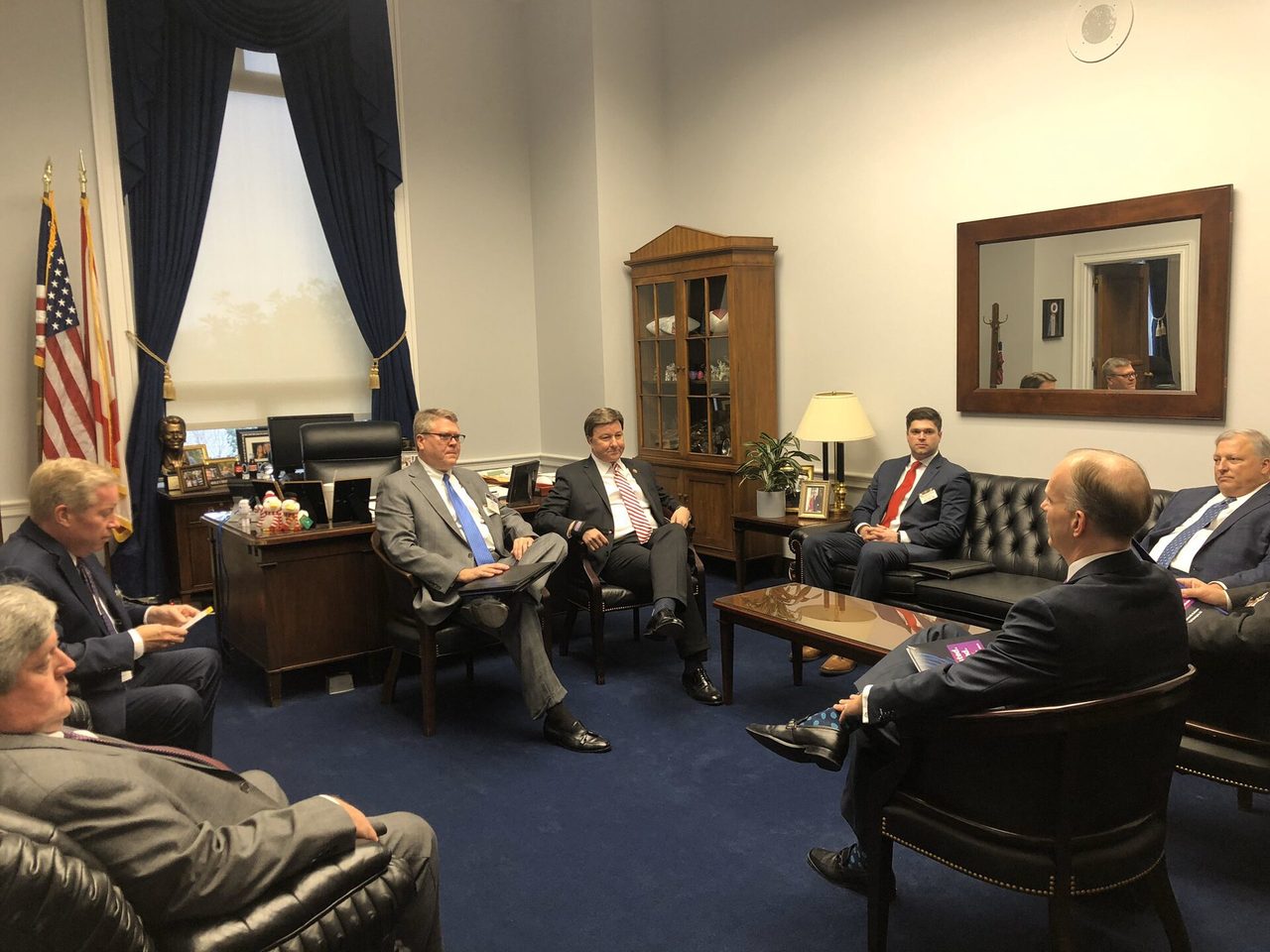
Photo: Office of Mike Rogers, United States Congress / Public domain · via Wikimedia Commons
El-Sayed and Rogers Face Off in Final Debate of Michigan's Increasingly Personal Senate Race
A Final Clash in Detroit
On the evening of October 21, Democrat Abdul El-Sayed and Republican Mike Rogers met for their second and final scheduled debate at WXYZ-TV's studios in Detroit, with the race for Michigan's open U.S. Senate seat entering its closing stretch. The hour-long debate, moderated by editorial director Chuck Stokes alongside anchors Carolyn Clifford and Alicia Smith, aired live at 7 p.m. ET on WXYZ-TV Channel 7 in Detroit and WXMI Fox 17 in Grand Rapids. The seat is open because Democratic incumbent Gary Peters is not seeking reelection, and both parties have poured tens of millions of dollars into the contest.
An Ann Arbor Doctor vs. a Former FBI Man
El-Sayed, the former director of Wayne County's Department of Health, Human and Veteran Services, is a physician and epidemiologist who lives in Ann Arbor; if elected he would become the first Muslim American to serve in the U.S. Senate. He holds a medical degree from Columbia University and a doctorate in public health from Oxford as a Rhodes Scholar, but holds no Michigan medical license — a distinction Rogers pressed in the first debate. Rogers, 63, is an Army veteran and former FBI agent who represented Michigan's 8th District in Congress for 14 years and chaired the House Intelligence Committee. He lost the 2024 Senate race to Elissa Slotkin by roughly 19,000 votes out of more than 5.5 million cast, and ran unopposed in the 2026 Republican primary, winning 883,328 votes.
The First Debate Set a Combative Tone
The October 8 debate in Grand Rapids, hosted by WOOD-TV, devolved into an hour of interruptions and insults. El-Sayed called Rogers "weak," "cowardly" and a "sock puppet for the Trump administration," while Rogers called him a "glitchy AI chatbot," a "con man," and questioned his medical credentials. Rogers accused El-Sayed of ties to groups and donors supportive of the Muslim Brotherhood, Hamas, Hezbollah and al-Qaida, offering no evidence. The candidates also clashed over the Iran war, the Canada trade war, immigration, healthcare and cost of living. El-Sayed blamed high gas prices on the Iran war and floated price controls on domestic oil; Rogers rejected price controls, proposed a diesel rebate for farmers and a temporary pause on diesel exports. Moderator Brett Albin said the two kept arguing through a commercial break, something he had not seen in 30 years of hosting debates.
Polls Show a Dead Heat
Recent surveys put the race within the margin of error. Mitchell Research & Communications' October 1 poll of 682 likely voters had El-Sayed at 45.6% and Rogers at 41.4%, with a ±3.8% margin of error; independents favored El-Sayed 46% to 34%. The RealClearPolitics average stood at El-Sayed 48.4% to Rogers 45.7%. InsiderAdvantage surveyed 1,200 likely voters October 9-10 and found a 48%-46% race with 5% undecided. YouGov's larger sample of 3,947 likely voters, taken from late September into early October, produced a 49%-48% split with a ±2.5% margin of error. Rasmussen Reports polled 798 likely voters October 12-14 and found 46% to 44%, with a ±3% margin of error. The FiftyPlusOne aggregator had El-Sayed up four points. Both Sabato's Crystal Ball and the Cook Political Report rate the contest a toss-up. Trump carried Michigan by about 1.5 points in 2024, while Slotkin beat Rogers by roughly a third of a point that same year; Democrats have won nine consecutive U.S. Senate races in Michigan.
Prices, Schools and Outside Cash
At the Detroit Economic Club the day before the final debate, the two candidates took the same set of questions for roughly 25 minutes each. Rogers made his access to the administration the centerpiece and warned that democratic socialism was on the ballot, a nod to El-Sayed backers such as Senator Bernie Sanders. El-Sayed opened by calling himself a capitalist, saying his quarrel is with a few giant corporations. Rogers also cited education figures, saying two-thirds of fourth graders cannot read at grade level and that young people face a 70% chance of prison or welfare. On spending, outside groups had laid out $100 million or more in the race on Rogers' side versus about $50 million for El-Sayed as of last week, according to the Detroit Free Press — the most independent spending in any Michigan Senate race in history.
November 3: A First for Michigan Either Way
Early in-person voting opens before the November 3 election. A Rogers win would make him the first Republican to represent Michigan in the Senate since Spencer Abraham lost his reelection bid in 2000; an El-Sayed win would send the first Muslim American to the U.S. Senate. Scripps News planned special coverage beginning at 6:30 p.m. ET on October 21 ahead of the debate broadcast.
Sources
- Newsweek: Michigan Senate Polling as Rogers, El-Sayed Head into Second Debate
- NBC 16 (Sinclair): Michigan's El-Sayed, Rogers to meet for final debate before early in-person voting begins
- Scripps News: El-Sayed, Rogers set to debate in closely watched Michigan Senate race
- Yahoo News: El-Sayed and Rogers toss insults in Michigan Senate debate
- NBC News: Sparks fly as Abdul El-Sayed and Mike Rogers face off in first Michigan Senate debate