Voyagers from Easter Island Reached Hawaii First, DNA Shows
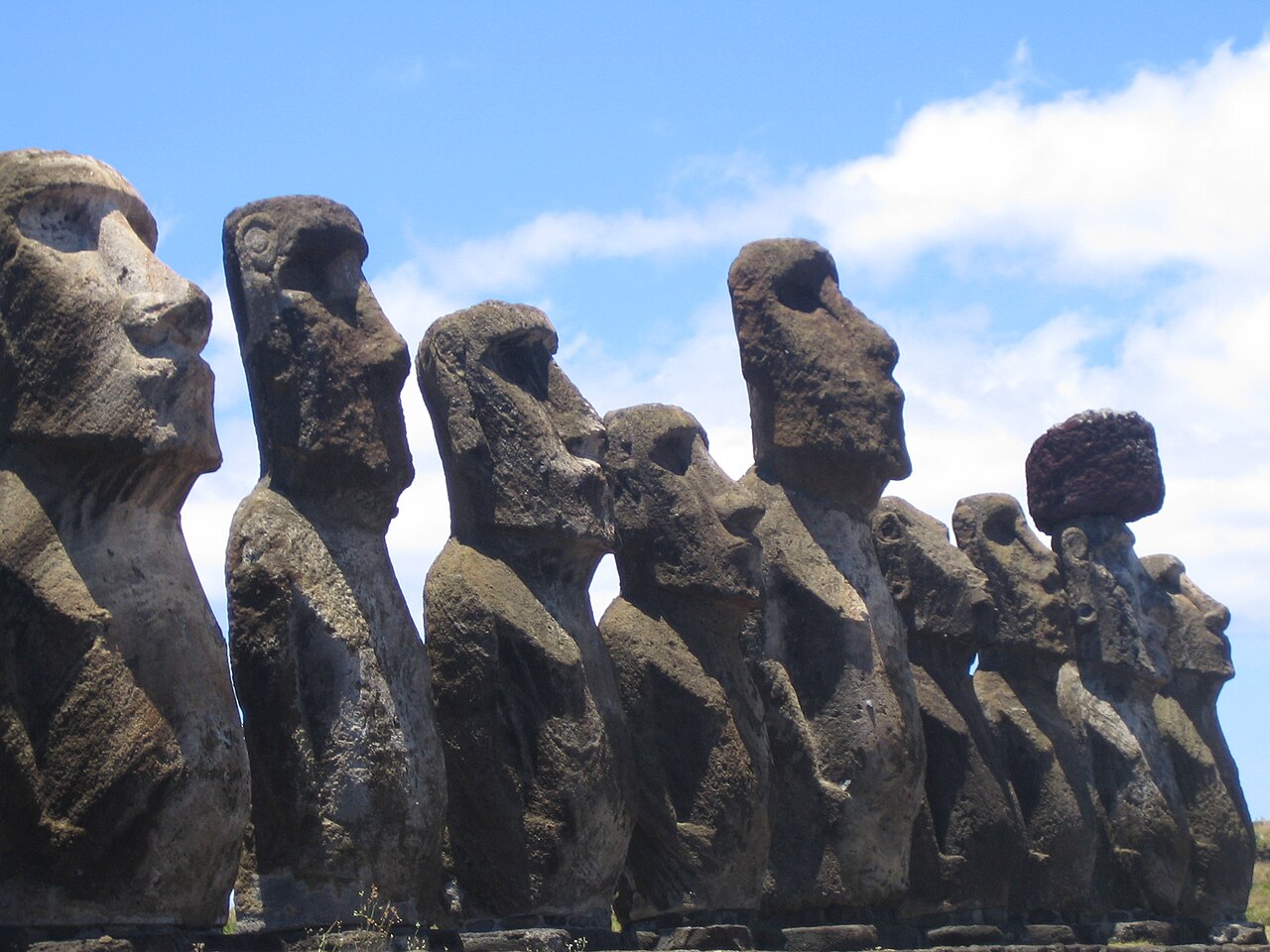
Photo: Bradenfox / Wikimedia Commons(CC BY 3.0) · via Wikimedia Commons
Voyagers from Easter Island Reached Hawaii First, DNA Shows
A 4,400-Mile Canoe Voyage Rewrites Settlement History
A band of seafarers from Easter Island, also called Rapa Nui, set off in double-hulled sailing canoes across the Pacific and landed more than 4,400 miles (7,100 km) away in Hawaii, the only Polynesian island in the Northern Hemisphere. According to Reuters reporting on October 20, new genetic research has determined that Native Hawaiians are more closely related to the people of Easter Island than to any other Polynesian population, pointing to Easter Islanders as the founding population of Hawaii and its first human settlers.
Whole Genomes Become Family Trees of Islands
The study, titled "Message in a bottleneck: Nested founder effects from French Polynesia to Rapa Nui and Hawaiʻi," was published on October 8 in the journal Science. It was co-led by Stanford computational geneticist Alexander Ioannidis and University of California, San Diego genome scientist Keolu Fox. Ioannidis explained that using whole genomes, algorithms can find DNA segments matching perfectly between individuals on different islands, the legacy of shared ancestors, and turn them into family trees of the islands. The team analyzed DNA from more than 1,000 Polynesian people, including 317 Native Hawaiians, 12 Rapa Nui and 8 Mangarevans, plus individuals from the Society, Tuamotu, Marquesas and Austral archipelagos as well as Samoa and Tonga.
Sixty-One Percent of Trees Pair Hawaii With Rapa Nui
The strength of the signal stunned even the authors. Across thousands of reconstructed genetic trees, Hawaii and Rapa Nui were paired together 61% of the time, a result the team verified four different ways. Fox said the researchers were dumbfounded and could hardly believe it at first. For comparison, Hawaii grouped with Mangareva in about 10% of trees and with the Marquesas in fewer than 3%, according to ZME Science. Mangarevan ancestry ranked second only to Easter Island ancestry among Native Hawaiians, indicating the voyaging route passed through Mangareva.
A Two-Step Journey Through Thirteenth-Century Pacific
The data sketch a two-leg odyssey. People from Mangareva in French Polynesia sailed more than 1,500 miles (2,400 km) to settle Easter Island in the 1200s, and a subset of them later pushed on to Hawaii, most likely within the same century. The voyagers carried bananas, taro and sweet potato along with chickens in their canoes, seeking resource-rich new islands to settle. The researchers attribute these crossings to an ultravoyaging population they call Holomoana Nui, Hawaiian for "great ocean voyaging," with Hawaii as the final destination reached.
Eight Hundred Founders and a Medical Warning
Tahiti, the island with the most genomes in the dataset, allowed the most detailed demographic reconstruction. By comparing identity-by-descent segments, the team estimated its founding generation at roughly 800 people of reproductive age, arriving about 34 generations ago, around the year 1070, not counting children and elders who may have come along. Repeated founder effects also concentrated rare disease variants: three variants in the genes ADAMTSL4, PDE6B and FAN1, linked to eye and kidney conditions, are carried by about 2% to 4% of the French Polynesian sample while being extremely rare worldwide. Mauricio Moraga of the University of Chile urged caution, noting via Nature World News that the data support a shared origin but cannot prove which island settled which, nor transfer clinical frequencies directly to Rapa Nui. Researchers say the next steps are extending the genome-based voyaging map to more islands and building genetic screening attuned to Polynesian populations.
Sources
- Genetic study shows seafarers from Easter Island settled Hawaii
- New genetic study reveals surprising origin of Native Hawaiians
- A 1,000-Year-Old DNA Mystery Links Hawaii and Easter Island
- Scientists Find a Surprising Genetic Link Between Hawaii and Easter Island
- Native Hawaiians' Closest Polynesian Relatives Live on Rapa Nui