Another Covid Case Is Not "Just a Cold"
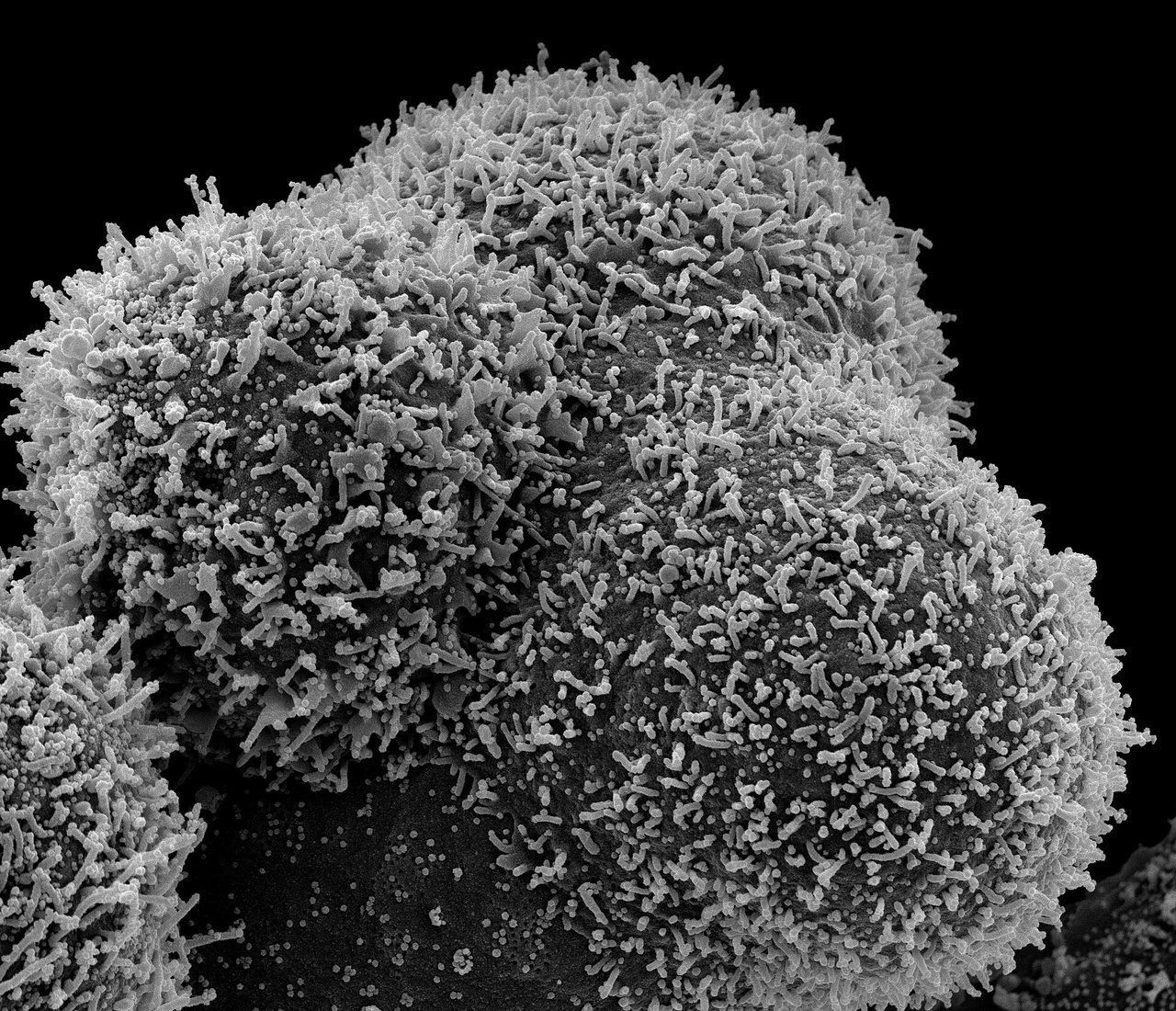
Photo: NIAID / CC BY 2.0 · via Wikimedia Commons
Another Covid Case Is Not "Just a Cold"
A winter wave is building in the wastewater
The New York Times reported on October 19 that Covid cases normally climb in late fall and winter, making repeat infections all but inevitable in the coming months. The picture in the United States is already shifting: CDC nowcasting estimates show infections growing or probably growing in 27 states. The CDC rates national wastewater activity as "low," yet several Southern and Western states sit at high or very high levels. According to WastewaterSCAN, national wastewater concentrations of the coronavirus were up 55 percent in September compared with August, and sites in the West and South have already surpassed the concentrations seen during the winter peak of 2025-2026. A modeling estimate cited on September 21 put it bluntly: about one in 91 Americans, or 1.1 percent of the population, was actively infectious, with roughly 542,000 new infections a day, 3.81 million a week, and 111 million cumulative infections so far in 2026.
Health agencies still want adults vaccinated
The CDC's guidance for the 2026-2027 season recommends an updated Covid shot for all adults ages 18 and older, plus children aged 6 months to 17 years with moderate to severe immune compromise; other children are covered by shared decision-making with clinicians. Support for staying current comes from Rio de Janeiro, where a 2020-2022 study of Covid rehospitalization found that a complete vaccination course including boosters was associated with a 39 percent lower risk of being hospitalized again than in unvaccinated people or those without boosters.
Mild tends to follow mild, severe tends to follow severe
"Reinfection is more or less a fact of life, with an asterisk," Dr. Ziyad Al-Aly, a clinical epidemiologist at Washington University in St. Louis, told the Times. "The asterisk here is that we tend to trivialize this." A study built on electronic health records of 3.1 million Americans in the NIH's N3C database, following 212,984 people with reinfections (defined as at least 60 days after a first infection, mostly during the Omicron period of late 2021 and early 2022), found a clear pattern: about 27 percent of people whose first bout was severe enough to need hospital care also needed hospital care for the reinfection, while about 87 percent of those whose first case was mild and needed no hospital care had a mild reinfection too. About 6.9 percent of the 3.1 million — the 212,984 reinfected — skewed younger and were less likely to have been vaccinated, and a worse first infection predicted a worse second one.
Every infection spins the long-Covid roulette wheel
The longer shadow is long Covid. "Every time there's a wave, there's another wave that's going to follow with patients developing new onset long Covid," Yale immunologist Akiko Iwasaki told the Times, echoing the researchers' roulette metaphor: any infection could be the one that leaves lasting symptoms. Canadian data published in the Canada Communicable Disease Report, covering more than 8,800 adults, found that adults reporting two or more infections had 76 percent higher odds of a new health diagnosis than the never-infected (adjusted odds ratio 1.76), with respiratory diagnoses up by a factor of 5.03 and back problems by 3.79 times; about 11 percent of all participants received a new diagnosis during the study period, and among the infected, those with symptoms lasting three months or longer had 3.35 times the odds of a new diagnosis. The NIH's RECOVER program found that about 10 percent of people first infected in the Omicron era still had long-term symptoms after six months. One recent review estimated that at least 400 million people worldwide live with long Covid.
Older and sicker patients carry the heaviest burden
Risk is uneven. The N3C work shows severe first cases concentrated in adults ages 60 or older and people with underlying conditions, the same groups most likely to be hospitalized again. A multicenter study of US health care workers found more than one in ten endured moderate-to-severe long-Covid symptoms for months, with higher odds for women, those with at least two underlying conditions, and those with a prior infection.
Vaccinate, ventilate and mask before the peak hits
The advice going into winter is familiar: get the updated shot if eligible, mask in crowded indoor spaces, ventilate, and test and treat early when sick. The Times piece closes where it started, with Al-Aly's warning against trivializing reinfection, and Iwasaki's reminder that reinfections help explain why long-Covid numbers have plateaued rather than fallen. With the seasonal rise underway, prevention now beats gambling on whether the next bout stays mild.
Sources
- How Bad Is Another Case of Covid?
- 2026-2027 COVID-19 Vaccination Guidance
- Study suggests reinfections likely have similar severity as original infection
- Second COVID Infections Linked to Sharply Higher Odds of New Diagnoses
- Rehospitalization due to COVID-19 reinfection in Rio de Janeiro