One Seat, One History: Michigan's Senate Race Could Decide the Chamber
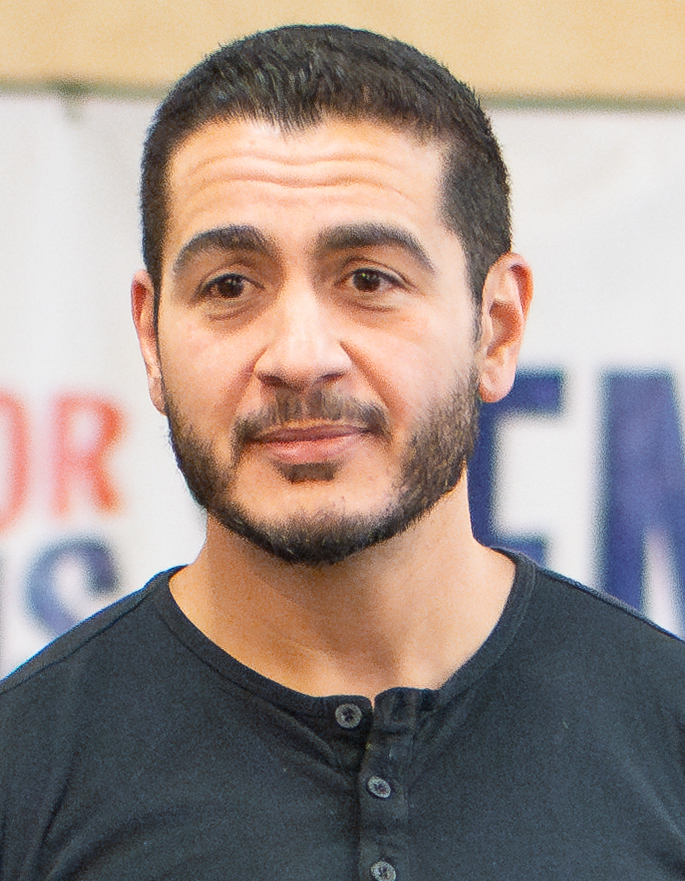
Photo: Conlan Houston / CC BY-SA 4.0 · via Wikimedia Commons
One Seat, One History: Michigan's Senate Race Could Decide the Chamber
One seat that could swing a chamber
On November 3, Michigan voters will pick the state's U.S. senator, and almost nothing about the race is routine. Republicans hold 53 seats to 45, plus two independents who caucus with Democrats (effectively 53-47), so Democrats need a net gain of four to take the chamber — meaning holding Michigan is where any Democratic path to a majority begins. The candidates are Dr. Abdul El-Sayed, a former Detroit public health director, and Mike Rogers, a former congressman, Army officer and FBI agent.
History on both sides of the ballot
If elected, El-Sayed would become the first Muslim member of the U.S. Senate and the first Egyptian American to hold the seat; if Rogers wins, Republicans would capture a Michigan Senate seat for the first time since 1994. The GOP has not held this seat since 1972 and has not won a non-presidential statewide race in Michigan since 2014. Either way, the result is historic.
How he cleared a crowded primary
The son of an Egyptian immigrant who studied in Michigan, Oxford and Columbia, El-Sayed led Detroit's health department before running for governor in the 2018 Democratic primary. In the August 4 Senate primary he defeated Rep. Haley Stevens by roughly one percentage point, according to Current Affairs, while facing roughly ten-to-one outside spending against him. The upset galvanized progressives, Arab American and Muslim voters, younger voters and college-town constituencies — and exposed deep divisions inside the Democratic coalition.
Polls inside the margin of error
The numbers are nearly inseparable. A Marist College October poll had El-Sayed ahead50% to 48%, with a margin of error of plus or minus 4.3 points. Rasmussen Reports polled 798 likely voters from Oct. 12 to 14 and found46% to 44%, plus or minus 3. YouGov's Sept. 22 to Oct. 4 survey of 3,949 likely voters had 49% to 48%, plus or minus 2.5. A Mitchell Research poll on Oct. 1 had 45.6% to 41.4%, plus or minus 3.8, with independents favoring El-Sayed 46% to 34%. The Hill reported that Decision Desk HQ's model gives El-Sayed a 67% chance of winning.
The blocs that will decide it
Michigan has close to 400,000 Arab Americans, nearly 4% of the state's population, while African Americans are about 14% of residents, or roughly 1.41 million voters. The Boston Globe reported that Arab Americans are now the majority of Dearborn's 106,000 residents — the first and largest U.S. city with that distinction — and that Trump outpolled Harris there 42% to 36% in 2024, against 68% for Biden in 2020. CNN noted that if Democrats lose this seat, the road to a majority runs almost exclusively through redder states.
The Muslim Brotherhood charge
Trump, writing on Truth Social, called El-Sayed a "Jihadist lunatic" and a "radical extremist," while Rogers demanded at an Oct. 17 event that his opponent disavow the Muslim Brotherhood. At an Oct. 10 town hall, El-Sayed answered "Sure. Yeah, absolutely" and then asked why the question was being put to him alone, calling the premise a form of Islamophobia. In the final debate, CBS News reported, El-Sayed repeatedly cast Rogers as Trump's "sock puppet," while Rogers called his opponent untrustworthy.
Money, and a candidate hedging
Rogers has broken with Trump on tariffs and the Iran war, yet joined the president in the Brotherhood attacks, warning voters they "cannot risk" El-Sayed's ideology. The spending is extraordinary: Bridge Michigan, citing federal records, put disclosed spending above $205 million in early October, and Detroit News counted more than $243 million by Oct. 9 — including about $75 million in outside spending in the primary and another $82 million in the general election, or $157 million combined. CNBC's ad analysis found that nearly one in nine ads from Rogers' campaign and the NRSC touched transgender issues, about $800,000 of $14.4 million in Michigan Senate ad buys through October.
Final debate, early voting
The two candidates debated in Grand Rapids on Oct. 8 and held their second and final face-off on Oct. 21, after which Michigan's early voting began; Barack Obama is scheduled to rally for El-Sayed in Detroit on Oct. 24. El-Sayed's platform centers on Medicare for All, abolishing ICE, higher taxes on the wealthy and stronger unions. Rogers has campaigned on common sense, costs and order, while distancing himself from the president on trade and war.
What Nov. 3 settles
A win for El-Sayed hands Democrats the pivot point of a Senate campaign and puts him within reach of becoming the country's first Muslim senator. A win for Rogers keeps the chamber in Republican hands, where Vice President JD Vance would break any tie. Either outcome closes one of the two most consequential races of the 2026 midterms — and settles whether Michigan's open seat is decided at the polls or in the history books.
Sources
- Economic Times: Could America elect its first Muslim senator? Michigan's high-stakes race may make history
- Deseret News: Is this the race that will decide who controls the Senate?
- The Hill: El-Sayed, Rogers clash in final Michigan Senate face off: 3 takeaways
- CBS News: In final Michigan Senate debate, El-Sayed ties Rogers to Trump, while Rogers says El-Sayed is untrustworthy
- CNN: Democrats fear slippage with Black voters makes Michigan Senate race feel 'far closer than it should'