A mutated flu strain is pulling the US into an unusually early season, starting on the West Coast
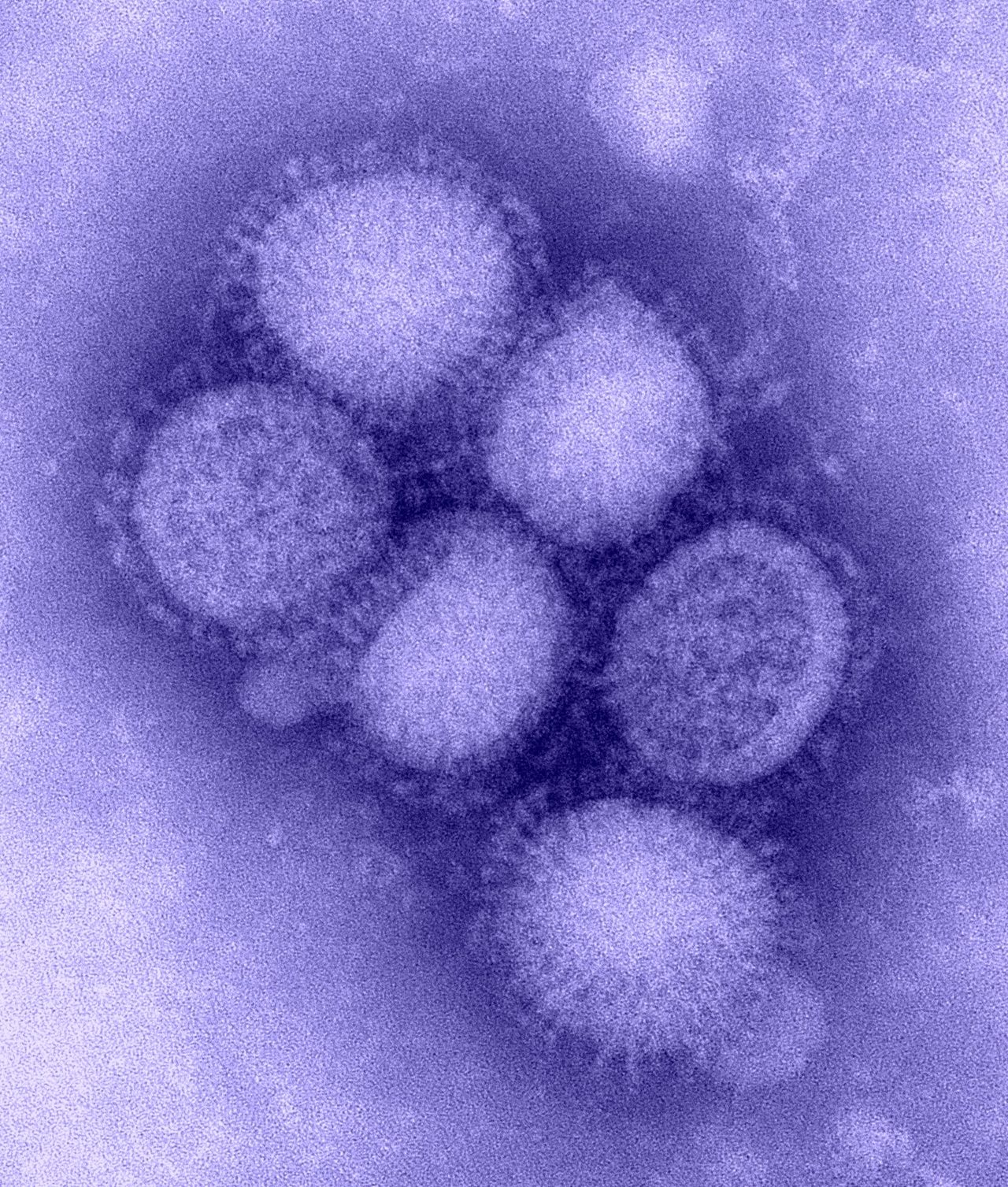
Photo: Centers for Disease Control / Public domain · via Wikimedia Commons
An early and mutated flu season is arriving in the US, and the West Coast is first in line
Flu season started two and a half months ahead of schedule
The 2026-27 influenza season in the United States began roughly two and a half months earlier than is typical, CNN reported. More unusually, it did not start in its usual place. Dr. Alex Greninger, head of the Division of Infectious Disease Diagnostics at the University of Washington's Department of Laboratory Medicine, told CNN that a season opening on the West Coast is "very unusual."
The West Coast is the epicenter of activity
The CDC's most recent weekly surveillance report said multiple indicators — test positivity, outpatient influenza-like illness visits, emergency department visits and laboratory-confirmed hospitalizations — have been increasing since late August and early September, with the highest activity in the West Coast, covering HHS regions 9 and 10. Caitlin Rivers, an epidemiologist who directs Johns Hopkins Bloomberg School of Public Health's Center for Outbreak Response Innovation, said all the Pacific states started very early, and that as the season progresses she is now seeing a spread eastward.
Roughly one in ten Washington tests positive
Washington state Department of Public Health data showed that roughly 1 in 10 people tested for flu in the state last week was positive. "We're basically seeing January levels of flu in the last week," Greninger said.
National positivity hits a 10-year high for the date
Clinical laboratories reported to the CDC that5% of specimens tested positive for flu last week, the highest rate for this point in the year in a decade, according to Reuters reporting carried by The Hindu and The Straits Times; the previous week was 3.9%. On the West Coast the figure was 10.7%, against 0.5% a year earlier. At peak flu, positivity runs around 30%. Medscape reported that H1N1 accounted for 96% of influenza A viruses subtyped by public health laboratories, a flip from last season, when H3N2 dominated.
A G155E mutation is turning up in Seattle sequences
The dominant strain this season is H1N1, and this year's version carries a new mutation called G155E. Nature reported that a Seattle laboratory has been sequencing H1N1 samples from hospitals and clinics across the city for months, and the change kept appearing, showing up in 13 of 17 samples whose sequences were complete enough to identify individual mutations.
Antibodies recognize the mutant strain less well
A team led by Jesse Bloom, a virologist at the Fred Hutchinson Cancer Center, tested blood sera from 260 people in Australia and the United States against 148 influenza A viruses that had circulated through mid-2026, according to Nature. Strains carrying G155E were less well recognized and neutralized by existing antibodies, with recognition especially limited in samples from teenagers and young adults. The study is a bioRxiv preprint and has not yet been peer reviewed. Jeanne Marrazzo, chief executive of the Infectious Diseases Society of America, said studies of antibodies from people exposed to flu last year found they did not recognize the new mutation, especially in teens and young adults — "something to be aware of but not cause for alarm."
Vaccinate in September or October; protection takes two weeks
The CDC recommends seasonal influenza vaccination for everyone aged 6 months and older, ideally offered during September or October. Reuters reported that Scott Hensley, a microbiologist at the University of Pennsylvania, said two of the three components of this year's vaccine appear very well matched to circulating strains, but given the H1N1 mutation's possible effect on younger people's antibodies, "it is probably a good idea to get vaccinated early." Infectious disease and pediatric specialists have publicly urged vaccination for people6 months and older, and the CDC notes it takes about two weeks after a shot to develop protective antibodies.
Pediatric cases and a first death have already appeared
Medical Daily reported that 150 children at Seattle Children's tested positive for flu in two weeks, a case count the hospital's head of pediatric infectious diseases said was typical of early December. Colorado health officials confirmed on Oct. 16 the first pediatric flu death of the season, an elementary-school-aged child outside the Denver metro area, with no record that the child had received this season's flu vaccine.
Falling uptake thins the protective shield
Reuters, citing data firm IQVIA, said about 58 million American adults received a flu shot last season, down more than 20% from the nearly 75 million in the 2019-20 season. The Straits Times, citing CDC data, reported that around half of US children got flu shots in 2025, compared with more than 60% in 2019-20.
Virus spreading eastward; late vaccination still helps
Two things matter over the coming months: whether activity keeps moving east as Rivers expects, and whether unvaccinated people can get their shots in before the virus keeps climbing. The CDC notes that vaccination does not completely prevent infection but can significantly reduce the severity of illness, and that getting vaccinated later in the season can still offer protection.
Sources
- CNN: A mutated virus is driving the US into an early flu season, especially on the West Coast
- Nature: Flu season could kick off 'incredibly' early — what scientists are watching
- The Hindu: Early U.S. flu season, current strain may signal risk for younger people; doctors urge shots
- The Straits Times: Early US flu season, current strain may signal risk for younger people; doctors urge shots
- Axios: Flu is showing up earlier this year