Shark Nicknamed 'Bukangi' Returns to Sea After Third Rescue Attempt in South Korea
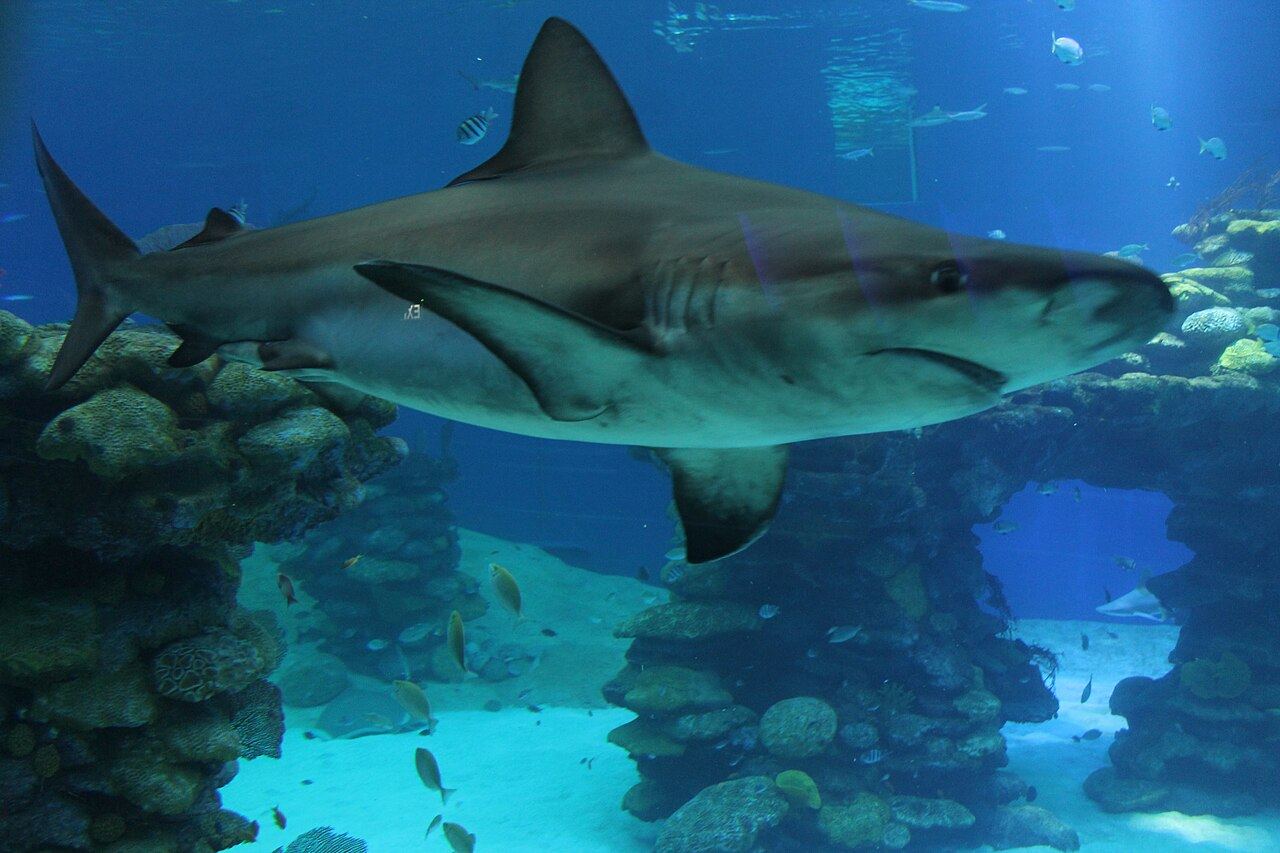
Photo: CC BY-SA 4.0 (Wikimedia Commons) · via Wikimedia Commons
Shark Nicknamed 'Bukangi' Returns to Sea After Third Rescue Attempt in South Korea
A Shark Trapped in a Busan Canal for Over a Month
A 3-meter-long (9.8-foot) female dusky shark was first spotted on September 18 in a narrow waterway at North Port in the South Korean port city of Busan. Unable to find its way out, the animal remained trapped for more than a month, becoming a local celebrity nicknamed "Bukangi," after the Korean name for Busan's North Port. As it slowly circled the canal with its fins slicing the surface, crowds gathered daily.
Third Attempt Finally Sends Her Seaward
South Korea's oceans ministry said the shark was successfully guided back into the open sea on Wednesday, following two failed rescue attempts. Authorities had tried to steer Bukangi out on September 29 and October 2, first using water jets and then nets, without success. On the third attempt, workers used nets fixed to floating pontoons to move gradually toward the sea, with divers navigating the canal's underwater terrain and varying depths. Busan Mayor Chun Jae-soo said the shark lingered at the canal's mouth but eventually swam out to sea.
She Came Back Within Hours
But the relief was short-lived. According to The Guardian, the shark dived beneath a net and returned to the canal in Busan overnight. An oceans ministry official told AFP that the shark was now between an outer net and an inner net installed 30 to 40 metres further inside the canal. Authorities had placed additional netting in front of the structure to prevent the animal from swimming back in, and South Korea's Yonhap news agency reported it was seen at a nearby pier.
Experts Worried About Her Health
Researchers have reported abrasions around the shark's snout and fins, potentially caused by repeated contact with canal walls where barnacles and oyster shells can injure marine animals. Experts also raised concerns because the shark had not been seen eating and appeared to have difficulty maintaining its balance while swimming. "These were not normal signs, and the experts believed its condition appeared to be deteriorating," an ocean ministry official told AFP.
Water Temperature Is the Clock
Dusky sharks generally prefer water temperatures between 18 and 26 degrees Celsius, and the canal water was measured at around 23.5 degrees. Authorities launched the third attempt as the water grew colder. By mid-November, city officials expect the canal's temperature to drop to around 11 degrees Celsius, when experts warn the shark's survival chances could become precarious. "I don't know what would happen if she's not out by then," Kim Hyun Woo, a senior researcher at the National Institute of Fisheries Science, told The New York Times. The shark is estimated to be around 10 years old.
A Tourist Sensation
Bukangi's prolonged stay drew more than 1.6 million visitors to the waterfront park through October 20, according to the Busan Infrastructure Corporation. South Korean media also noted that even the president visited. The species is listed as internationally endangered, and researchers confirmed the animal is female, about three meters long.
What Comes Next
The National Institute of Fisheries Science said it will continue monitoring Bukangi's swimming behavior and health status, cooperating with the Busan metropolitan government if abnormal signs occur. With nets now bracketing the shark inside the canal, authorities hope to guide her seaward again before temperatures fall further. Whether a fourth attempt will be needed depends on how the animal fares in the coming days.
Sources
- The Guardian: Bukang-i is back: famous shark returns to canal in South Korea hours after being coaxed out to sea
- Reuters: Shark nicknamed 'Bukangi' returns to sea after third rescue attempt in South Korea
- Phys.org: South Korea guides crowd-pulling shark out of canal
- RFI: South Korea guides crowd-pulling shark out of canal
- NBC News: South Korean officials free a shark trapped for a month in Busan canal