North Korea Says Border Loudspeakers Will Be on Standby Within Days, Putting Seoul's Detente at Risk
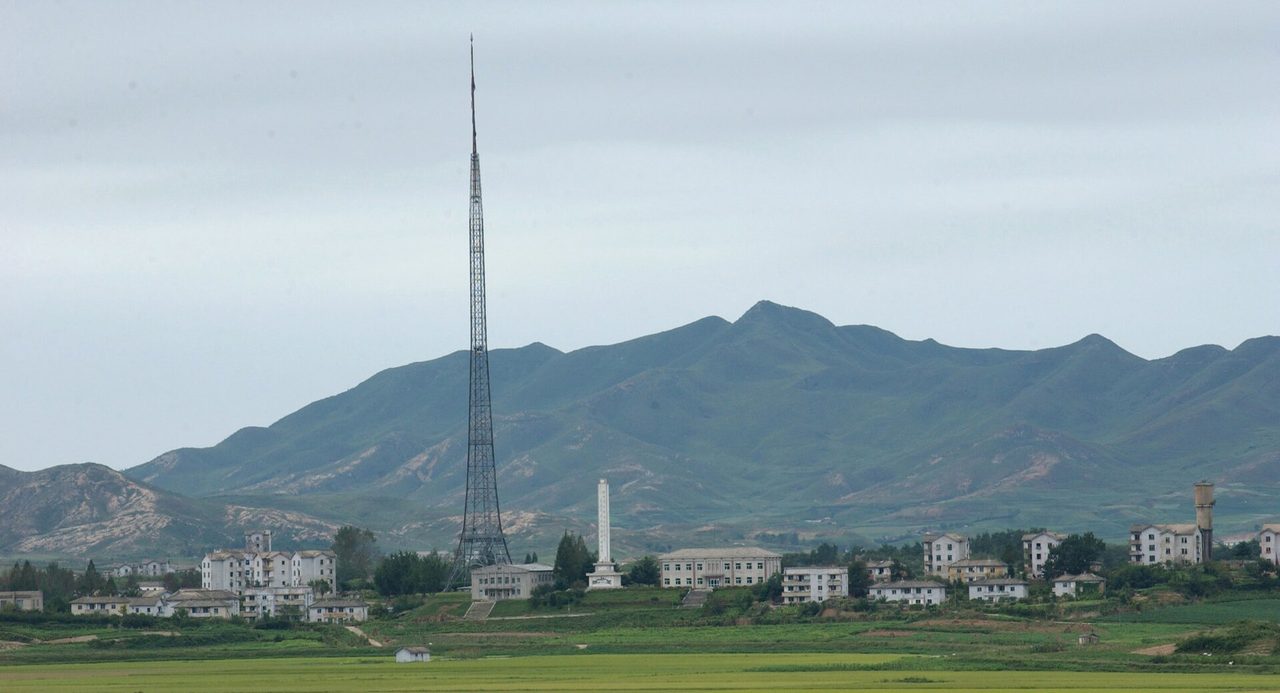
Photo: TECH SGT JACK BRADEN / Public domain · via Wikimedia Commons
North Korea Says Border Loudspeakers Will Be on Standby Within Days, Putting Seoul's Detente at Risk
Speakers on standby across the whole border
North Korean leader's sister Kim Yo Jong said on Thursday, October 22, that the North will place "new counter means" on alert along the entire southern border and have its loudspeakers aimed at South Korea on "standby in a matter of days." She warned Seoul of "the most horrible and distressing situation" if South Korea continued what Pyongyang calls interference in the North's internal affairs. The statement came via the state news agency KCNA.
A second statement in a matter of hours
The warning was Kim's second public statement within hours. On the evening of Wednesday, October 21, after inspecting border fortification sites together with senior military officials including Marshal Pak Jong-chon, an adviser to the North's defence ministry, she said North Korean tactical units were taking up new positions and that "within October, the loudspeakers for psychological warfare against the ROK will be in operation along the whole border."
What triggered the warning
Kim's statement responded to a special adviser to South Korean President Lee Jae Myung on defence policy, who had accused North Korea of planting landmines that wounded South Korean soldiers and urged Pyongyang not to escalate tensions with loudspeaker broadcasts. Seoul had formally blamed North Korean mines for the September 21 border blasts that injured three South Korean soldiers.
A border being turned into a fortress
Kim said the border had been "clearly blocked and turned into a fortress more thoroughly," adding that Kim Jong Un had told her it "should be a permanent line never to be crossed." North Korea has been reinforcing its side of the Demilitarized Zone with mines, barriers and fencing since April 2024, and said this week it would keep pushing fortification work forward.
Seoul's count of crossings
South Korea says Pyongyang has sent up to 7,000 workers to the border this year, with about 50 crossings of the Military Demarcation Line that bisects the DMZ, into the South's side. The military demarcation line runs roughly 250 km, dividing the two Koreas. North Korean officials have rejected Seoul's allegations as an "absurd assertion" designed to shift blame, saying their army knows where the border lies better than anyone else.
Seoul keeps its options open
A South Korean defence ministry spokesperson said on Thursday that if the North went ahead, "naturally there would have to be a proportional measure," while making clear no decision had been made. At the same time, Seoul publicly urged Pyongyang to hold talks on measures to ease tension and prevent an accidental military clash along the border.
Sixteen months of silence
The loudspeaker standoff would be the first such exchange in 16 months. President Lee Jae Myung suspended South Korea's broadcasts just days into his presidency in June 2025 to ease tension with Pyongyang, and the military dismantled its fixed loudspeakers that August. Restarting the North's broadcasts would put that signature achievement of easing inter-Korean tensions under direct pressure, and would push frontier tensions to their highest level since he took office.
A Cold War-era weapon with a modern history
Both Koreas have used giant loudspeakers across the DMZ for psychological warfare since the 1960s. The South has broadcast government messages, news, weather reports and K-pop; the North has replied with sirens, drums and harsh noises. The two sides agreed to stop in 2004, resumed after a landmine injury in 2015, paused under a 2018 agreement on "hostile tactics," and restarted after North Korean trash balloons in 2024. Seoul halted its own broadcasts again in 2025.
What happens next
The key question is what Seoul does in the days ahead: whether it reinstalls equipment, restores K-pop broadcasts, or holds the line while keeping the door open for the dialogue it has been urging. Residents and front-line soldiers along the DMZ are the ones most likely to hear the outcome first.
Sources
- The Guardian: North Korea prepares to restart propaganda loudspeakers as ties sour with South
- Al Jazeera: North Korea to resume propaganda broadcasts, South Korea urges dialogue
- NPR: North Korea says it will resume propaganda broadcasts across border into South Korea
- CNN: North Korea tells border troops to take 'resolute action' if South threatens their safety
- The Independent: North Korea vows to make border with South Korea 'impregnable'