Putting a Face to the Denisovans: Xujiayao Fossils Reveal What They Looked Like
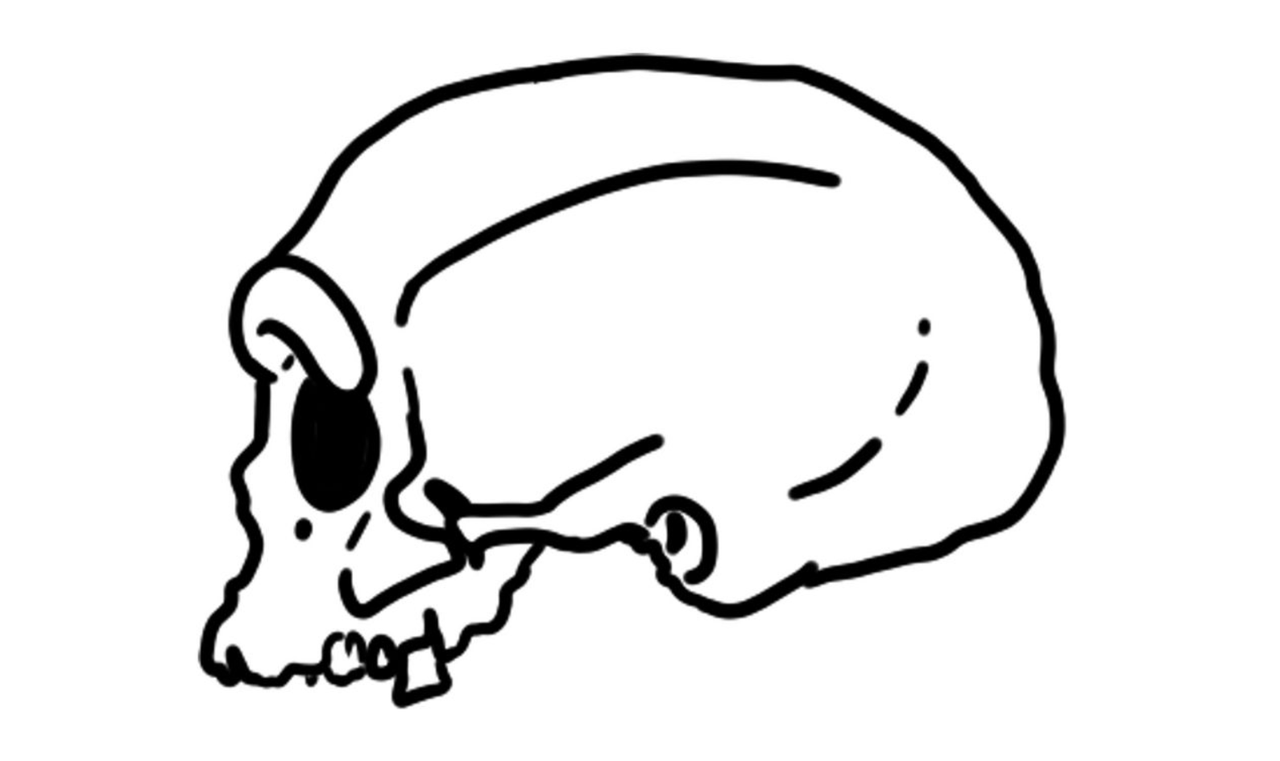
Photo: Clumsystiggy / CC BY-SA 4.0 · via Wikimedia Commons
Putting a Face to the Denisovans: Xujiayao Fossils Reveal What They Looked Like
Twenty Xujiayao fossils carry the answer
A team from the Institute of Vertebrate Paleontology and Paleoanthropology at the Chinese Academy of Sciences has reported in Nature that it identified 20 hominin cranial, mandibular and dental fossils from the Xujiayao site in northern China as members of the Denisovan lineage. The fossils were excavated between 1976 and 1979 in the Nihewan Basin, and combined uranium-series and electron-spin-resonance dating places the assemblage at roughly 199,000 to 138,000 years ago.
The team says a face has finally emerged
Sally Wasef, a palaeogeneticist at the Queensland University of Technology in Brisbane, told Nature the community is finally starting to put a face to the Denisovan. Fabrice Demeter, a palaeoanthropologist at the University of Copenhagen, said the findings add to growing evidence that Denisovans were a widespread and potentially diverse group of humans.
Ancient proteins did the identifying
The investigators drilled small holes in two specimens — a right parietal bone (PA1490) and a right mandibular ramus (PA1497) — protecting the surrounding surfaces with aluminium foil and taking a three-dimensional scan beforehand so the full external morphology would survive for anatomical analysis. Bone powder was demineralized with 0.6 M hydrochloric acid and separated into fractions, yielding 18 endogenous proteins. Within them, the researchers found a Denisovan-specific variant in the collagen gene COL1A2, designated COL1A2-996 R>K. Live Qurious reports that the same single amino-acid change showed up across multiple peptides from the Xujiayao bones and other East Asian fossils, and did not appear in human or Neanderthal samples.
A low forehead and a brow ridge curving backwards
Taken together, the comparison yields a face: a low, sloping forehead; a massive brow ridge that curves backward; rectangle-like eye sockets; flat cheeks; and a moderately elevated bridge of the nose. Across the Denisovan-associated material, the study identified a low cranial profile with nearly parallel lateral walls, a massive supraorbital torus, a flat zygomaxillary region and weak prognathism.
Traits borrowed from erectus, sapiens and Neanderthals
The picture is a mosaic. The Denisovan-associated fossils displayed a thick cranial vault reminiscent of Homo erectus, while the Xujiayao and Harbin material also had a strongly arched temporal squama, a feature the study associates with modern humans. The temporal labyrinth structure and the presence of a suprainiac fossa resembled features found in late Neanderthals. The authors describe their result as a comprehensive view of Denisovan features. Xujiayao 6 had already been shown to have an exceptionally large endocranial capacity of 1,700 ml, which is what designated Xujiayao as the holotype of Homo juluensis.
The Harbin skull serves as the reference
The reference material for the comparison is the Harbin cranium, Homo longi, the "Dragon Man" skull from Heilongjiang, whose Denisovan identity was confirmed in 2025 through mitochondrial DNA from dental calculus and proteins from the skull bone itself; its age is at least about 146,000 years. GB News reports that Fu's team initially failed to recover usable DNA from the petrous bone and tooth samples, then turned to a fragment of hardened plaque clinging to the skull's only surviving molar — a sample weighing just 0.3 milligrams that yielded ancient mitochondrial DNA. A separate protein analysis recovered 95 ancient proteins and 19,299 peptides, far more protein information than earlier studies of several other ancient human specimens.
Sixteen of eighteen predicted traits
The work also tests an older model. In 2019, researchers used DNA methylation patterns to predict 56 anatomical features that would distinguish Denisovans from modern humans and Neanderthals, 34 of them in the skull. Optimism Report notes that the Harbin cranium matched 16 of 18 predicted features, more than any other hominin fossil of its period that the team tested, Neanderthals included; the nearest rival, the Dali skull, also from China, matched 15.
One branch for East Asian archaic Homo
The palaeoproteomic results revealed the Xujiayao hominins as Denisovans, and their morphological similarities with other East Asian late Middle Pleistocene archaic Homo — such as Jinniushan, Dali and Hualongdong — indicate that they all belong to the Denisovan lineage. The two Xujiayao specimens have direct palaeoproteomic support, while Xujiayao and Harbin serve as the Denisovan reference material for the morphological comparison.
A species name is still missing
Denisovans remain a population without a formal, universally accepted species name, even after the Harbin cranium was assigned to the lineage. The Xujiayao fossils had themselves been designated as the holotype of Homo juluensis in 2024, with suggestions to sink Denisovans into that species. The new protein evidence ties the two labels together, but it does not settle the naming question.
What happens next
Researchers say the method opens the door to re-testing fossils that were previously shelved for lack of DNA. Earth.com reports that a team at Bianfu Cave in Yunnan picked three Denisovan bones out of roughly 60,000 bone scraps — two pieces of skull and the upper end of a radius — with direct dating giving ages of at least about 102,000 years for the upper-layer pieces and 143,000 years for the deeper skull fragment. Both are younger than the sediment around them, and a handful of protein sequences cannot say which Denisovan population lived there or what it passed on.
Sources
- Nature: This is what the mysterious Denisovans looked like
- Live Qurious: In China, researchers say fossils from Xujiayao show what a Denisovan face looked like
- Scienmag: Xujiayao proteome links East Asian archaic Homo fossils to Denisovans
- GB News: Archaeology breakthrough: Scientists uncover remarkable detail into 146,000-year-old ‘Dragon Man’ skulls
- The Brighter Side: Ancient DNA identifies 146,000 year-old ‘Dragon Man’ as a Denisovan