Juvenile giant manta rays stay inshore while adults roam hundreds of kilometres
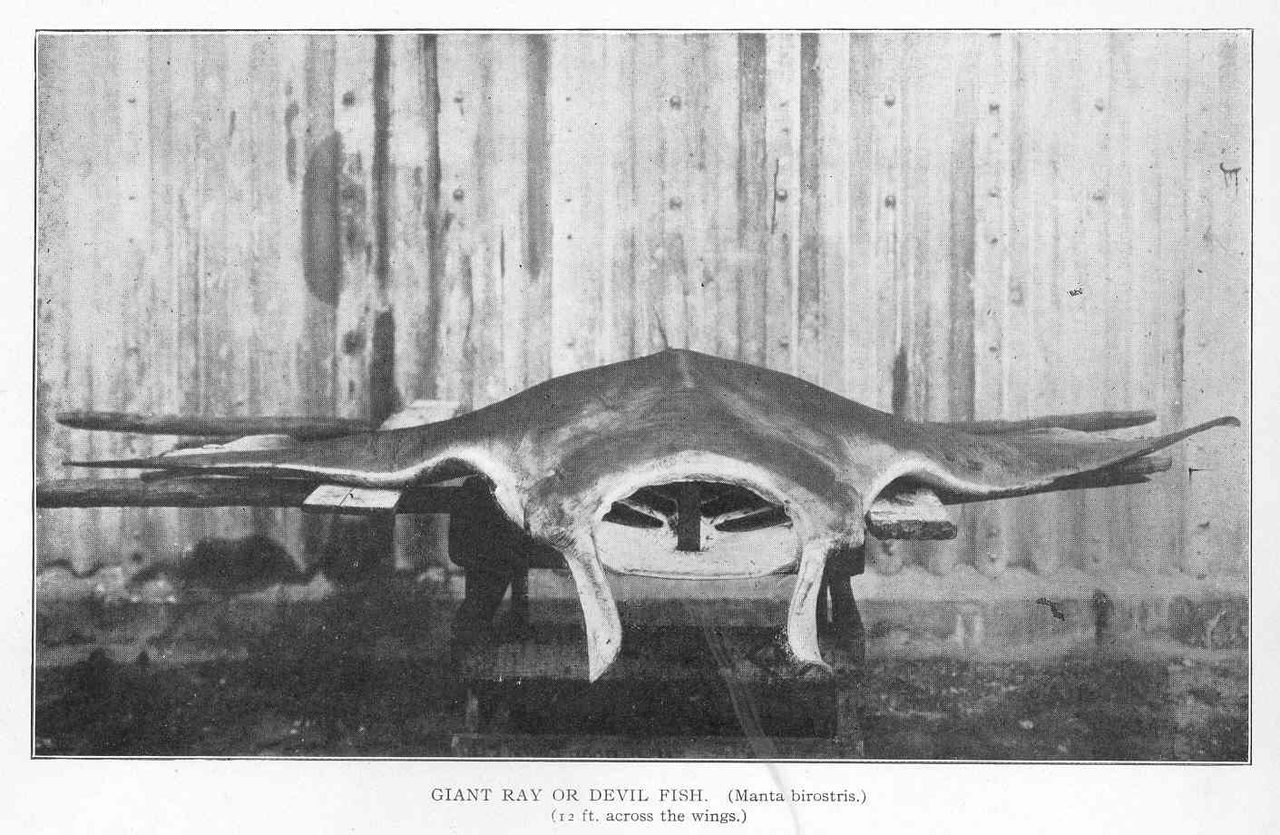
Photo: Harry Vincent / Public domain · via Wikimedia Commons
Juvenile giant manta rays stay inshore while adults roam hundreds of kilometres
A tracking study off Costa Rica has revealed a stark split in how giant manta rays use space across their lives: juveniles remain strictly in shallow nearshore waters, while adults undertake long-distance transboundary migrations along the continental shelf break into Central America, with some reaching waters off Guatemala.
Seven years of tracking mapped ray movements
Jeffry Madrigal-Mesén, director of the research group Mantas Costa Rica and lead author of the study, tracked endangered oceanic manta rays between 2018 and 2025. The team fitted 59 animals with acoustic transmitters, tracked 12 with satellite tags, and added photo identification, producing a combined dataset of more than 12,000 detections. "By combining different technologies, we were able to piece together a highly detailed map of their movements and their use of coastal cleaning stations," Madrigal-Mesén said.
Juveniles measure about 3 m across, adults 4–4.5 m
Young mantas with disc widths of around three metres or less stayed within Costa Rica's coastal waters, inside its exclusive economic zone. These shallow refuges provide food, shelter and cleaning services, without overlapping predator hunting grounds. Larger, mature animals measuring around 4 to 4.5 metres (13 to 15 feet) across undertook the long journeys; the smaller animals measured around 3 to 3.5 metres (10 to 11.5 feet).
Size and deep diving let adults evade threats juveniles cannot
"Mature adults can rely on their massive body size and their ability to dive deep to evade threats. But juveniles don't have that luxury," Madrigal-Mesén said. Giant manta rays can grow up to nine metres long with a disc size of seven metres across and weigh up to 2,000 kg, leaving adults with very few natural enemies once they reach sexual maturity at around eight to ten years. Juveniles, called pups, cannot rely on size to protect themselves from open-ocean predators including several species of shark and orcas.
Cleaning stations double as social hubs for adults
"Nearshore cleaning stations transcend basic hygienic function; they act as primary social hubs where courtship and reproductive interactions take place," Madrigal-Mesén explained. "Returning to a predictable coastal depot allows mature rays to prioritize social and cleaning needs before undertaking large-scale regional migrations." Coastal mantas also showed strong site fidelity, with very few moving between monitoring sites even when only tens of kilometres apart. One male nicknamed "Mickey Mouse" for its distinctive spot pattern was repeatedly photographed at Cabo Blanco and tracked with both satellite and acoustic tags, showing strong attachment to the site.
Leaving coastal waters means entering unprotected seas
Madrigal-Mesén noted that once animals left Cocos Island, a volcanic island in the Pacific Ocean, and most monitored coastal sites, they entered waters with no protection, exposing them to threats including fishing and vessel traffic. Manta rays reproduce slowly and take years to reach sexual maturity, making populations vulnerable. At Cocos Island, diver sightings of oceanic mantas fell 89% over 21 years.
Small samples and short tracks limit certainty
Earth.com cautioned that only two tracked juveniles form a thin base for a rule about where young mantas live, the Cocos Island acoustic record rests on eight animals, and satellite tags lasted 11 to 160 days, so none of the adult tracks covers a full year. These limits mean the findings still need larger samples to confirm.
Sources
- Frontiers in: Baby manta rays hunker down close to coasts before facing the open ocean’s dangers
- Popular Science: Baby manta rays stick to the shallows to avoid sharks and orca
- IFLScience: Baby Manta Rays Stick To The Coast Until They're Big Enough To Face The Open Ocean
- Phys.org: Baby manta rays hunker down close to coasts before facing the open ocean’s dangers
- Earth.com: Giant manta rays travel thousands of miles but keep returning to familiar reefs