Two Studies Point to Natural Shields Against Alzheimer's Risk
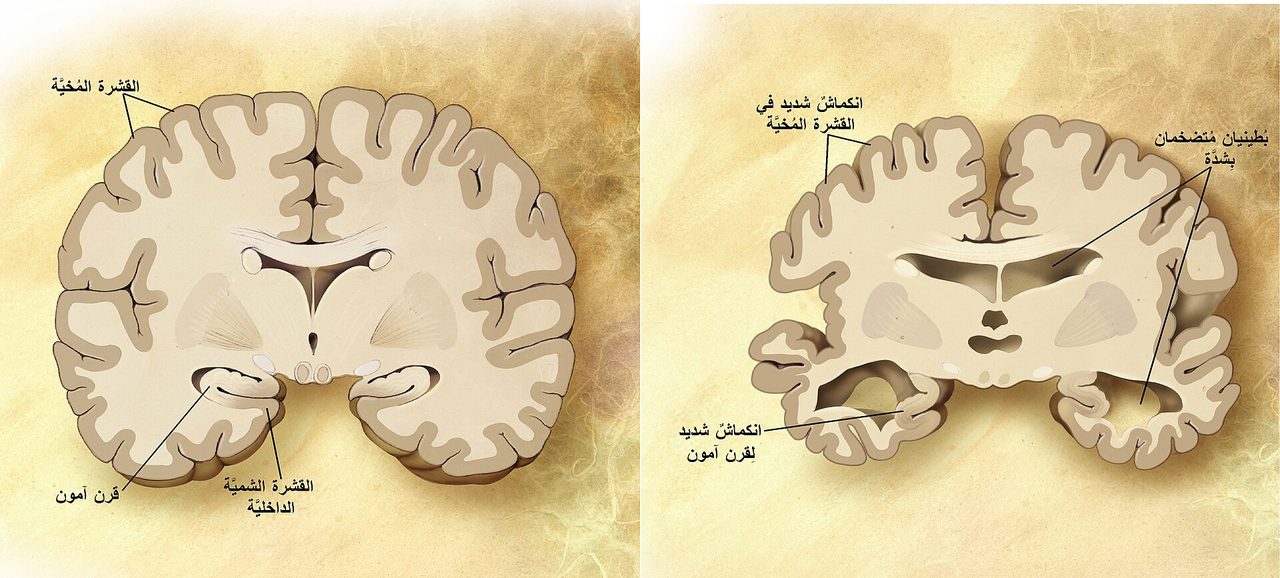
Photo: Original: Garrondo (talk)Derivative: باسم / Public domain · via Wikimedia Commons
Two Studies Point to Natural Shields Against Alzheimer's Risk
A Common Gene Puts One in Four at Higher Risk
About one in four people carries at least one copy of APOE4, the strongest common genetic risk factor for Alzheimer's disease. Carriers face at least twice the risk of developing the disease, and up to 12 times in some estimates. Yet many carriers never get sick, and scientists have long wondered what protects them.
Columbia Traces the Damage to Leaky Brain Vessels
A team at Columbia University focused on the brain's blood vessels. They found that APOE4 drives the production and accumulation of a protein called fibronectin around cerebral blood vessels, and the buildup damages the blood-brain barrier. In mice engineered to carry human APOE4, brain fibronectin measured nearly twice the level seen in mice carrying the ordinary APOE3 version, and the excess came with signs of barrier leakage.
A Rare Mutation Acts as a Built-in Brake
The Columbia researchers also identified a rare mutation in the FN1 gene that appears to keep fibronectin under control. In zebrafish carrying this mutation, fibronectin buildup was far lower than in fish without it. Nature, in effect, ran the control experiment: restrain fibronectin, and the vessel barrier stays protected.
MIT Finds the Insulation Around Neurons Under Attack
A separate study led by Li-Huei Tsai's group at MIT attacked the problem from a different angle: myelin, the fatty insulation that lets neurons signal properly. The team showed that APOE4 suppresses the canonical Wnt signaling pathway in oligodendrocytes, the cells that make myelin. Essential fatty acids get trapped inside toxic lipid droplets instead of being deployed as myelin around axons. The group had already reported the droplet accumulation back in 2022; the new work pins down the molecular switch behind it.
Flipping One Switch Restores the Insulation
Using a genome-wide CRISPR screen, the MIT team showed that inhibiting the enzyme GSK3b reactivates Wnt signaling, dissolves the lipid droplets, and restores myelination in human brain organoids and Alzheimer's mouse models alike. When mice carrying APOE4 with Alzheimer's-like tau pathology were treated with CHIR99021, lipid droplets in the hippocampus, the brain's memory hub, shrank while myelination increased.
From Genetic Clue to Disease Mechanism
Caghan Kizil, the corresponding author of the Columbia study, said the work turns a genetic clue into a disease mechanism: researchers knew fibronectin changes could protect against Alzheimer's, but not why excess fibronectin caused harm. Richard Mayeux, chair of Columbia's neurology department, added that the study connects a major genetic risk factor to an early disease process that may be possible to modify, offering both therapeutic targets and ways to measure whether treatments work.
Why It Matters Beyond Gene Carriers
Both findings converge on APOE4 carriers, a huge population, but their reach is wider. Vessel leakage and myelin damage are early processes that precede obvious symptoms, which suggests the window for intervention may open earlier than assumed. The Columbia team sketched three strategies: prevent excess fibronectin from accumulating, block the harmful signals it triggers through integrins and focal adhesion kinase, or restore the growth signals, including VEGF, HBEGF, and IGF1, that keep the barrier intact.
What Comes Next: Lab Tests Before Any Drug
The Columbia paper appeared in Nature Aging and the MIT paper in Cell Stem Cell, and both remain at the laboratory and animal-model stage, well short of any approved treatment. The teams are now testing these interventions, and the genome-wide screen has already surfaced additional pathways as fresh drug targets. For the public, the takeaway is concrete: carrying a risk gene is not destiny, and the brain harbors natural defenses that future drugs may learn to imitate.
Sources
- New York Post: Scientists uncover a surprising defense against Alzheimer's risk
- ScienceDaily: Why some people escape Alzheimer’s despite carrying a high-risk gene
- Deseret News: Study examines why many with high risk don’t get Alzheimer’s
- Neuroscience News: Boosting Wnt Signaling Reverses APOE4 Alzheimer’s Damage
- Technology Networks: Restoring Wnt Signaling May Counter APOE4 Effects