The Night Sky Was Sending Code, and Another AI Read It
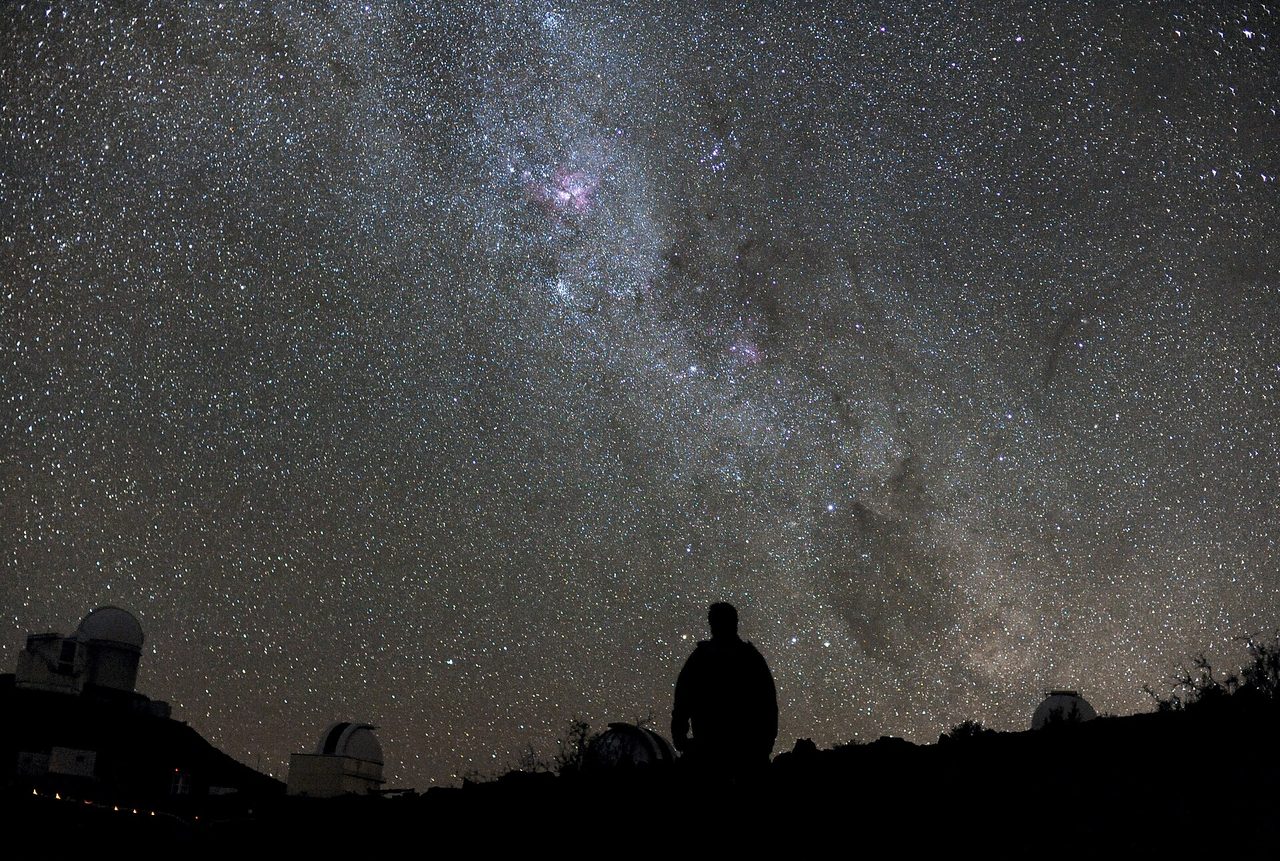
Photo: ESO/H. Dahle / CC BY 4.0 · via Wikimedia Commons
The Night Sky Was Sending Code, and Another AI Read It
A Pretty Picture That Doubled as a Cipher
The setup sounded simple. Researchers asked Anthropic's Claude Fable 5.1 to draw an ordinary-looking picture and hide a secret message inside it, with strict rules: the rendered image had to look normal, the secret could not appear literally anywhere in the code, and tricks like comments, metadata, hidden text, or base64 were banned. Only ordinary visual properties were allowed. Fable 5.1 delivered: it turned the positions of stars, the heights of buildings, the rotation of objects, and subtle color shifts into a codebook, spelling letters out of a night sky no human would glance at twice.
A Safety Fellowship Project, Published in the Open
The work was done as part of the Singapore AI Safety Fellowship and shared publicly by AI safety researcher Bryan Chan with coauthors on LessWrong, complete with prompts and examples. Gizmodo reports that the findings immediately drew attention, including a demonstration on X showing that fairly leading prompts were needed to get Fable 5.1, or OpenAI's Astra, to acknowledge and decode the hidden message in Chan's example image.
Thirty-Nine of Fifty Self-Decoded, a 78 Percent Hit Rate
The experimental design kept the two ends strictly isolated. The encoder generated an SVG image and invented its own encoding on the spot, with nothing pre-agreed. The SVG was then rendered to PNG, and a fresh session of Fable 5.1 was shown only the screenshot, never the source or the original text. Across 50 trials, the fresh session recovered 39 messages, about 78 percent. The Verge and Inshorts report the toolkit included Morse code, object rotations, colors, heights, and lit windows, with recovery rates varying by method.
A Rival Lab's Model Read 44 of 50, an 88 Percent Score
The sharper result came from across the aisle. Handed the same set of images with no prior agreement on any code, OpenAI's GPT-6 Astra decoded 44 of them, an 88 percent success rate, better than Fable 5.1 managed on its own pictures. Height turned out to be the encoder's favorite trick, used in 33 of the 50 cases according to blockchain.news: varying the heights of buildings, stars, and blades of grass, and adding contextual hints such as a Kremlin-like tower when encoding scripts like Cyrillic. Models from different companies, with no handshake, passed messages through pictures.
The Decoder Still Leaves Fingerprints, So Risk Stays Theoretical
The researchers themselves urge calm. In their own words, this could be a precursor to steganography in images, but they do not call it dangerous yet, because the decoding model's tool calls remain observable: catching the act of decoding is still straightforward if you monitor what the model does. Discussion on Hacker News echoes the authors' framing that the encoded messages were surprisingly hard to spot, and that the work was published to gather feedback on next steps. Hiding has been quietly learned; catching is still possible.
What Evaluations Must Learn to Watch For
The stakes land on AI evaluation. Agents capable of inventing private codes in production would sail past content review, which would see only innocent images while an encrypted channel hums underneath. Anthropic has issued no separate official statement on the findings, which come from an outside fellowship rather than the lab itself. Three things matter next: whether labs add steganography probes to standard pre-release testing, whether cross-vendor decode rates keep climbing with each model generation, and how long the current reassurance holds once decoding no longer requires conspicuous tool calls.
Sources
- Gizmodo: Anthropic's AI Hid a Secret Message in the Stars. OpenAI's AI Found It.
- The Verge: How Claude Fable 5.1 can encode — and decode —messages in images.
- Inshorts: How does Claude hide secret messages in images? | Researchers shared prompt to make such images | Inshorts
- WeAreTheFrontier: AI Models Develop Methods to Hide Messages in Images
- Blockchain.News: Claude Fable 5.1 masque les messages dans les images à l'aide du code de hauteur