Beijing Reshuffles Six Provinces Two Days Before Discipline-Focused Plenum
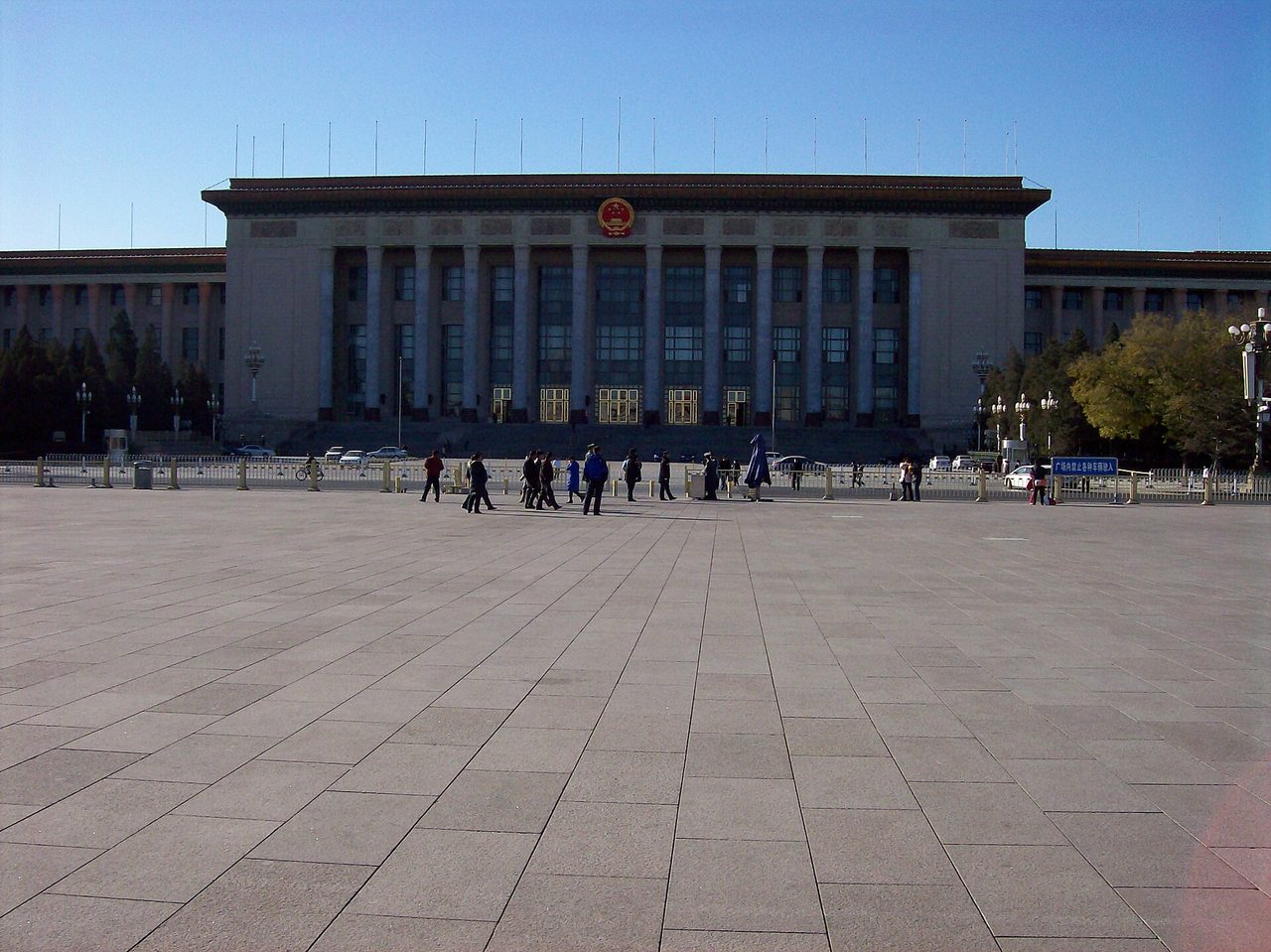
Photo: Philip Nalangan / CC BY 4.0 · via Wikimedia Commons
Beijing Reshuffles Six Provinces Two Days Before Discipline-Focused Plenum
Six provinces changed hands on October 24
China's ruling Communist Party announced personnel changes across six provinces on Saturday, October 24, just two days before a closed-door conclave in Beijing running October 26 to 29. The package includes two new provincial party secretaries and six officials placed as party-group secretaries of provincial governments, the stepping stone to becoming governors.
Wang Zhijun takes Hunan, Mo Gaoyi takes Yunnan
Wang Zhijun, Vice Secretary-General of the State Council and a full member of the Central Committee, was named party secretary of Hunan, replacing Shen Xiaoming. Mo Gaoyi, a vice minister of the party's publicity department and director of the State Council Information Office, was named party secretary of Yunnan, replacing Wang Ning. State news agency Xinhua confirmed both appointments on the same day.
Successors-in-waiting lined up for governorships
Xie Weijiang, Hunan's deputy party secretary and party chief of the northeastern city of Yueyang, became secretary of the provincial government's party group, signalling he will succeed Governor Mao Weiming. Guo Ningning, Fujian's deputy party secretary and party chief of the capital Fuzhou, took the equivalent post in Fujian, positioning her to become governor. Lin Tao was named Fujian deputy party secretary while Qin Haixiang replaced Guo as Fuzhou chief; Liu Qifan, formerly deputy party secretary of Qinghai, moved to Yunnan's number-two slot, signalling he will succeed Governor Wang Yubo.
Self-governance tops the plenum agenda
According to the official announcement, the fifth plenum of the 20th Central Committee will study "full and rigorous self-governance" of the party, with the Politburo reporting its work to the Central Committee. Days before the meeting, Xi Jinping set out three priorities in the flagship journal Qiushi: enforcing the leadership's decisions while preserving uncontested authority, locking cadres' sweeping powers in "an institutional cage," and sustaining the high-pressure anti-graft campaign with greater "penetrating power" indefinitely.
Analysts read tighter discipline as higher stakes
"The growing focus on discipline is not because behaviour is getting worse, but because the stakes are getting higher," Ruby Osman, a senior China policy adviser at London's Tony Blair Institute, told Reuters. Jean Christopher Mittelstaedt of the University of Zurich noted that purges and probes have thinned the ranks so far that turnout "will most likely be the lowest at any post-Mao plenum," below last October's 168 full and 147 alternate members.
Three of 24 gone from the Politburo
Mittelstaedt counts three of the 24 Politburo members elected in 2022 as gone, the most removed from a sitting Politburo in a single term since 1980, alongside five of the original seven members of the Central Military Commission. That attrition frames the plenum as plausibly the last major party gathering before the leadership reshuffle expected at the 21st Party Congress in autumn 2027, when Xi, 73, is widely expected to seek another term.
September rotation set the pattern
The October moves extend a rotation that began on September 23, when new party chiefs were named for Anhui, Henan and Fujian. That round, as Caixin Global reported, cycled experienced technocrats, academics and central ministers into regional posts to drive economic development and enforce administrative discipline ahead of local party congresses later this year.
What it means for provinces and cadres
For the affected provinces, new chiefs arriving with a discipline mandate suggest tighter cadre evaluation alongside the usual growth targets. For rank-and-file officials, the language of "institutional cages" and indefinite high-pressure graft-busting points to more penetrating supervision. For watchers of elite politics, parachuting central officials into Hunan and Yunnan two days before the plenum reads as stage-setting for 2027.
Communique and congresses to test appointments
The plenum communique due after the October 29 closing session will show how the discipline agenda is codified and what the Politburo's work report signals. The next concrete test follows early next year, when provincial legislatures vote on whether the six designated party-group secretaries formally become governors.
Sources
- U.S. News: China's Communist Party Names New Provincial Chiefs Ahead of Fifth Plenum
- The Straits Times: China's Communist Party names new provincial chiefs ahead of fifth plenum
- Xinhua: CPC Central Committee appoints Party chiefs for provinces of Hunan, Yunnan
- CGTN: Why China's upcoming 5th plenum of 20th CPC Central Committee matters
- Caixin Global: China Reshuffles Communist Party Chiefs in Anhui, Henan and Fujian