Trump Calls His Sinking Polls "Fake" and Puts Himself in the 60s
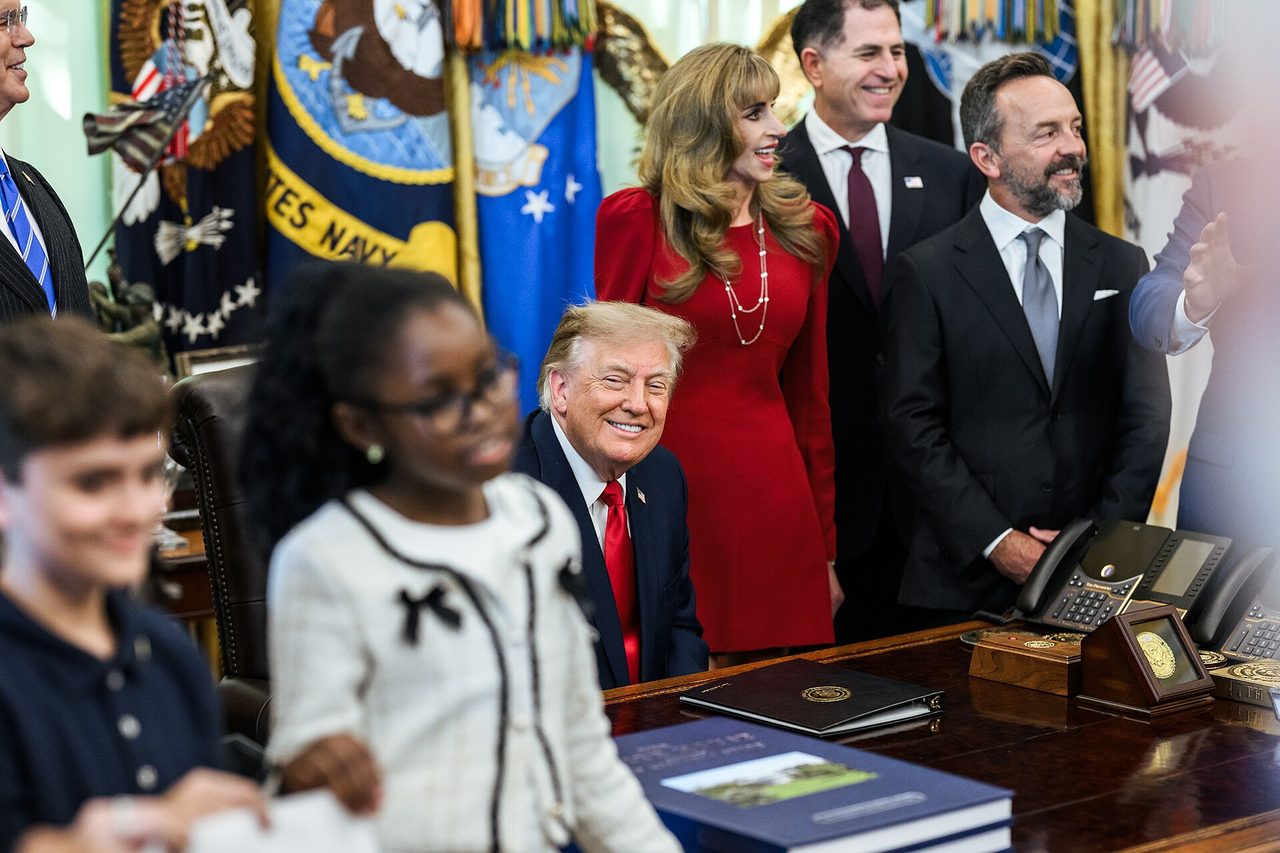
Photo: The White House / Public domain · via Wikimedia Commons
Trump Calls His Sinking Polls "Fake" and Puts Himself in the 60s
A Saturday interview turns into a broadside against the polls
In an interview with The Washington Examiner's Byron York published October 24, President Donald Trump dismissed a RealClearPolitics polling average showing him at 38.8 percent approval and 60.4 percent disapproval. "It's fake," Trump said. The exchange came less than two weeks before the November 3 congressional midterm elections.
"I'm not at 38": Trump names his own number
Pressed on what he believes his real approval rating is, Trump replied: "The job approval, they said it's 37, 38? I'm not at 38." He added: "I don't believe I could be beaten by anybody. I think that if I needed it, which I don't, I think 60." He went on to say, "I think I'd be in the 60s now."
Trump singles out the Times over a disgraced pollster
Trump aimed particular fire at The New York Times over its use of Wedgewood Polls, a firm that recently admitted to fabricating numbers, though the paper has said it did not use Wedgewood data in the poll in question. Trump also invoked CNN chief data analyst Harry Enten, whom he has previously praised at rallies. This week Enten described Trump's polling position as "a five-alarm Trumpster fire," noting Trump's net approval on inflation has collapsed from plus 8 points in the 2024 election to minus 45 points ahead of the midterms.
Four polls, one story: stuck near 30 percent
No major recent survey comes close to Trump's claimed figure. A Reuters/Ipsos poll conducted October 16 to 19 among 1,679 adults put him at 31 percent approval, the lowest of either of his terms, with a 2-point margin of error. A Pew Research Center survey of 5,062 adults from September 28 to October 4 found 30 percent approval and 68 percent disapproval, a second-term low with a 1.6-point margin of error. A New York Times/Siena University poll of 3,494 voters from October 12 to 19 gave him 34 percent, the worst pre-midterm standing since Harry Truman's 33 percent in 1946. A Washington Post/ABC News/Ipsos poll of 2,545 adults from October 9 to 13 found 33 percent approval and 66 percent disapproval, including 52 percent who strongly disapprove, down from 37 percent in April and July surveys.
Gasoline, groceries and the Iran war drag him down
The economy dominates the explanation. In the Reuters/Ipsos poll, 68 percent disapprove of Trump's handling of the economy, including 37 percent of self-identified Republicans, and voters trust Democrats over Republicans on the economy by 40 percent to 33 percent. The Times/Siena poll found 69 percent disapprove of his handling of the cost of living, 65 percent disapprove of his handling of the Iran war, and 73 percent disapprove of his handling of gas prices against 24 percent who approve, with the national average still above 4 dollars a gallon. Pew found only 35 percent confident in his economic decisions, only 21 percent calling current conditions excellent or good, and 84 percent of registered voters calling the economy very important to their vote. An NBC News/SurveyMonkey poll released the same week put him at a second-term low of 34 percent, with 51 percent strongly disapproving and Latino approval at just 31 percent.
Republicans feel the undertow two weeks out
The slump extends to the party. The Post-ABC-Ipsos poll found independents' approval of Trump at just 22 percent, a record low in that series, and Pew found only 67 percent of Trump's own 2024 voters still approve, a 28-point fall since the start of the term. The Times/Siena survey gives Democrats an 11-point lead on the generic House ballot, with Democrats ahead by eight to 20 points on the economy, cost of living, gas prices and health care. Even the group that powered Trump's 2016 and 2024 wins, white voters without a college degree, is now about evenly split at 48 percent approving and 46 percent disapproving.
Denial or strategy as Election Day nears
Trump has disputed unfavorable polls before, but rarely this sweepingly and this close to voting. The White House has offered no data supporting the 60s claim. Whether economic discontent converts into Democratic votes, or Republicans hold their base despite the numbers, will be settled on November 3.
Sources
- The Independent: Donald Trump says polls are fake and insists his approval rating is really at 60%
- Mediaite: Donald Trump Claims His Job Approval is Actually Somehow 60%
- HuffPost: Trump Rejects Disastrous Polls: 'I Don't Believe I Could Be Beaten By Anybody'
- The Hill: Trump approval at record low 31 percent ahead of midterms: Survey
- USA Today: Trump approval rating falls to career low in new poll