Settlers Turn the West Bank Olive Harvest Into a Season of Fear
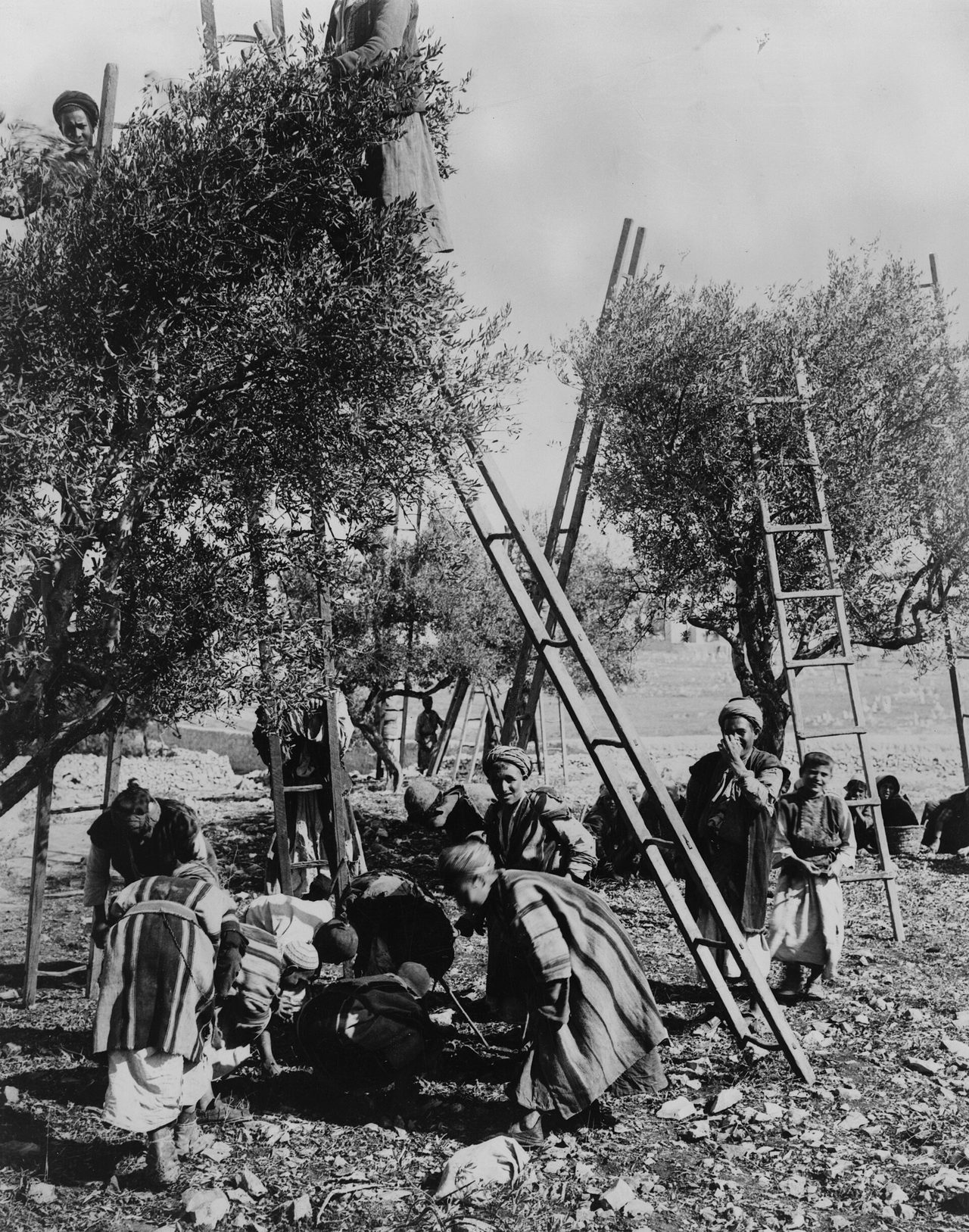
Photo: Frank and Frances Carpenter Collection / Public domain · via Wikimedia Commons
Settlers Turn the West Bank Olive Harvest Into a Season of Fear
A harvest that now starts with funerals
The olive harvest that began in early October was supposed to be the West Bank's happiest season. Instead, it has become the most violent in years. Palestinian authorities say three Palestinians have been killed in near-daily settler attacks since the harvest began, while journalists, European diplomats and a French mayor have been injured. Ziv Stahl of the Israeli rights group Yesh Din called the violence part of a campaign of ethnic cleansing designed to clear the way for annexation.
Theft on a scale veterans have never seen
This year the settlers are not only beating pickers, they are taking the crop. Salem, a 50-year-old farmer near Lubban al-Gharbi, watched settlers dump his olives into sacks and drive them to a nearby outpost to be pressed into oil. Sarit Michaeli, an activist with 22 years of experience on this issue, said settlers are stealing the harvest on a scale she has never seen. Videos published by B'Tselem showed hundreds of bags of olives seized and hauled to Israeli presses.
Friday of fire in Abu Falah and Turmus Ayya
The worst single day came on October 16. In Abu Falah, near Ramallah, at least 80 settlers, some armed with guns or clubs, descended on families picking olives and rained stones down with slingshots as military vehicles looked on, according to witnesses. Heidi Levine, a veteran American photojournalist working for The Washington Post, was knocked to the ground and kicked, she estimated, some 50 times; her helmet and flak jacket likely saved her life, and she was hospitalized near Ramallah. Hours earlier near Turmus Ayya, settlers beat a lone farmer and burned three cars. Settlers also reportedly stabbed about 20 sheep in Kafr Malek and cut down 120 olive trees near Kisan.
The numbers behind the "ominous start"
The United Nations says the pace of attacks is unprecedented. Its aid coordination office counted 160 harvest-related settler attacks in the first two weeks of October alone, often with soldiers present or participating, and nearly 200 by October 15, already more than the 185 recorded in all of 2025. Between 2023 and the end of September 2026, about 286,000 olive trees were damaged, including 100,000 this year before the harvest even began. The harvest supports 80,000 to 100,000 Palestinian families and contributes an estimated $170 million a year to the West Bank economy.
Washington breaks its silence
The beating of an American journalist drew an unusually sharp response. U.S. Ambassador to Israel Mike Huckabee called the attack on Levine vicious and cowardly, a despicable act of terror by masked cowards, and demanded a full investigation with arrests and prosecution to the fullest extent of the law. Israeli police later said 8 suspects had been arrested over the attacks on the journalist and on diplomats. UN experts urged Israel to protect the farmers, and Amnesty International called for targeted sanctions and an arms embargo.
Harvest runs to November, half the land still out of reach
The harvest runs through the end of November, and Palestinian officials estimate that about 50 percent of olive land will remain inaccessible this year. Villages such as Jalud are leaving fruit hanging on trees out of fear. Whether arrests and international pressure can keep the remaining weeks safe, and whether stolen harvests and destroyed groves will push more families off their land, are the questions that will decide this season's legacy.
Sources
- Reuters: Israeli settlers steal Palestinians' olives as attacks on harvest grow more violent
- The Guardian: Israeli settlers attack olive farmers and Washington Post journalist in West Bank
- PBS: Israeli settlers attack Palestinians during West Bank olive harvest and beat U.S. photojournalist
- UN News: ‘Ominous start’ to West Bank olive harvest amid settler attacks
- France 24: How Israeli settlers wearing keffiyehs are attacking West Bank olive groves