Why Microsoft Popped While Google Sank: A Tale of Two Earnings
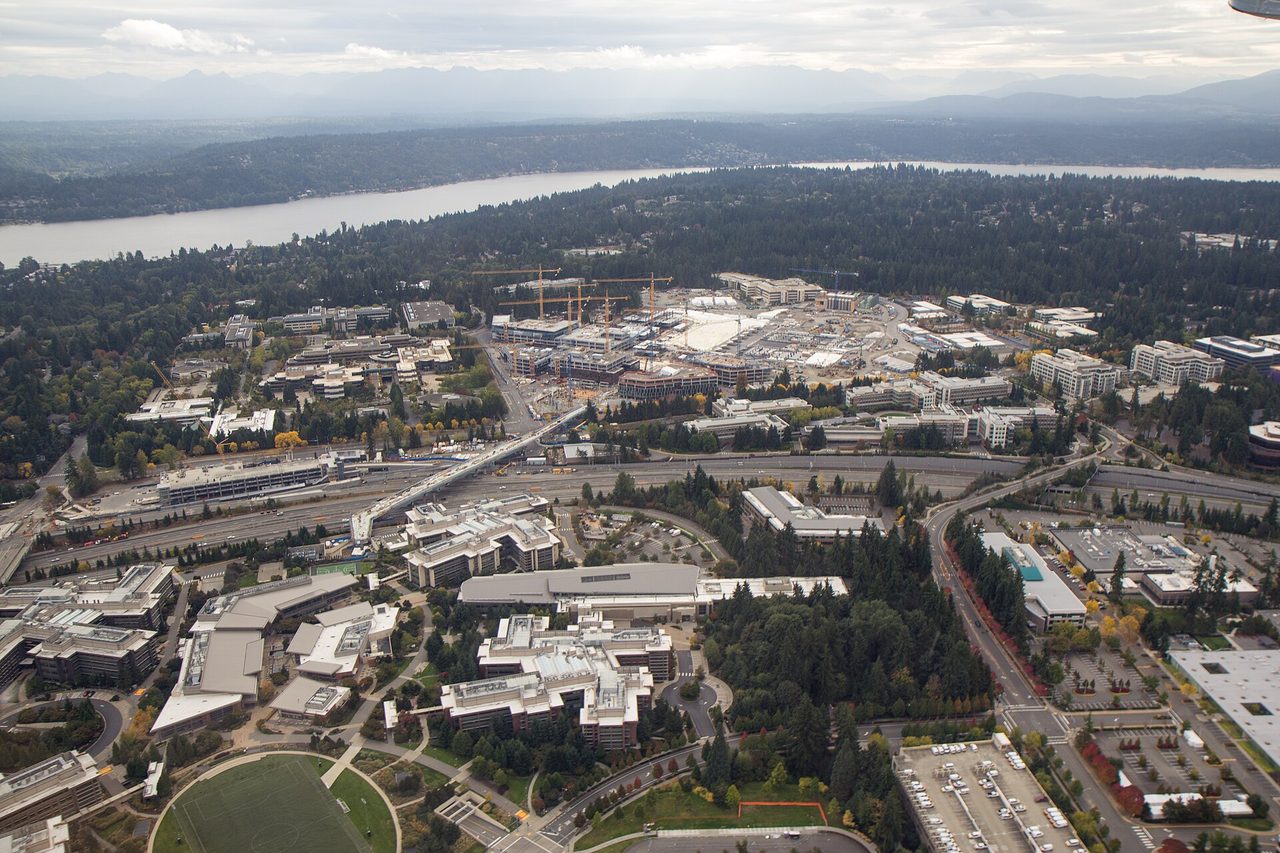
Photo: Atomic Taco / CC BY-SA 2.0 · via Wikimedia Commons
Why Microsoft Popped While Google Sank
Same Night, Opposite Verdicts From Investors
Microsoft and Alphabet reported on the same Wednesday evening, and the market delivered a split verdict. Microsoft shares rose as much as 4% after hours, pushing toward $554.68, above the prior 52-week high of $551.15. Alphabet sank about 8% to 10% in extended trading and stayed down more than 10% premarket Thursday, erasing roughly $200 billion to more than $280 billion in market value.
Microsoft Beat on Both Lines
Microsoft's fiscal first quarter was a clean beat. Revenue rose 19% to $92.3 billion, ahead of the $90.69 billion consensus. Adjusted earnings per share rose 18% to $4.89 versus $4.73 expected. Operating income climbed 21% to $45.9 billion, and adjusted net income came in at $36.4 billion versus $35.13 billion expected.
Azure Accelerated and Finally Showed Its Size
Positive Cash Flow Set Microsoft Apart
Microsoft generated $18.63 billion in free cash flow, down 27% from a year earlier but still firmly positive. That contrasted with Alphabet's negative $9.07 billion and Meta's recent swing to an outflow. Microsoft also trimmed its full-year capital spending forecast to $170 billion from $175 billion, signaling a measured build-out. Finance chief Amy Hood guided to 49% to 50% Azure growth next quarter at constant currency, above the Street's 45.1%, adding that demand still exceeds supply.
Google's Problem Was Search, Not Cloud
Cash Burn and a Messy Message Sealed the Selloff
Free cash flow of negative $9.07 billion was far worse than the near-breakeven consensus and deeper than the prior quarter's negative $5.9 billion, marking a second straight quarter of cash burn. Alphabet held its full-year capital expenditure guidance at $195 billion to $205 billion rather than raising it. Analysts were blunt: JonesTrading called it the AI Hunger Games played from weakness, UBS warned search cannibalization fears were back, and Quilter Cheviot contrasted Microsoft's measured execution with what it called a messy set of results and a poorly handled earnings call.
What Comes Next Is Monetization
Both companies spent less than feared this quarter, which also weighed on neocloud stocks. From here, the paths diverge: Microsoft must prove Azure can hold near-50% growth while supply catches up, and Alphabet must show that record search query growth and a Gemini app past 1 billion users can translate into ad dollars again. Until search reaccelerates and cash burn narrows, Google stock carries the burden of proof that Microsoft, for now, does not.
Sources
- CNBC: AI build-out hits snag as Google and Microsoft put off raising capex forecasts
- Reuters: Alphabet shares fall after revenue miss, cash burn worsens
- Fortune: Alphabet's Google Cloud revenue doubles to $31 billion as cash flow stays deep red
- SiliconANGLE: Microsoft's stock rises on solid earnings and revenue beat, with Azure growing 48%
- Proactive Investors: Microsoft beats Wall Street estimates as Azure growth hits 48%