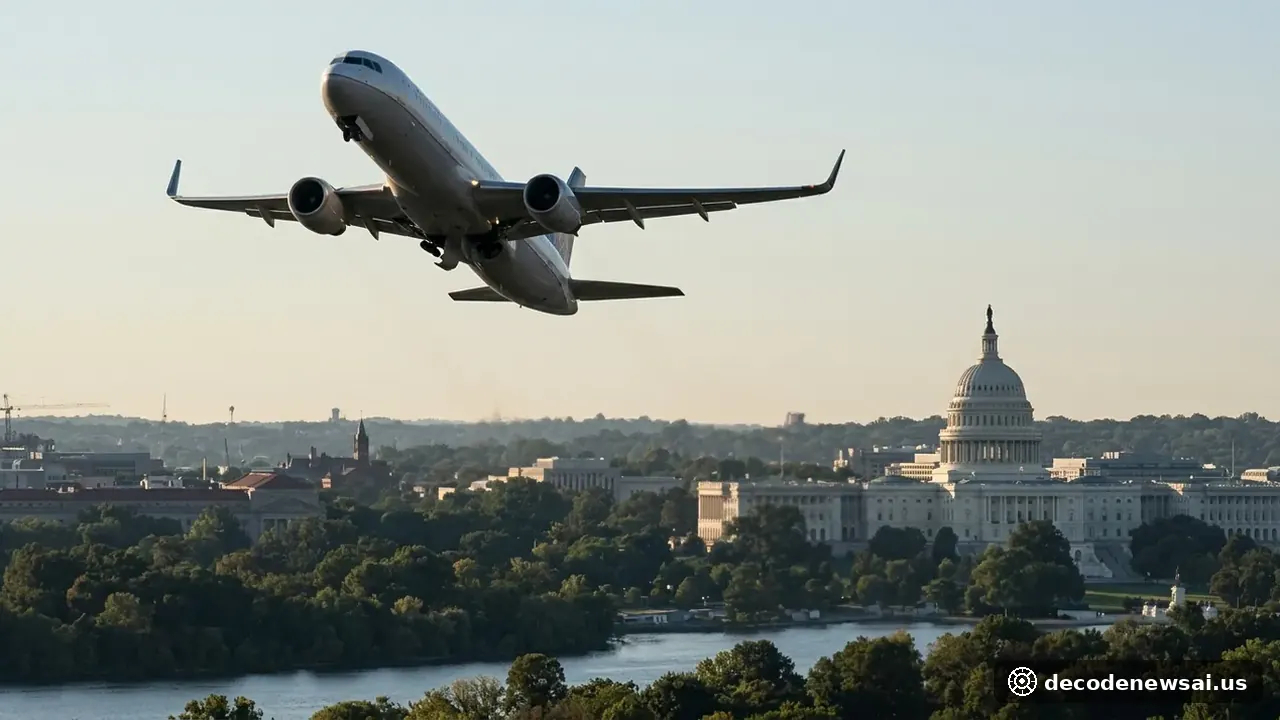
WASHINGTON - Senate Commerce Committee leaders on Nov. 17 announced an agreement in principle with House lawmakers to require civilian aircraft in crowded airspace to carry collision-alert systems. The proposal follows the Jan. 29, 2025 midair collision near Reagan National Airport that killed 67 people, though rules for military aircraft remain unresolved.
Civilian Fleets Face 2031 Equipment Deadline
Committee Chair Ted Cruz and ranking Democrat Maria Cantwell unveiled the bipartisan framework alongside victims' families outside the U.S. Capitol. Under the proposal, operators must equip civilian aircraft with ADS-B In receivers, which provide pilots visual and audible traffic alerts, by the end of 2031. The National Transportation Safety Board estimated that ADS-B In could have alerted the jet's pilots 59 seconds before the crash.
Military Airspace Standards Remain Contested
Lawmakers are still negotiating how strictly the mandate will govern Pentagon training flights in shared corridors. "We must have strong military accountability in the national airspace. The military must be a willing partner with the Department of Transportation and the FAA to make sure that what happened that January never, ever happens again," Cruz said. Cantwell added that negotiators do not yet have an agreement on military protections.
Lawmakers Aim for Passage Before Year-End
House Armed Services Chair Mike Rogers previously objected to portions of the military tracking rules, leaving key details to be settled in conference talks. Cruz said his objective is to pass the compromise aviation safety bill before Congress adjourns for the year.