ULA Traces Vulcan Rocket Failure to Inadequate Fuel Supply to Booster Engines
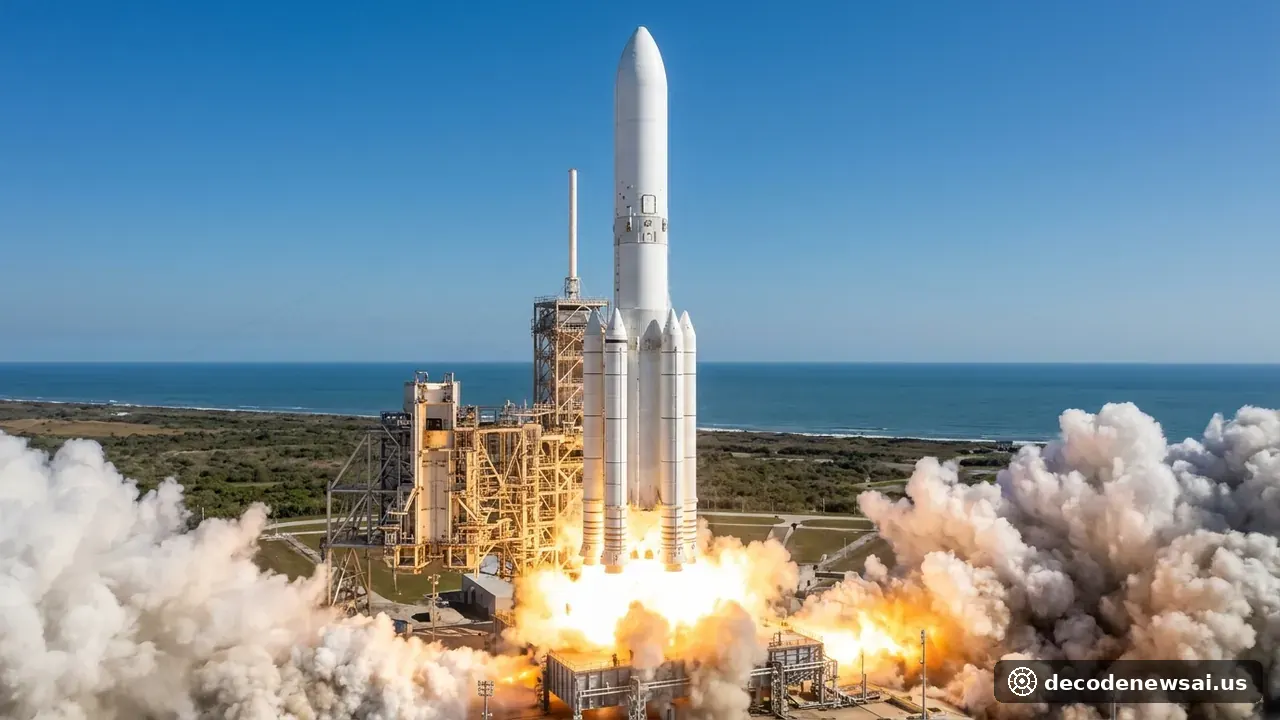
CAPE CANAVERAL, Fla. - United Launch Alliance said on Nov. 18 that a preliminary flight data review points to an inadequate fuel supply from the rocket to its first-stage BE-4 engines as the cause of Sunday's launch failure.
Booster Fuel Starvation Doomed 40 Amazon Satellites
The fifth flight of ULA's Vulcan Centaur rocket lifted off at 12:40 p.m. EST on Nov. 15 and lost telemetry roughly 10 minutes later, failing to orbit 40 Amazon Leo broadband satellites in ULA's first total mission loss in 20 years. "While work remains to determine cause, preliminary indications are that the low booster thrust was the result of inadequate fuel supply from the vehicle to the BE-4 engines, not from the performance of the engines," ULA stated on Nov. 18, adding that the Centaur V upper stage and its RL10 engines operated normally.
Blue Origin Engines and Solid Boosters Cleared
The preliminary finding spares Blue Origin, which manufactures the methane-fueled BE-4 engines used on both Vulcan and Blue Origin's New Glenn rocket, currently targeting a January return to flight. ULA also reported nominal performance from all six Northrop Grumman solid rocket boosters, which burned out and separated about 1 minute and 35 seconds after liftoff following nozzle upgrades made after earlier anomalies in October 2024 and February 2026.
FAA Oversees Probe With Grounding Indefinite
Vulcan remains grounded with no return-to-flight date, delaying deployments for the U.S. Space Force and Amazon, which booked 38 Vulcan launches toward a constellation exceeding 3,200 satellites. The Federal Aviation Administration is overseeing ULA's investigation and must approve the final report and corrective actions.
Sources
- spacepolicyonline.com: Insufficient Fuel Flow May Have Doomed Vulcan -
- spaceflightnow.com: Vulcan failure investigation focuses on 'inadequate fuel supply' to booster engines -
- Space.com: ULA traces Vulcan Centaur rocket failure to 'inadequate fuel supply' to 1st-stage engines -
- english.news.cn: Preliminary review points to inadequate fuel supply in Vulcan rocket launch anomaly -