NASA's Voyager 1 Reaches One Light-Day From Earth After 49 Years
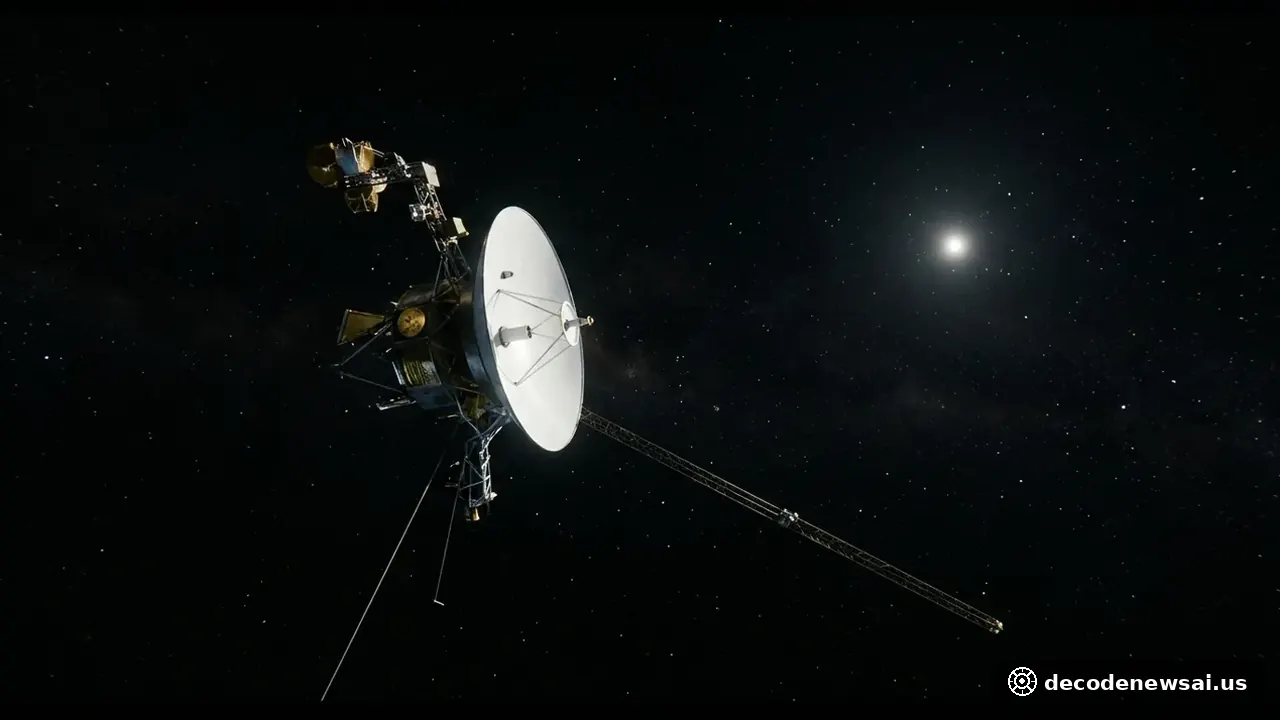
WASHINGTON - NASA's Voyager 1 spacecraft reached one light-day from Earth at 5:16:07 a.m. EST on Nov. 18, becoming the first human-made object to cross that distance. Launched on Sept. 5, 1977, the probe took 49 years, two months and 11 days to travel more than 16 billion miles into interstellar space.
Radio Signals Now Take 24 Hours Each Way
One light-day equals the exact distance light travels in 24 hours, or 16,094,799,096 miles (25,902,068,356 kilometers), meaning every command from Earth now takes a full day to reach the probe. Engineers at NASA's Jet Propulsion Laboratory communicate through the Deep Space Network and must wait another 24 hours for confirmation to return. "The Earth and Voyager are exactly 24 hours apart at the speed of light," Voyager Project Scientist Linda Spilker told Space.com.
Aging Probe Still Measures Interstellar Space
Voyager 1 is cruising at nearly 38,000 mph through the interstellar medium beyond the sun's protective heliosphere while still returning magnetometer and plasma wave data. "Reaching one light-day is an astounding feat, one that I never expected to see," Voyager project manager Suzanne Dodd said, as reported by Hindustan Times. Dodd added that Voyager 1 continues detecting shock fronts from solar eruptions far past the heliopause.
Voyager 2 Follows Nine Years Behind
Twin spacecraft Voyager 2 took a slower trajectory to visit Uranus and Neptune and is not expected to reach one light-day from Earth until November 2035. NASA has turned off select instruments on both probes, including Voyager 1's low-energy particle instrument in April 2026, to conserve plutonium power. Mission officials said enough power remains to keep current science instruments operating through the 50th launch anniversary in 2027.
Sources
- NASA: Voyager 1: What Is a Light-Day —
- Space.com: 1 light-day from Earth! NASA's Voyager 1 probe hits huge milestone in interstellar space —
- earthsky.org: Voyager 1 reaches 1 light-day from Earth! —
- hindustantimes.com: Voyager 1 becomes first human-made object to reach one light-day from Earth —
- orbitalradar.com: Voyager 1 Passed One Light-Day: Live Distance —