Earth's Ancient Mountain Spurts Helped Spark Complex Life, Study Finds
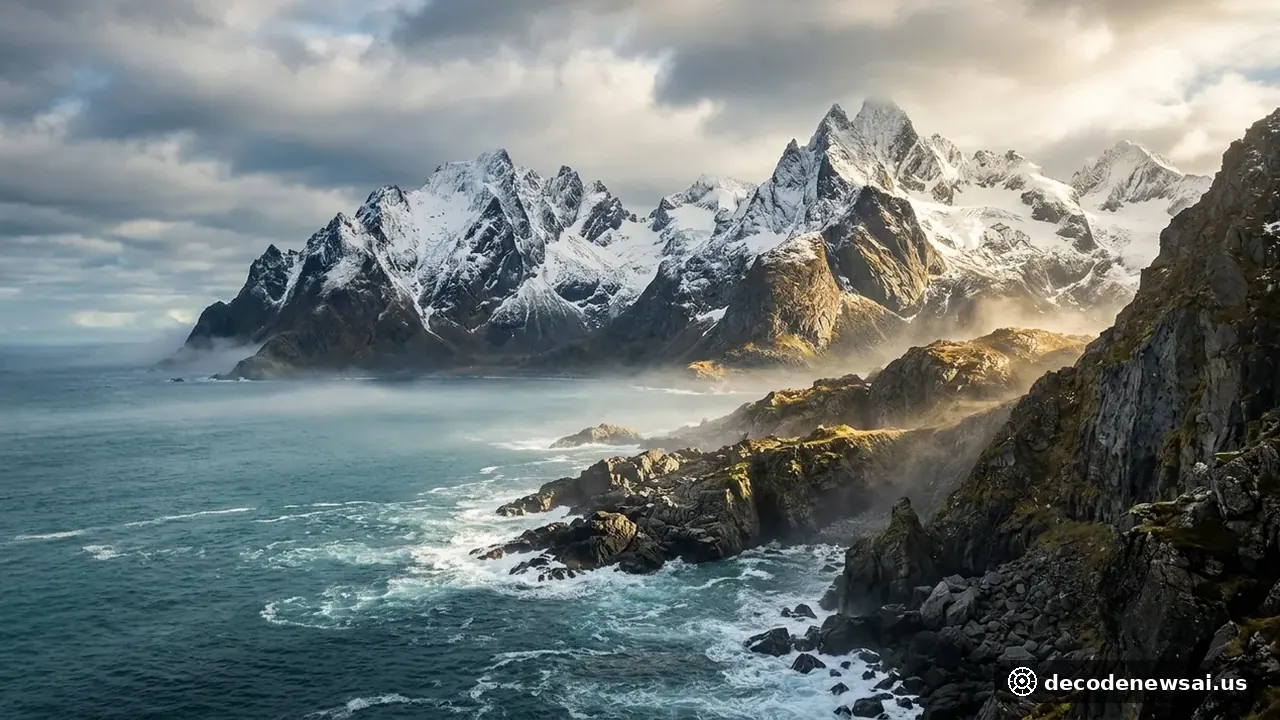
VANCOUVER — Earth's mountain ranges grew in two abrupt geological leaps. They did not rise gradually. They flushed vital nutrients into ancient oceans. They helped oxygenate the atmosphere for complex life, according to a study published in Science Advances and highlighted on Nov. 19, 2026.
Metamorphic Rocks Track Crustal Leaps
Researchers led by Matthijs Smit at the University of British Columbia analyzed pressure signatures in metamorphic rocks. Teams from Utrecht University and the Swedish Museum of Natural History joined them. The rocks were buried across more than three billion years. That record is long.
Before roughly 2.7 billion years ago, mountain crust reached only 30 to 35 kilometers thick. Growth was limited. By 2.2 billion years ago, maximum crustal thickness doubled to about 60 kilometers. It supported 4.5- to 5-kilometer peaks.
Between 800 million and 700 million years ago, it surged to 90 kilometers. It was another leap. It rivaled today's 9-kilometer Himalayas.
Erosion Delivered Ocean Nutrients and Oxygen
Scientists linked the growth spurts to the gradual cooling of Earth's mantle. The mantle cooled. That stiffened tectonic plates enough to support taller peaks.
Erosion of those ranges was faster. It washed phosphorus and other locked minerals into nutrient-starved seas. It fueled photosynthesis during two global oxidation events.
Peaks grew taller. "Changes that occurred deep in the Earth ultimately gave rise to much taller mountains over time." "which may have made our planet habitable by providing the nutrients needed for life to form and flourish," Smit said.
Planetary Cooling Shapes Exoplanet Search
Both mountain-building waves preceded major ice ages. They also preceded rapid biological diversification. The authors note that interior planetary cooling could serve as a key indicator when astronomers evaluate whether distant exoplanets can sustain complex life.
Sources
- sci.news: Earth's Mountains May Have Helped Make It Habitable, New Study Says —
- uu.nl: Did mountains make a habitable world? —
- science.ubc.ca: Mountain growth spurts may have sparked complex life on Earth —
- discovermagazine.com: Mountain Growth Spurts May Have Helped Fuel the Rise of Complex Life —
- iflscience.com