BepiColombo Reaches Mercury After 8-Year Journey Ahead of Orbit Insertion
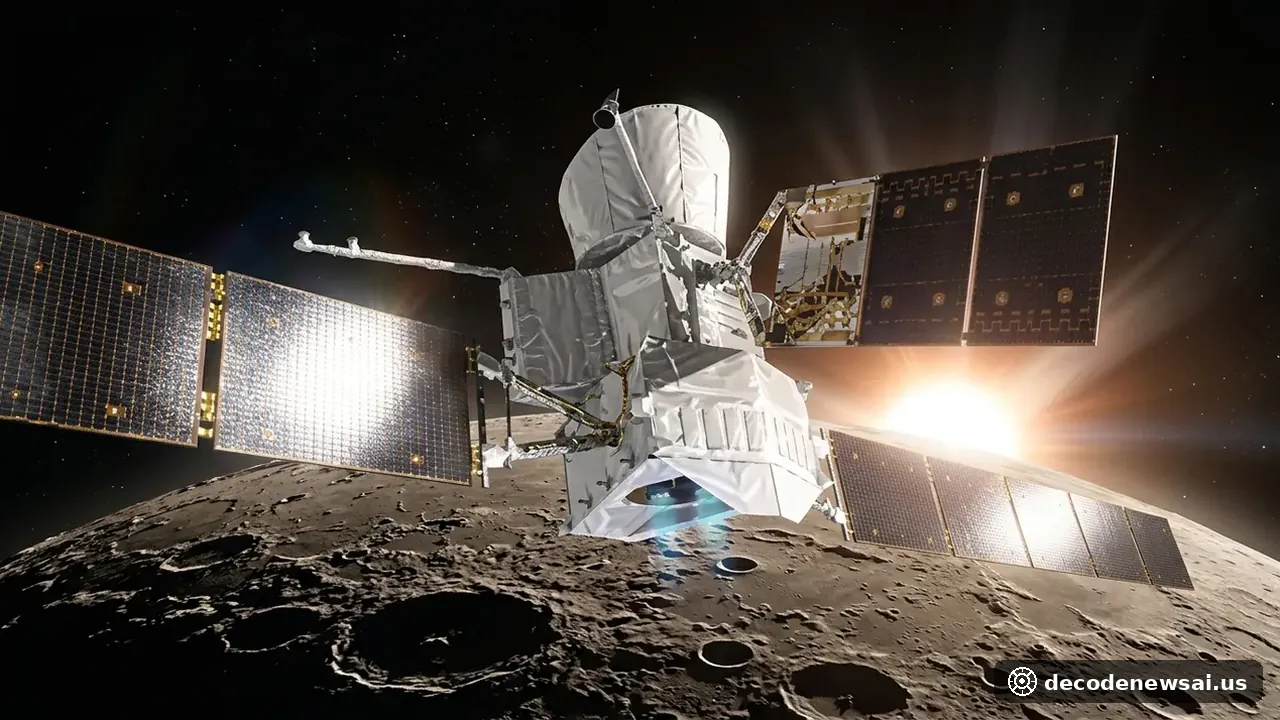
PARIS - The joint European-Japanese BepiColombo spacecraft has arrived at Mercury after an eight-year, 6-billion-mile voyage and is set to fire its thrusters on Nov. 21, 2026, to enter orbit around the solar system's smallest planet.
Second Mission Ever to Orbit Mercury
When flight controllers command orbit insertion on Nov. 21, the €1.6 billion ($1.7 billion) mission will become only the second spacecraft to circle Mercury, following NASA's MESSENGER probe.
Approaching the sun requires constant braking through solar electric propulsion and nine planetary flybys. After shedding its transfer module on Sept. 3, 2026, the craft overcame a 2024 solar-array power issue that shifted arrival from December 2025 to November 2026.
Dual Orbiters Will Split in December
ESA's Mercury Planetary Orbiter and JAXA's Mio probe are scheduled to separate on Dec. 9–10, 2026, before starting science operations in April 2027.
Operating from complementary polar orbits, they will study Mercury's oversized core, magnetic field, and crater ice where temperatures swing from 450 degrees Celsius to minus 180 degrees Celsius. "As well as cameras covering a wide range of wavelengths to study the surface, we'll be 'tasting' the gases around the planet, sensing the magnetic field, probing the interior with ultrasensitive instruments, and mapping the shape of the whole planet with a laser," ESA lead project scientist Geraint Jones said.
UK X-Ray Instrument Cleared Cruise Tests
During a Sept. 11–12, 2026 test, the UK-built MIXS spectrometer observed the Crab Nebula—6,500 light-years away—for 39 hours with no radiation damage.
Both orbiters will study Mercury for roughly three years before crashing onto its surface.
Sources
- esa.int: Latest updates: BepiColombo's arrival at Mercury -
- The Guardian: Spacecraft reaches Mercury on second-ever mission to enter its orbit -
- skyatnightmagazine.com: An X-ray camera on a spaceship bound for Mercury has captured the remnants of an exploded star -
- thecampusreview.com: Spacecraft Reaches Mercury After Eight Years in Space -