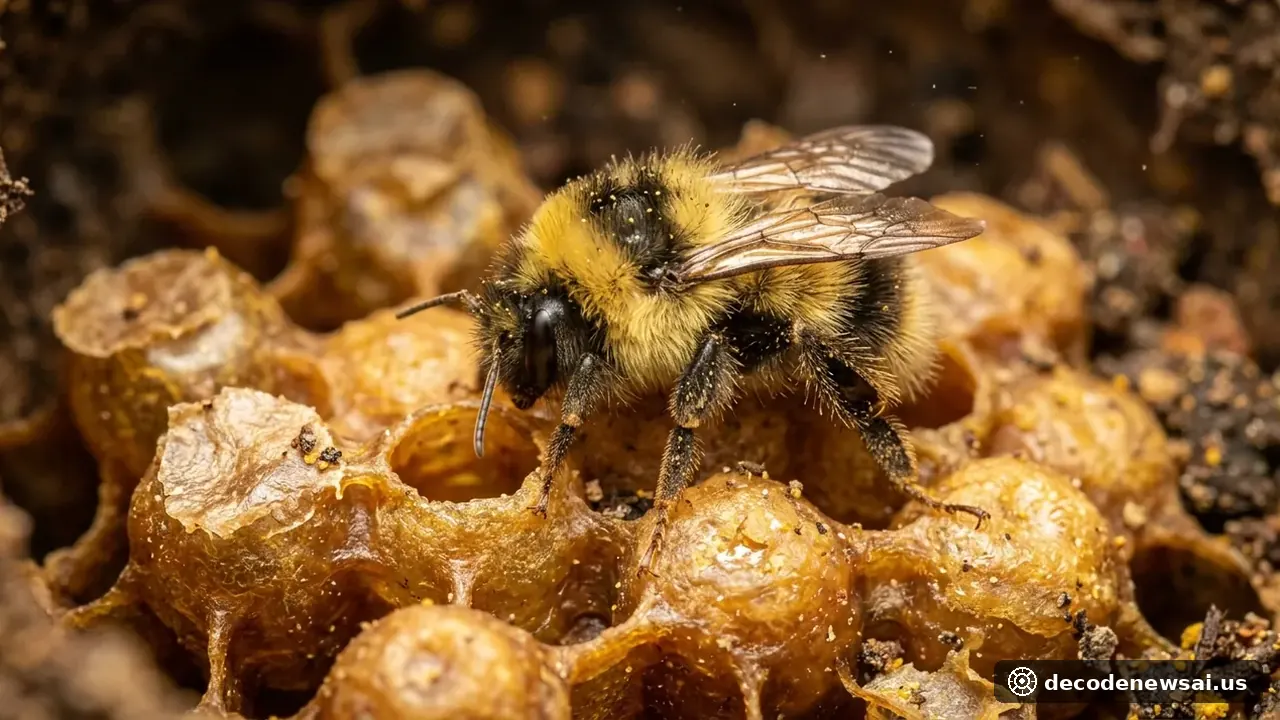
RIVERSIDE, Calif. - Researchers at the University of California, Riverside reported on Nov. 19 that male bumblebees actively generate body heat to incubate eggs and larvae, challenging decades of assumptions that males only contribute sperm.
Male Helpers Double Egg-Laying Speed
Published in Royal Society Open Science, the study tracked laboratory nests of Bombus impatiens for roughly one month, each containing a mated queen and zero, one, three, or five males without female workers. "Queens with males in their nests began laying eggs twice as fast, and they end up with up to 1.5 times more brood," said lead author Meghan Moore, noting the findings arrive as wild bumblebees face pollution and habitat loss.
Thermal Cameras Capture Active Thorax Heating
Moore discovered the behavior while inspecting thermal heat maps from an earlier test, spotting males straddling eggs in the classic incubation posture. Males adopting the posture raised their thorax temperatures to about 34.8 degrees Celsius, compared with a typical 31 degrees, though they incubated at slightly lower temperatures than queens—a difference Moore suggested might protect sperm viability.
Laboratory Caveats and Future Energy Studies
Because wild bumblebee nests are hard to locate and the lab setup kept males inside without female workers, the team cautioned that wild male tenure remains uncertain. Still, Moore noted a smaller test showed males caring for brood even alongside female workers, and co-author Hollis Woodard said future studies will measure the energetic trade-offs of male caregiving.