APEC Leaders Adopt Shenzhen Outlook Declaration, Hand 2027 Torch to Viet Nam
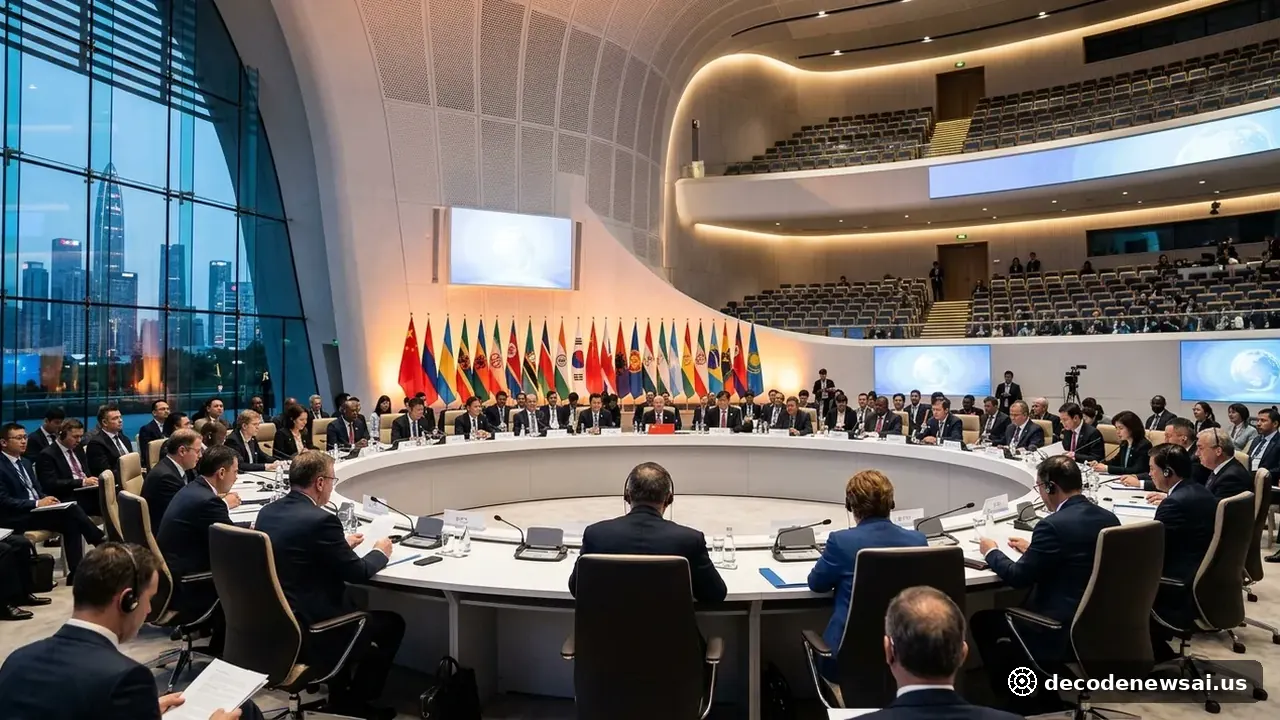
SHENZHEN, China — Economic leaders from 21 Asia-Pacific Economic Cooperation economies unanimously adopted the 2026 Shenzhen Outlook declaration and three outcome documents on Nov. 19. Viet Nam assumed the 2027 host role.
Declaration Sets Digital and Trade Roadmap
The consensus declaration endorses a 2027–2030 trade digitalization framework. It endorses an artificial intelligence initiative through 2030. It endorses a supply chain connectivity review.
Together, APEC's 21 member economies accounted for 61.6 percent of global real gross domestic product in 2025. That included 50.1 percent of global goods exports. That included 48.5 percent of world goods imports.
Chinese President Xi Jinping chaired the 33rd Economic Leaders' Meeting. He pledged $20 million for practical regional cooperation. He announced a Center for Asia-Pacific Community Studies in Shenzhen.
Leaders Call for Resilience Amid Shocks
Participants stressed open markets and supply chain stability. Energy disruptions and rapid technological shifts reshape regional growth. "Members of APEC are like passengers riding the same ship. To navigate the waves of the Pacific, we must unite as one and look out for each other," Xi told fellow leaders.
International Monetary Fund Managing Director Kristalina Georgieva briefed the summit, urging members. Artificial intelligence has helped counterbalance energy supply shocks this year. Address cybersecurity and financial stability risks.
Viet Nam Assumes 2027 Host Duties
Vietnamese President To Lam formally accepted the 2027 APEC chairmanship. He invited member economies. They convene in Viet Nam next year.
The Shenzhen Outlook also confirmed future host rotations through 2034. It named Mexico for 2028. Then came Singapore for 2030, Japan for 2031, Chile for 2032, Papua New Guinea for 2033, and Peru for 2034.
The Shenzhen gathering was China's third time. It hosted the summit after Shanghai in 2001 and Beijing in 2014.
Sources
- fmprc.gov.cn: President Xi Jinping Chairs the 33rd APEC Economic Leaders' Meeting —
- english.www.gov.cn: Xi chairs APEC meeting, calls for building Asia-Pacific community —
- PR Newswire: Xi calls for inclusive regional cooperation based on solidarity, openness, innovation —
- chinadailyhk.com: President Xi invites global firms to share in China's development —