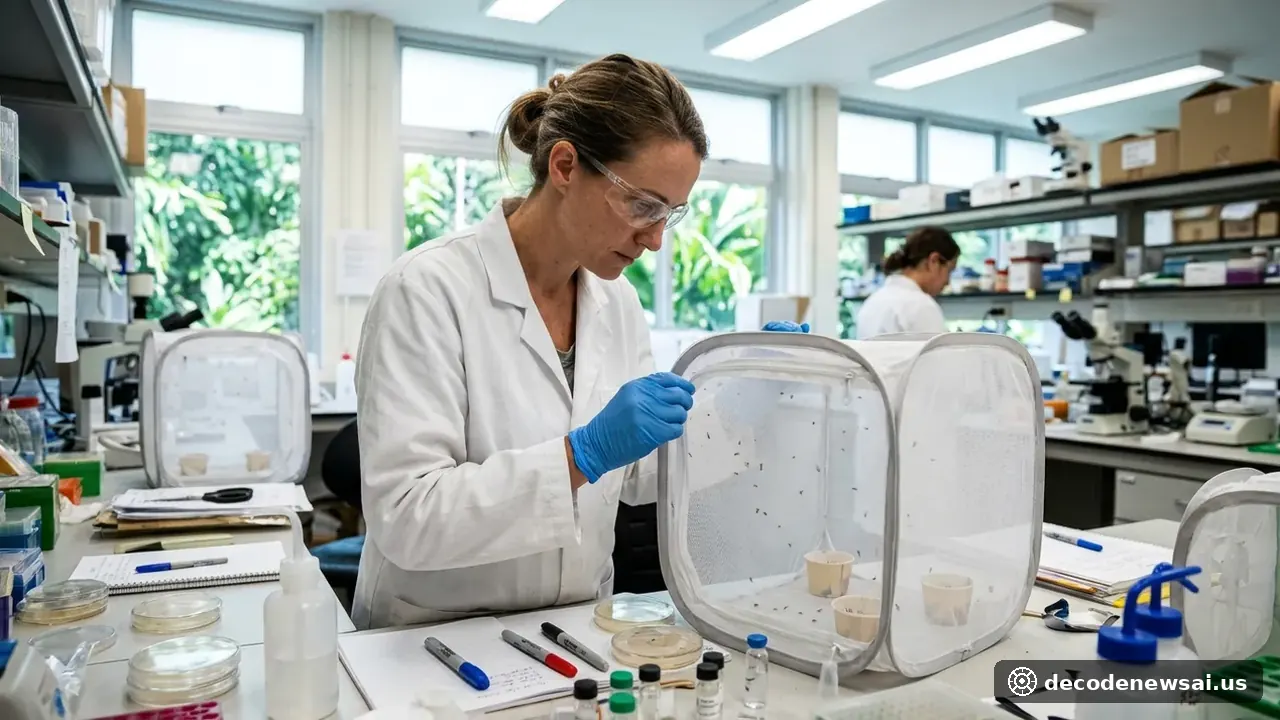
WASHINGTON - A four-year study of more than 5,700 children in Brazil reported on Nov. 21 that releasing mosquitoes carrying Wolbachia bacteria cut dengue and chikungunya infections by about 69%.
Blood Tests Confirm 69% Drop Across Neighborhoods
Researchers compared neighborhoods in Belo Horizonte that received identical pesticide controls, with half randomly assigned to receive Wolbachia-carrying mosquitoes. Dr. Sri Edupuganti of Emory University presented the findings on Nov. 21 at the American Society of Tropical Medicine and Hygiene meeting, noting protection held even during Brazil's severe 2024 dengue outbreak, the Associated Press reported. Blood tests found too few Zika cases to measure effects on that virus, Newsday reported.
Bacteria Block Virus Transmission Across Generations
Wolbachia is harmless to humans and naturally blocks viruses inside Aedes aegypti mosquitoes, though it is not native to that species. Female mosquitoes pass the bacteria to offspring, establishing the trait in local populations. "He predicts that pairing more use of these Wolbachia mosquitoes with existing steps to fight mosquito-borne disease could “knock dengue down to much lower levels” in many places," The Independent reported, citing Boston University global health expert Dr. David Hamer, who was not involved in the study.
Florida Faces Largest Local Outbreak Since 1940s
The findings arrive as Florida confronts what appears to be the largest locally acquired dengue outbreak in any U.S. state since at least the 1940s. As of Nov. 20, Florida health officials had tallied more than 650 locally acquired cases, with roughly three-quarters in Hillsborough County, home to Tampa, WSB Radio reported.