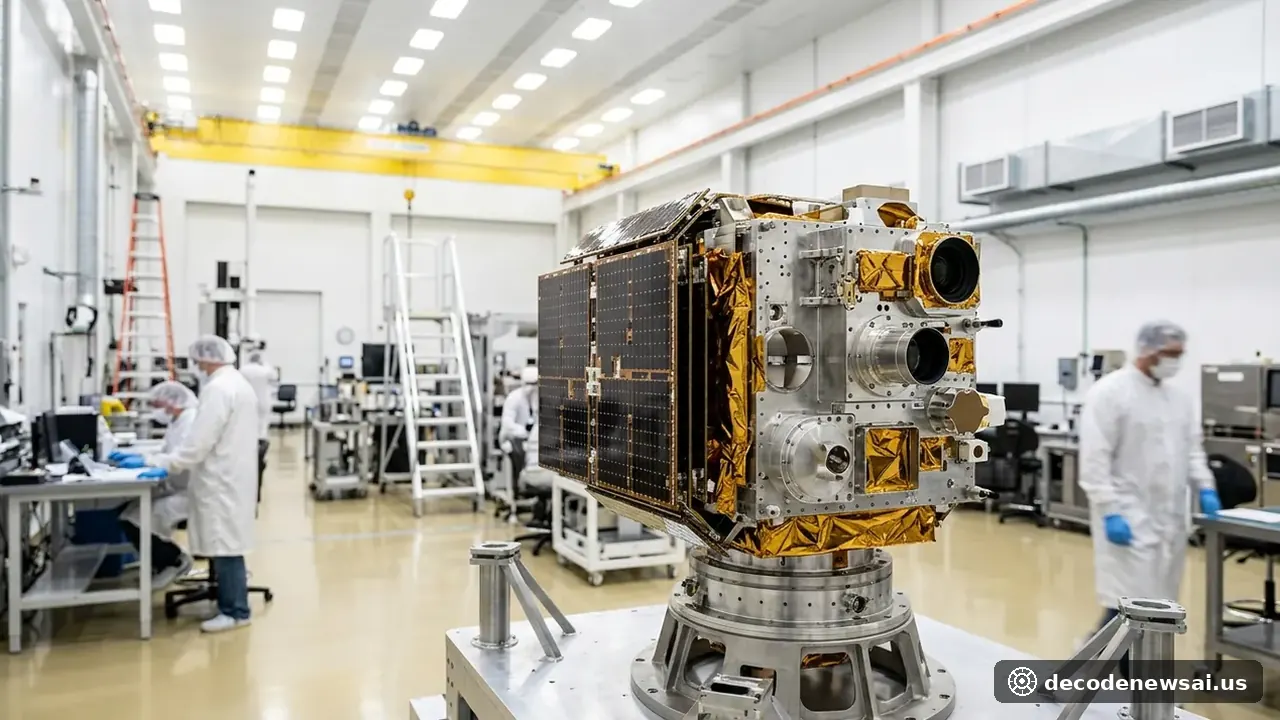
WENCHANG, China - China launched a Long March-8A carrier rocket from the Hainan commercial spacecraft launch site on Nov. 20. Nine satellites were sent. They reached their designated orbits.
Rocket Lifts Off With Nine Satellites
The Long March-8A Y13 rocket lifted off at 7:59 p.m. Beijing Time on Nov. 20. Nine satellites were added. China's state-backed GuoWang constellation reached 249 spacecraft in orbit.
Operated by state-owned China Satellite Network Group, each GuoWang satellite weighs about 695 kilograms. Each uses electric propulsion. Two solar panels power it.
The mission marked the 13th flight of the Long March-8A. It was the 679th launch in the Long March series. It was China's 83rd orbital launch of 2026. Xinhua and Friends of NASA reported it.
Domestic Trials Precede Global Rollout
China Satellite Network Group is conducting trials. They are domestic usage trials. The company is signing agreements. Both precede a broader commercial rollout.
The company plans to deliver worldwide internet connectivity services. It will use the growing low-orbit network.
Philippine Space Agency Issues Debris Advisory
The confirmation followed the launch. The Philippine Space Agency confirmed projected rocket debris drop zones. The zones were within the Philippine Exclusive Economic Zone and archipelagic waters.
Patag Island was one reference point. Hadji Muhtamad, Basilan was another. One area was 98 nautical miles from Patag Island. Another was 40 nautical miles from Hadji Muhtamad, Basilan.
"As global launch rates continue to accelerate, debris shed during staging events and the uncontrolled re-entry of large rocket upper stages pose growing hazards—not only to other spacecraft, but to civil aviation and to populations on the ground," the Philippine Space Agency warned. It urged the public not to touch suspected debris. The debris may contain toxic fuel remnants.