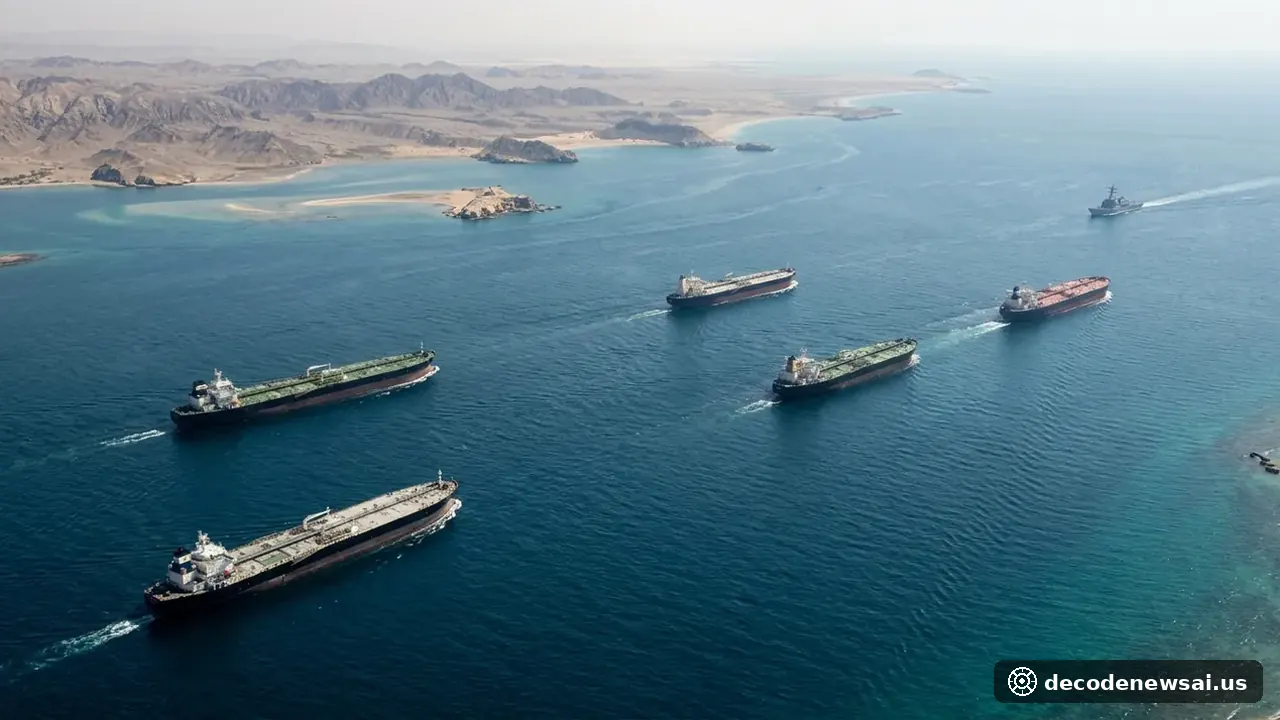
DUBAI, United Arab Emirates - Middle East oil exports fell by roughly 20% to around 13 million barrels per day during the first two weeks of November, energy analysts reported on Nov. 20.
Shipping Attacks Curb November Crude Flows
Data from Rystad Energy showed early November exports dropped from October levels of 15 million to 16 million barrels per day, which had matched prewar volumes. Iranian strikes on tankers and repeated attacks on a key Saudi pipeline running to the Red Sea port of Yanbu drove the decline.
The United Kingdom Maritime Trade Operations reported on Nov. 20 that shipping through the Strait of Hormuz remained 65% below prewar levels during the week ending Nov. 18, recording 263 transits alongside six tanker attacks.
Naval Escorts and Pipelines Sustain Global Supply
Despite heightened security risks, energy analysts noted via the Associated Press that most regional crude still reaches global buyers. "Around 80% of the prewar amount of oil is being exported, most of it through the Strait of Hormuz under the protection of U.S. forces," the report stated, adding that pipelines to the Red Sea and Gulf of Oman also bypass the strait.
Brent crude settled 0.6% higher at $92.57 per barrel on Nov. 20 as traders weighed supply disruptions.
Coalition Intercepts Fresh Houthi Drone and Missile Strikes
Meanwhile, the Saudi-led coalition fighting Yemen's Houthis said it intercepted five drones and one ballistic missile targeting areas including Riyadh on Nov. 20. The coalition also struck Houthi weapon-smuggling operations in Yemen's Red Sea port of Hodeidah and capital Sanaa.