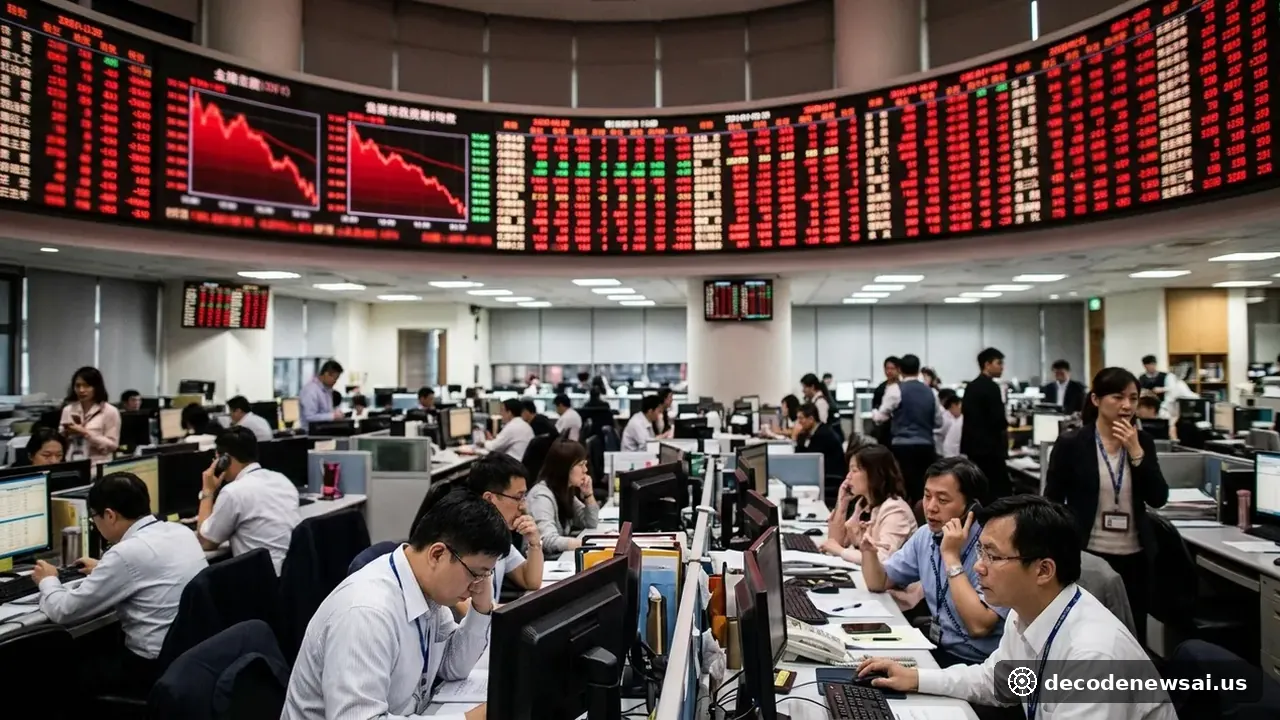
TAIPEI, Taiwan - Taiwan's National Stabilization Fund confirmed on Nov. 21 that it has entered the stock market after the benchmark index fell 7,641.83 points, or 17.5%, from Nov. 16 to Nov. 20. Regulators simultaneously announced a full short-selling ban below the prior close effective Nov. 23.
Stabilization Fund Cites Artificial Intelligence Rules and Tech Spending
Weekly Stock Rout Triggers State Intervention
Taiwan's benchmark index closed at 36,033.29 on Nov. 20 after dropping 7,641.83 points over five sessions, its worst weekly loss since 1990. The National Stabilization Fund said on Nov. 21 that concerns over tighter U.S. artificial intelligence rules and tech capital spending drove the sell-off. Authorized at a Nov. 6 emergency meeting, the fund said foreign institutional net selling has gradually narrowed.
Regulator Unveils Five Market Stabilization Rules
Taiwan Tightens Short Sales and Cites Export Orders
Starting Nov. 23, Taiwan's Financial Supervisory Commission will bar securities lending and short sales below the previous day's closing price. Regulators raised the short-sale margin requirement from 130% to 150% and suspended new put warrant applications. Authorities also urged listed firms to buy back shares and asked financial institutions to halt stock lending.
Officials Cite Record Orders to Calm Investors
Premier Cho Jung-tai met financial chiefs on Nov. 20 and Nov. 21 to discuss expanding the fund from NT$500 billion to NT$1 trillion. "Taiwan's economic fundamentals remain solid, with 2026 economic growth reaching 11.05%, a 39-year high, and cumulative January-to-October export orders hitting $943 billion, up 58.6% year on year," the fund stated on Nov. 21 according to Central News Agency and BigGo Finance, noting NT$56.89 trillion in ten-month corporate revenue already topped last year's NT$50.77 trillion.