MELBOURNE, Australia - A Monash University study published Nov. 21 proposes overhauling the human family tree by grouping Australopithecus and Paranthropus species into Homo, the same genus as modern humans.
Fossil Traits Challenge Traditional Homo Boundaries
Overlapping Fossil Traits Blur Old Boundaries
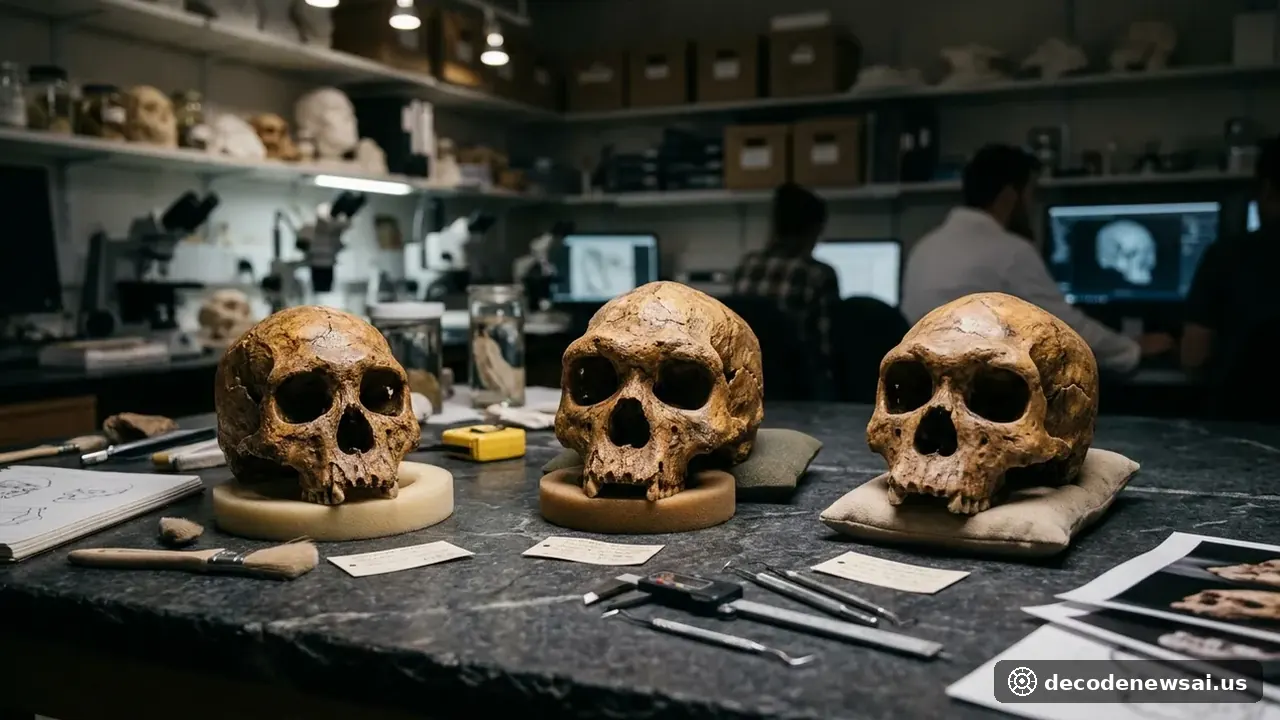
Published in the American Journal of Biological Anthropology by Monash Biomedicine Discovery Institute fellow Ian Towle, the paper argues that all human species and close fossil relatives from the past 4 million to 5 million years belong under Homo. Scientists historically separated Homo using traits like larger brains and advanced tool use, yet recent discoveries revealed small-brained Homo species alongside surprisingly complex behaviors among Australopithecus and Paranthropus.
Clade Framework Aims for Taxonomic Stability
Clade-Based Homo Proposal Awaits Scientific Consensus
Modern taxonomy increasingly classifies organisms by shared ancestry, known as clades, rather than physical traits alone. Towle contends that Australopithecus and Paranthropus do not necessarily represent separate evolutionary branches. "I propose expanding Homo to include these other groups to provide a more accurate and stable way to represent the complex evolutionary relationships revealed by the growing fossil record," Dr. Towle said, as reported by ScienceDaily.
Proposal Awaits Broader Scientific Consensus
Towle noted the change would preserve individual species distinctions while avoiding repeated boundary shifts as new fossils emerge. The paper remains a scientific argument rather than an officially adopted classification, and other specialists have yet to formally weigh in.