BepiColombo Enters Mercury Orbit Despite Software Glitch
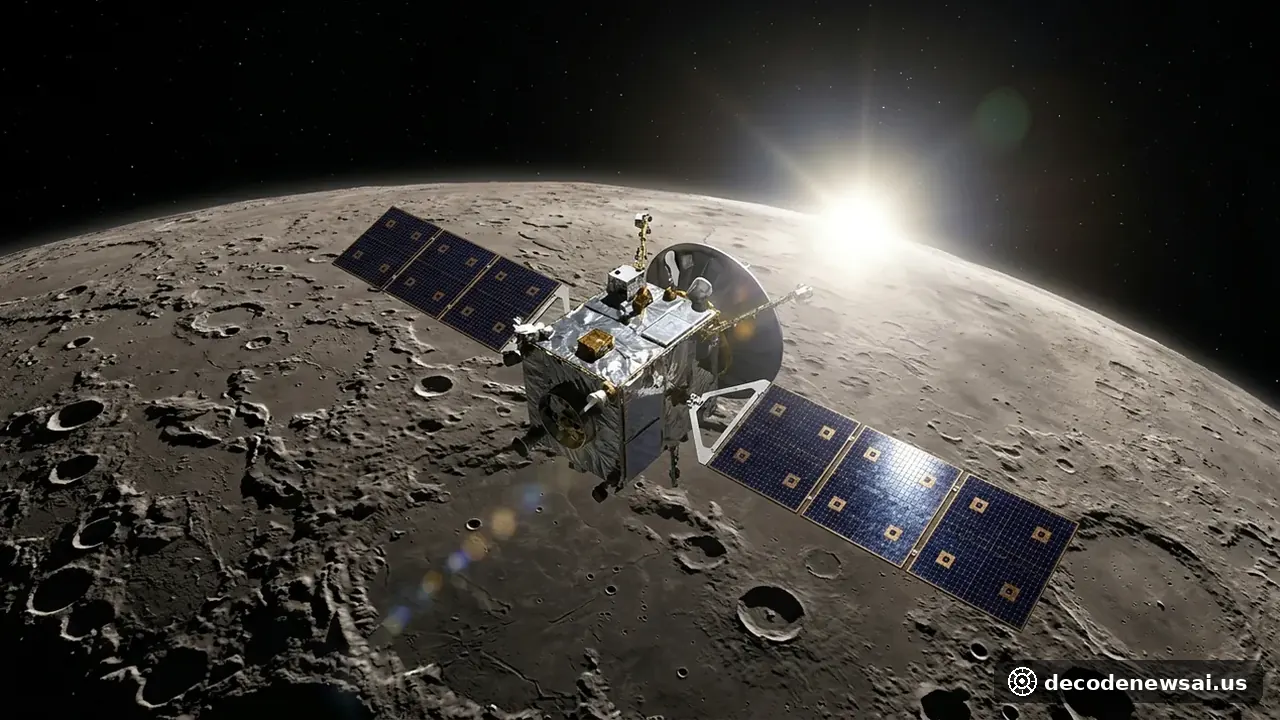
DARMSTADT, Germany — Despite a software glitch that cut its main thruster burn short, the joint European-Japanese BepiColombo spacecraft entered orbit around Mercury on Nov. 21, 2026. The European Space Agency confirmed it Nov. 23. BepiColombo becomes only the second mission in history to orbit the solar system's innermost planet.
Thruster Burn Interrupted Yet Capture Confirmed
Starting at 18:24 UTC on Nov. 21 at 635 kilometers above Mercury, the Mercury Planetary Orbiter fired four axial thrusters. An onboard issue interrupted the 37-minute burn. The issue triggered safe mode.
Flight engineers confirmed the maneuver still delivered about 77% of planned velocity change. The craft entered a stable 75-hour orbit. It did not enter a 58-hour path.
“Upon finding Bepi in safe mode, it was like flipping a switch. Everybody was focused in understanding what had happened,” Ignacio Tanco said. He is ESA's BepiColombo flight operations director.
Eight-Year Journey Ends Decade-Long Wait
Launched in October 2018, the ESA and Japan Aerospace Exploration Agency mission used solar-electric propulsion and nine planetary flybys. These slowed it against the sun's pull.
Only NASA's MESSENGER probe had previously orbited Mercury. That orbit ran from March 2011 to April 2015.
December Orbiter Separation Remains on Track
ESA confirmed the adjusted trajectory requires no extra burns. It will not delay the Dec. 9 separation. That separation involves ESA's planetary orbiter and JAXA's magnetospheric probe Mio. Full science operations remain scheduled to begin in April 2027.