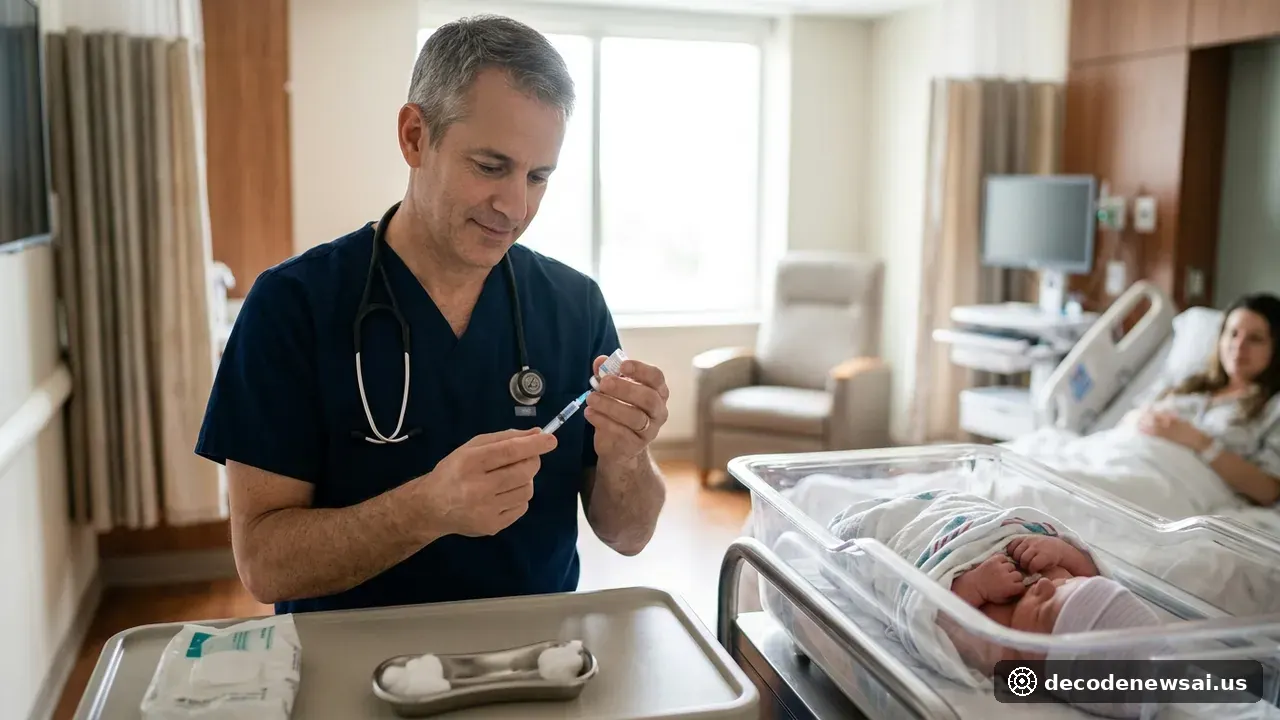
BELLEVUE, Wash. - Coverage fell. Hepatitis B vaccination within one day of birth among U.S. newborns fell from roughly 80% in 2022 to 65.6% by June 2026. A Truveta study of 1.3 million infants reported the decline. The study was published in NEJM Evidence on Nov. 24, 2026.
Declining Coverage Includes High-Risk Infants
Researchers analyzed linked electronic health records for 1,338,961 infants. The infants were born between January 2018 and June 2026. Coverage slipped. It began in 2023, reached 69.0% in 2025, and hit 65.6% in the first half of 2026.
Birth-dose rates fell. Among babies born to hepatitis B-positive mothers, rates fell from 97%–98% in 2020–2025 to 93.9% in early 2026.
Prenatal Screening Gaps Leave Hundreds Exposed
Documentation was missing. About one in 10 pregnancies in the records lacked a documented hepatitis B test. The gap exposed an estimated 360,000 newborns annually to unscreened births. It also exposed more than 640 infants a year to undetected maternal infection.
"These numbers aren't just a trend line. Each data point represents a real child who may be left vulnerable to a preventable disease. At a time when vaccine policy is changing, we need more evidence guiding our decisions, not less," said study co-author Demetre C. Daskalakis, former CDC immunization center director.
Slide Preceded Federal Schedule Overhaul
The slide began. It started nearly three years before federal vaccine advisers voted in December 2025. They voted to drop the universal birth-dose recommendation. A federal judge later blocked that shift temporarily in March 2026 while litigation proceeds.