Scientists Use Drones and Scent Dog to Monitor Endangered Orcas
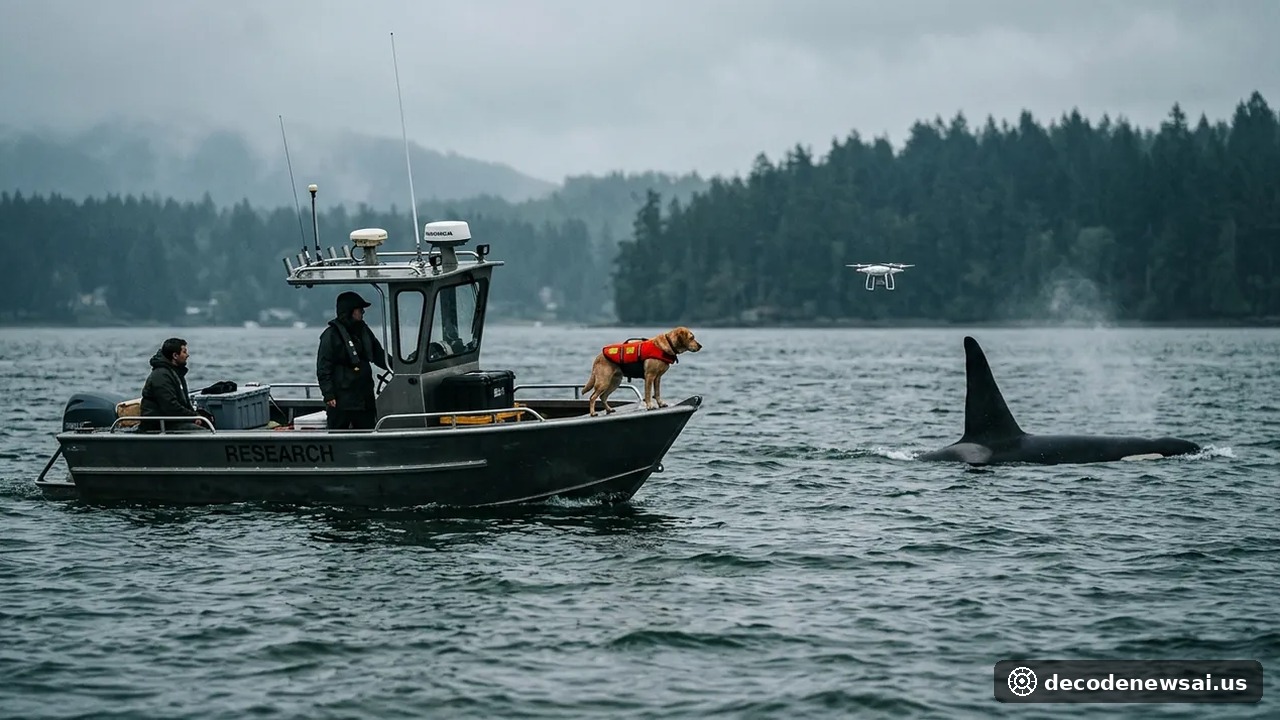
Photo: AI-generated
Scientists Use Drones and Scent Dog to Monitor Endangered Orcas
KINGSTON, Wash. — Scientists from The SeaDoc Society and the San Diego Zoo Wildlife Alliance are using petri-dish-equipped drones and an 11-year-old rescue dog to conduct health checks on the 76 remaining endangered Southern Resident killer whales in Puget Sound, according to reporting on Nov. 27. Tracking breath droplets and floating feces gives researchers non-invasive profiles of a population struggling with miscarriages and high calf mortality.
Aerial Drones and Scent Dog Collect Biological Samples
Senior scientist James Sheppard flies a camera- and infrared-equipped drone low over surfacing whales to sweep through 6- to 10-foot blowhole spouts before returning samples to the boat. "Once we've got the sample it's important we bring the drone back to the boat as quickly as possible so that the samples don't get degraded with the wind and the sunlight," Sheppard said. Meanwhile, scent-detection dog Eba stands on the bow of researcher Deborah Giles's 22-foot boat to locate whale feces, which laboratories analyze for hormones, bacteria, fungi, parasites, and DNA.
Shrinking Salmon Stocks Drive Whales Toward Seattle
Historically, Chinook salmon along the Pacific Northwest coast weighed more than 100 pounds (45.36 kilograms), but dams, overfishing, vessel noise, and water pollution have reduced their average weight to about 12.5 pounds (5.66 kilograms). Because food has grown scarce around their traditional summer grounds in the San Juan Islands, the whales now hunt coho and chum salmon north of Seattle each fall, allowing researchers easier boat access.
Restoring Salmon Runs Remains Central Conservation Goal
While neighboring Bigg's killer whales thrive on abundant seals and sea lions and calve every two years, Southern Resident females suffer frequent pregnancy losses across their 17- to 18-month gestation period. Giles said reducing vessel noise helps, yet restoring salmon runs intercepted as far north as Alaska remains essential to saving the population.
Sources
- Associated Press: Scientists use drones for health checks on endangered orcas
- PBS NewsHour (AP): Using a drone and a poop-sniffing dog, scientists perform health checks on endangered orcas
- WBOC (AP): Using a drone and a poop-sniffing dog, scientists perform health checks on endangered orcas
- WFTV (AP): Using a drone and a poop-sniffing dog, scientists perform health checks on endangered orcas